Google broadens AI ad labels to Search, YouTube, Discover

▼ Summary
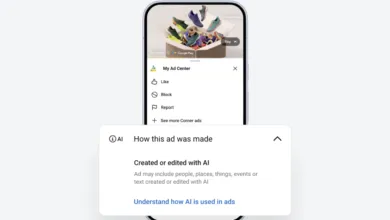
– Google is adding a “How this ad was made” section in My Ad Center to disclose whether an ad was created or modified with AI, rolling out globally across Search, YouTube, and Discover.
– Google will automatically add the AI disclosure when advertisers use its own generative AI tools, while advertisers using third-party AI tools can choose whether to disclose.
– Users can access the AI disclosure from the three-dot menu or info icon on ads.
– Google’s existing ad policies still prohibit misleading or deceptive ads regardless of AI use, and the update adds transparency without changing advertiser identification requirements.
– Google already uses imperceptible signals like SynthID for AI-generated content and requires election advertisers to disclose synthetic or digitally altered content in political ads.
Google is expanding its AI disclosure labels to ads appearing across Search, YouTube, and Discover. The company announced today that a new section called “How this ad was made” will be added to My Ad Center, giving users more insight into the role artificial intelligence played in creating the advertisements they see.
The new panel will clearly indicate whether an ad was created or modified using AI. This update is rolling out globally across Google’s primary ad surfaces, representing a significant expansion of the company’s ad transparency tools as more advertisers turn to generative AI to produce ad assets.
Users can find this information by clicking the three-dot menu or the info icon on any ad. Google shared a screenshot with Search Engine Land showing how the feature will appear.
For ads built using Google’s own generative AI ad tools, the company will automatically add the disclosure to My Ad Center. However, when advertisers use third-party AI tools, they will have the option to decide whether to disclose AI involvement. Depending on local regulations, an AI label may also appear directly on the ad itself, either automatically or after the advertiser chooses to enable it.
Why this matters. As AI-generated ads become easier to produce, the need for clear disclosure grows. Advertisers and marketers must know when creative was created or modified with AI because disclosure requirements vary by market and ad format. This update helps users make more informed decisions about the content they engage with.
It’s important to note that existing ad policies remain in effect. Google emphasized that its rules continue to prohibit misleading or deceptive ads, regardless of whether AI was used. The new transparency layer simply adds context about how an ad was made, but does not change the requirement that advertisers must clearly identify themselves and the product or service they are promoting.
Google has also taken earlier steps to address AI-generated content. The company already embeds imperceptible signals, including SynthID, into content created with its generative AI tools. Additionally, since 2023, election advertisers have been required to disclose any synthetic or digitally altered content in political ads.
This announcement marks another step in Google’s ongoing effort to build trust and transparency in digital advertising as AI becomes a more common tool in the creative process.
(Source: Search Engine Land)