AI Mode and Preferred Sources Are Creating Filter Bubbles

▼ Summary
– Google’s Preferred Sources, Search Profiles, and Subscription Linking create an audience loyalty ecosystem, rewarding publishers with established followings by surfacing their content more often.
– Preferred Sources lets users pick publishers to see more of in search, with a 2x click-through rate and over 345,000 sources selected, but creates a discovery problem for unknown sites.
– Personalized features like AI Mode and Personal Intelligence combine user queries, chosen sources, and personal data, resulting in highly individualized search experiences that differ between users.
– Publishers without a built-in audience can try to break through by being cited by preferred sources, using Google’s deeplink tools, or writing for personalized queries, but these are not guaranteed paths.
– Google has not disclosed Preferred Sources adoption rates, its weight relative to other signals, or provided a Search Console filter, making it impossible for publishers to measure the feature’s traffic impact.
Google’s latest search features are quietly reshaping how people discover content online, and the implications for publishers without a built-in audience are significant. The core issue? These tools reward loyalty over discovery, potentially creating a new kind of filter bubble, one that users voluntarily construct.
Barry Adams recently outlined how Google’s Preferred Sources, Search Profiles, and Subscription Linking give established publishers a direct line to their most loyal readers. His analysis rightly focuses on how businesses with existing followings can leverage these features. But the harder question is what happens to the rest of the web, the sites that need to be discovered before they can be preferred.
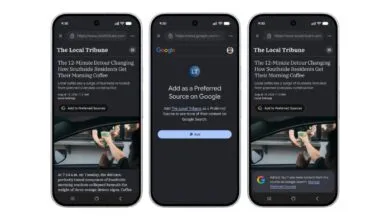
Preferred Sources is the most direct example. Launched initially for Top Stories in the U. S. and India, it expanded globally in April and then into AI Overviews and AI Mode in May. Users manually select publishers they want to see more often. Those sources then appear more frequently in a dedicated section or are tagged with a badge in AI-driven results. Google reports that searchers are twice as likely to click a preferred source, and over 345,000 unique sources have been chosen to date. This is a user-driven preference, not an algorithmic guess.
The problem is structural. Search Profiles, launched in June, require 100,000+ followers on major social platforms. Subscription Linking needs an existing paid subscriber base. Each feature builds on an audience that already exists. For a new or niche publisher, the gap between being unknown and being selected is widening. This is a user-directed filter bubble, where the ethical burden shifts from the algorithm to the individual, but the outcome is the same: less exposure to unfamiliar, high-quality content.
The personalization layer deepens with Personalized Queries in AI Mode. Instead of searching “Nashville restaurants,” users now type queries like “restaurants in Nashville but a friend has an allergy, and we have dogs, and want to sit outside.” This single query hands Google far more context than a traditional keyword search. Combine that with Personal Intelligence, which connects Gmail and Photos data, and the search experience becomes highly individualized. An iPullRank experiment from May found a 46-percentage-point lift in brand mentions for accounts with Personal Intelligence enabled, with seeded brands jumping from 23.9% to 66.8% of relevant AI Mode responses. Two users asking the same question may now see entirely different results.
So how can publishers break through before they earn preference? Three strategies are emerging.
First, become the source that preferred sources cite. If a trusted publisher references your work, your content reaches their audience indirectly. This means investing in podcasts, original research, industry publications, social platforms, and even ChatGPT, wherever new sources are encountered and cited.
Second, use Google’s own tools. Search Central provides a deeplink format and downloadable button assets that let publishers prompt users to add them as a preferred source. Google positions these alongside social follow prompts and newsletter signups.
Third, write for personalized queries. Content that demonstrates first-hand experience and depth beyond what an AI summary can provide may perform better in conversational search. AI-driven citation patterns already favor publishers with strong brand recognition across multiple channels, not just high traditional rankings.
None of these are guaranteed. Google has not disclosed how much Preferred Sources weighs against other ranking signals. Adoption data is limited. While Sundar Pichai said AI Mode has surpassed 1 billion monthly active users, the number of people who have actually activated Preferred Sources remains unknown. Digiday reported in February that publishers cannot measure the feature’s effect on their traffic, as there is no Search Console filter for it. The 2x click-through rate Google cites is unverifiable on individual sites. In AI Overviews and AI Mode, preferred sources currently receive a badge, not a ranking boost. How and when that changes is an open question.
The future of discovery hinges on adoption and signal weighting. For businesses and SEO professionals, these features are already relevant. The strategic challenge is clear: become the source people choose before preference-based distribution becomes the dominant way search works.
(Source: Search Engine Journal)