How SEO and Affiliate Teams Can Unlock Business Value
▼ Summary
– SEO and affiliate teams often work in silos, but coordination is crucial to protect brand rankings and reduce unnecessary affiliate commission costs.
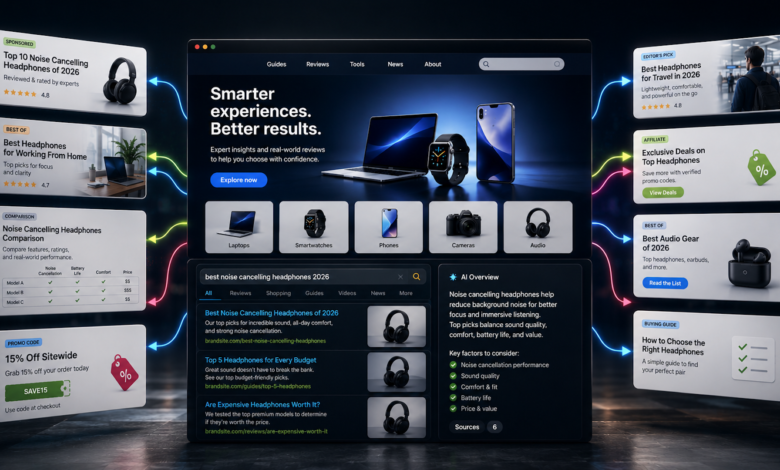
– Affiliates can rank for branded search terms like “[brand] + discount code,” sending traffic back to the brand and charging a commission, which can be avoided with proper SEO optimization.
– Simple content updates, such as tweaking meta titles and H1s on branded pages, can reclaim rankings, increasing organic revenue and reducing affiliate spending.
– Affiliate content like “Best of” articles boosts reputational signals for LLM visibility, benefiting both direct traffic and AI model recommendations.
– Affiliate tracking URLs must be no-indexed or canonicalized to prevent indexing issues; automated monitoring tools can catch and fix such problems quickly.
In most organizations, SEO and affiliate teams rarely collaborate, even though both directly influence revenue and brand presence. The SEO group focuses on rankings, content strategy, and organic traffic, while the affiliate team manages third-party partners, negotiates commissions, and tracks performance. These two departments often operate in isolation, missing opportunities to create compounded value for the business.
Cross-functional work is essential for growth. Partnering with other teams helps me understand what success means across the company, pulling me out of my SEO silo so I can align with broader business objectives. It also reveals new initiatives that can be leveraged for organic search growth.
The relationship between SEO and affiliates deserves special attention. Let’s explore brand protection, LLM visibility, tooling, and why tighter collaboration will drive efficiency, cut costs, and boost your bottom line.
Protecting your brand and search terms is critical when working with affiliates. You must ensure that terms rightfully yours don’t fall under affiliate control. For my clients, anything that impacts organic performance falls under my or the SEO team’s responsibility.
Consider high-intent conversion terms involving discount codes, such as:
- [brand] + discount codeLetting these terms slip away is a costly mistake. When affiliates rank for your own branded keywords, they can intercept your traffic and sales, charging you a commission for conversions that would have happened organically. This leads to excessive affiliate commissions that are entirely avoidable.Reclaiming your rankings is straightforward. For example, Trainline, a train ticket platform, loses branded conversions to its own affiliates because its promo code page isn’t optimized. The term “trainline promo code” gets 17,000 monthly searches in the UK. Trainline’s dedicated page ranks inconsistently, causing lost traffic and revenue.The fix is simple: adjust the meta title, H1, and body copy to better target the relevant terms. After reclaiming those rankings, we saw:
- Increased organic revenue for the channelIn another case, one of my managed brands lost significant Share of Voice for a high-intent branded discount codes page to affiliates. A strategic content update pushed the page from 14% to 31% Share of Voice in just one day. These wins benefit the entire business, not just SEO. That’s the real purpose of SEO: delivering insights that fuel business growth.How SEO and affiliate teams can compound returns through collaboration is equally important. Affiliates typically create content that builds reputational signals: “Best of” articles, comparison pieces, and category roundups. Large language models (LLMs) weigh these signals heavily. Being mentioned across multiple authoritative “Best of” articles in your niche signals to LLMs that your brand is trustworthy. When many reputable sources in your space recommend you, that reputational signal compounds.Educate your affiliate team to ensure your brand appears in these articles. This delivers two benefits:
- Affiliate visibility drives direct traffic and conversions from placementsOn the technical side, affiliate tracking URLs , parameterized versions of your pages generated by affiliate platforms , must be handled correctly to avoid indexing issues. This sits squarely at the intersection of SEO and affiliate responsibilities.The solution is to no-index these URLs, which Google respects as a directive. While some use canonical tags pointing to clean versions, I’ve seen canonicals ignored, leading to tracking URLs flooding the index. To monitor, I use SEOTesting, which sends automated alerts when new URLs get indexed and start receiving impressions. This lets me catch affiliate tracking URLs quickly before they become a larger indexing problem.Collaborate with affiliates today. SEO and affiliate teams often work in separate silos, but each directly affects the other. Affiliates can outrank you and drain your budget. Yet they can also help build LLM visibility, and those armed with SEO data make better decisions for the whole business. The closer these two teams align, the stronger the outcomes for everyone , and most importantly, for the company.