YouTube Lets Creators Use AI to Insert Into Other Videos
▼ Summary
– YouTube announced a “Remix” option for Shorts that lets users write a prompt to alter a creator’s video style or insert themselves, with digital watermarks and creator opt-out controls.
– Google also introduced “Ask YouTube,” a feature that answers detailed questions by pulling steps from relevant YouTube videos, rolling out to Premium users now and all users later this summer.
– YouTube now has over three billion users worldwide, matching the reach of Google’s other major products like Search and Gmail.
– YouTube is expanding its AI-powered tools, with Shorts as the main testing ground, and opening its likeness detection tool to all users 18 and over.
– YouTube CEO Neal Mohan declared “The YouTube Era” at Brandcast, emphasizing the platform’s shift to empowering creators over traditional entertainment formulas.
Sora may have faded from the spotlight, but its most talked-about capabilities are making a major leap onto YouTube. At the Google I/O event on Tuesday, the tech giant rolled out a wave of product updates, including transformative features for the world’s dominant free video platform.
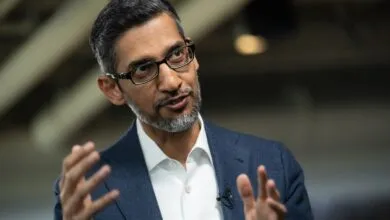
CEO Sundar Pichai announced that YouTube now boasts over three billion monthly active users, placing it alongside Google Search, Gmail, Android, and Chrome in terms of global reach. This staggering figure underscores YouTube’s unparalleled dominance in the video ecosystem.
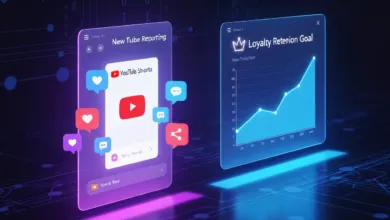
The most significant headlines, however, revolve around Gemini and its video-centric Omni updates. These changes fundamentally reshape how users engage with content. In YouTube Shorts, a new “Remix” option allows creators to write a text prompt to alter a video’s style or even insert themselves into another creator’s clip, all while preserving the original context.
This feature echoes elements of OpenAI’s now-dormant Sora app, which allowed users to prompt tweaks on existing videos. Sora also had a “Cameos” feature for inserting user likenesses. YouTube is careful to emphasize control: all remixed videos will carry digital watermarks linking them back to the original, and creators can opt out of visual remixing in Shorts at any time.
While not identical to Sora, the ability to remix a video into an anime aesthetic or place yourself inside someone else’s content represents a fundamental shift in user interaction. Google also unveiled “Ask YouTube,” a feature that lets users pose detailed questions and receive answers drawn directly from video content. Pichai demonstrated this with a parent teaching a child to ride a bike, showing how Ask YouTube could pull step-by-step instructions from relevant clips and jump instantly to the most useful part. The feature is available now for Premium users, with a full rollout expected later this summer.
YouTube, like the rest of Google, is aggressively pursuing AI-powered innovation, with Shorts as the primary testing ground. The company has also expanded its likeness detection tool, which was initially opened to Hollywood last month and is now available to any user aged 18 or older on the platform.
But YouTube is also leaning hard into its role as the new television. At the company’s Brandcast event last week, CEO Neal Mohan declared the arrival of “The YouTube Era.” He told the audience at Lincoln Center, “For decades, the entertainment industry was built on a series of bets, programming shows based on formulas and focus groups and guessing what would make an audience show up. At YouTube, we didn’t wait for a focus group. We built a stage and empowered anyone with a story to find an audience.”
Now, with these new AI tools, the company is doubling down on that mission, giving creators even more power to generate and remix content at scale.
(Source: Hollywood Reporter)