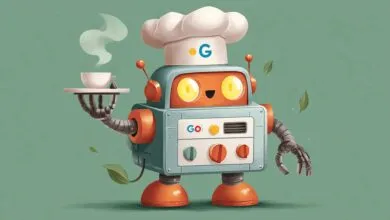
Google’s future: a single search box that does everything

▼ Summary
– Google’s search bar will now dynamically expand, offer AI-powered suggestions, and display AI-generated summaries in a new “AI Mode” instead of traditional links.
– Users can create “information agents” from the search bar to track specific items like sneaker drops, and search results will feature personalized interactive visuals and graphs.
– Gemini gains a “Daily Brief” that summarizes information from Google apps, and the “Gemini Spark” feature allows users to create custom Google-powered agents.
– In Workspace, users can verbally command Gmail, Docs, and Keep to parse inboxes or draft documents, while the new Universal Cart consolidates shopping across apps with Google payment checkout.
– The author argues that Google’s goal is a single universal search box that does everything, which could collapse web traffic to publishers and creators, and removes the personal effort of finding information online.
After watching Google’s I/O keynote last year, I walked away convinced the company’s future was essentially Google googling for you. This year’s event on Tuesday pushed that idea even further. It’s no longer just about searching on your behalf. Google now wants to do everything for you, all from a single search box.
The classic Google search bar, which the company rarely tinkers with, is finally getting a refresh. It will now expand “dynamically” as you type longer queries. You’ll also see “AI-powered suggestions” that go beyond simple autocomplete. These could fill in the blanks of your search in ways you may not have intended, but the real question is whether that will actually help.
What about the search results themselves? AI Overviews are evolving into AI Mode, which generates a custom page with an AI summary instead of a traditional list of links. Results are becoming more personalized, with Google able to create custom UI elements like interactive visuals and graphs right on the results page. You can even ask Google, directly from the search bar, to create “information agents” that track things like new sneaker drops or apartment listings. Essentially, the search bar is turning into an AI-infused Google Alert.
Gemini is also getting a major overhaul. It can now send you a “Daily Brief” that summarizes your day using data from across your Google apps, including Gmail and Calendar. A new feature called Gemini Spark lets you create your own custom Google-powered agents. Since it’s a first-party offering, it could have a significant edge over competitors like OpenClaw. Google is also making noise about Personal Intelligence, which pulls context from your other Google apps to inform Gemini’s responses.
Inside Workspace, the vision is simple: just talk to tools like Gmail, Docs, and Keep. They’ll help parse your inbox, draft documents, and generate to-do lists. For shopping, the new Universal Cart keeps track of items you want to buy across Search, Gemini, Gmail, and YouTube, and lets you check out using Google’s payment system. And on YouTube, Google is testing an AI Mode-like experience that assembles a page of search results instead of just showing a list of videos.
There’s even more. The new Gemini Omni models allow you to create a video using other videos, images, and audio as prompts. Down the line, you’ll be able to generate other media too. The family of models is designed to “create anything.”
I could keep listing announcements, because there was a lot at I/O. But the core takeaway is clear: Google is no longer just showing you where information lives. Through its various search boxes, it’s now answering questions directly in the way it thinks is most helpful. In the best-case scenario, if done well and accurately, this could be incredibly useful. But that’s an extremely high bar to clear, especially with complex queries or sensitive data like years of Gmail emails.
It’s easy to imagine a future where everything happens in one universal search box. No more jumping between Google Search, YouTube, Gmail, and Gemini. My gut says Google’s end state is simple: you type anything into an “Ask Google” box, and it finds a way to make it happen and surface it for you in a personalized way.
If that’s the case, count me out. The fun of the internet is doing the work to find things, even when it’s frustrating or time-consuming. Sure, talking to Gmail to find something in my inbox sounds handy, but I’ve spent years honing my own email management system one that works whether I use Gmail or not. I think we should all have to figure out the systems that work best for us, instead of relying on Google to do it from one universal box.
There’s another problem. If Google does everything, the web it relies on collapses. If Search stops sending traffic to publishers and websites that need visitors to make money something already happening at a rapid rate, thanks to Google Zero what will Search learn from, and where will it point people? If YouTube’s AI Mode stops people from browsing videos, how will creators support themselves? Google may not care. It increasingly seems to want a search bar that can do it all, no matter the cost.
(Source: The Verge)