Metroid Prime 4 Falls Short of Nintendo’s Legacy
▼ Summary
– Metroid Prime 4: Beyond’s open-world exploration feels like a chore and lacks the rewarding discoveries found in Nintendo’s other successful open-world titles.
– The game’s open-world design conflicts with its Metroidvania structure, as encountering roadblocks without guaranteed payoffs kills momentum and makes the world feel empty.
– The game presents an illusion of choice, where the player is told they can go anywhere but is often immediately blocked by obstacles requiring specific power-ups.
– The companion characters are overly intrusive and condescending, constantly offering unasked-for guidance that undermines the series’ appeal of self-reliant exploration.
– While the core Prime exploration remains unique, the game’s new elements, like recycled psychic powers, feel unimpressive and fail to modernize the franchise effectively.
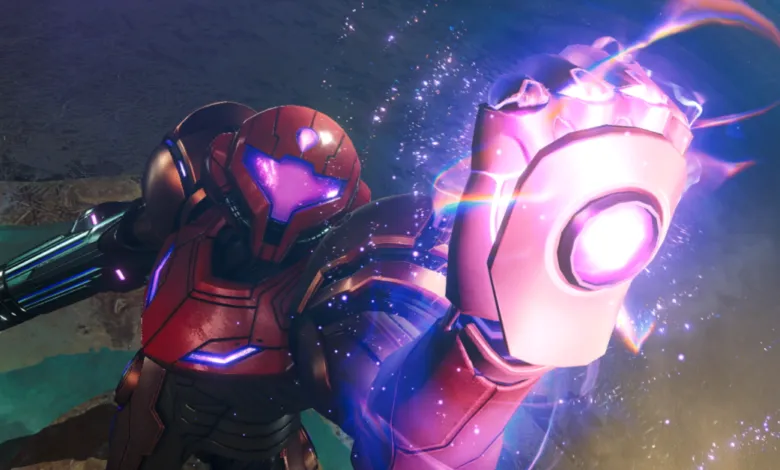
After years of anticipation and a complete development overhaul, Metroid Prime 4: Beyond has arrived, but it struggles to capture the innovative magic that defines Nintendo’s greatest hits. While the core experience of isolated, atmospheric exploration remains, the game’s attempt to integrate modern open-world design often clashes with the series’ classic Metroidvania soul, resulting in a journey that feels dated rather than daring.
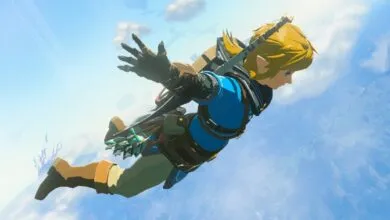
Nintendo’s strategy of infusing its flagship titles with expansive, open-ended exploration has been largely successful. This approach revitalized series like The Legend of Zelda and Super Mario, transforming their worlds into playgrounds of constant discovery. Applying this philosophy to the Metroid Prime series, however, proves problematic. The sense of wonder that comes from uncovering secrets in Hyrule or the Cap Kingdom is frequently absent on the arid planet of Viewros. Here, vast desert hubs can feel barren, with discoveries amounting to little more than checkpoints on a long, empty road.
The fundamental issue lies in a mismatch of genres. A traditional Metroidvania expertly controls pacing by gating progress behind new abilities, creating a satisfying loop of backtracking with purpose. In Beyond‘s more open spaces, this structure falters. Encountering an impassable obstacle in a huge area doesn’t signal a fun challenge for later; it often feels like a waste of time, with no promise of a meaningful reward. You might find a wrecked structure, clear out enemies, and search for a puzzle, only to leave with nothing but the suspicion you’ll need to return hours later with a specific upgrade. This drains momentum and makes the world feel hollow.
The game further undermines player agency with an illusion of choice. Early on, you’re told you can go anywhere, only to immediately encounter insurmountable barriers like walls of flame. This heavy-handed guidance contradicts the series’ celebrated emphasis on self-reliance and clever problem-solving. That cherished feeling of being a lone hunter using your wits is constantly interrupted by over-eager companions. These characters, led by the know-it-all Mackenzie, relentlessly offer unsolicited advice, explaining puzzles and dictating objectives in a manner that feels condescending. It’s a hand-holding trend borrowed from other modern action games that feels utterly foreign to Samus Aran’s character.
Even the new abilities fail to inspire. Nintendo has historically excelled at giving players inventive tools that unlock creative gameplay. In Beyond, Samus’s new psychic powers come across as uninspired re-skins of old gear, lacking the transformative impact seen in other Nintendo evolutions. A psychic lasso, for instance, is functionally little more than a grapple beam with a different visual effect.
There are bright spots where the classic Prime formula shines, offering moments of immersive isolation and intricate world design the series is known for. Yet, given the lengthy and troubled development cycle, expectations were for a title that could stand shoulder-to-shoulder with Nintendo’s best. Instead, Metroid Prime 4: Beyond feels caught between two eras, where nostalgic elements don’t feel fresh and new additions don’t feel fully realized, leaving it short of the legendary status its name implies.
(Source: The Verge)