Healthify’s AI Assistant Ria Now Features Real-Time Conversations
▼ Summary
– Healthify has launched a new, live conversational version of its AI health assistant Ria, powered by OpenAI, which supports voice, camera input, and over 50 languages.
– The assistant aggregates data from various health trackers to provide users with insights and summaries on exercise, sleep, and glucose, and can log meals via camera or description.
– The company is enhancing personalization by developing a persistent memory layer for the AI to remember long-term user preferences and health changes.
– Healthify is integrating Ria into coaching sessions to assist with data retrieval and call transcription, and is launching a new $20/month AI plan in the U.S.
– The startup aims to build a comprehensive health ecosystem, with plans for device partnerships and GLP-1 program collaborations, and may seek new funding due to U.S. growth.
Health tracking is entering a new era of personalization and convenience, moving beyond simple data logging to offer real-time, conversational guidance. Companies are now leveraging advanced AI to build interfaces that make maintaining health habits intuitive, using both structured data from devices and unstructured input from everyday conversations. This shift aims to create an always-available assistant that supports users with nutrition, exercise, and overall wellness insights directly through natural dialogue.
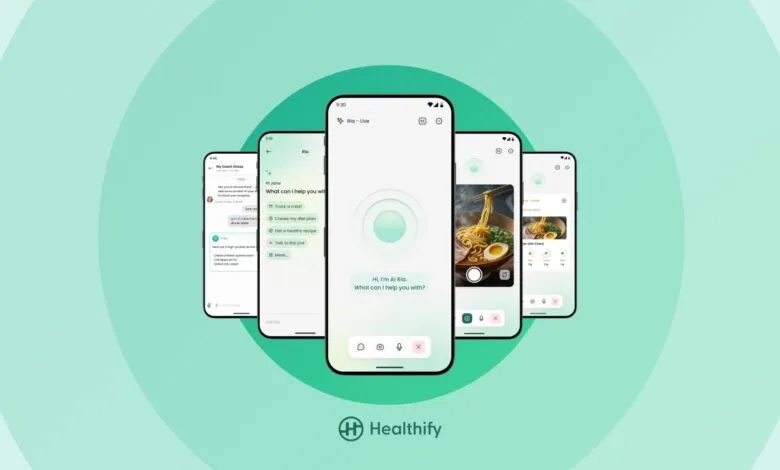
The health startup Healthify, backed by Vinod Khosla, has introduced a significant upgrade to its AI assistant, Ria, enabling live voice conversations and camera-based food input. This new version allows users to interact with Ria in real time, asking questions, logging meals by simply pointing their phone, and receiving instant feedback. The system is powered by OpenAI’s technology, supporting over 50 languages, including 14 native to India, and can understand mixed language inputs like Hinglish. While currently reliant on OpenAI, the company remains open to integrating other AI models in the future.
With this update, users can request personalized health overviews for any timeframe, daily, weekly, or monthly. Ria aggregates data from various connected devices, such as fitness bands, sleep monitors, and glucose sensors, to provide comprehensive insights on exercise patterns, sleep quality, recovery readiness, and blood sugar management. Similar to features in Google’s Gemini, the assistant can analyze food items through the camera, offering immediate nutritional information and simplifying meal logging.
In a demonstration of its expanding capabilities, Healthify showcased Ria functioning through Ray-Ban Meta smart glasses, allowing for hands-free, real-time interaction and food logging via the glasses’ built-in camera. The startup emphasizes that this conversational approach makes users more comfortable, enabling them to accomplish multiple tasks in a single session. This includes generating workout plans, setting goals, or retrospectively describing a day’s meals for automatic logging, which addresses the common issue of forgetting to track food intake.
Looking ahead, Healthify plans to deeply integrate its conversational AI into user onboarding, using unstructured dialogue to gather richer personal insights, a strategy also seen in modern dating apps. The company is developing a persistent memory layer atop OpenAI’s models, enabling Ria to remember long-term user preferences and health changes for increasingly tailored advice. This memory is built from years of anonymized conversational data between human coaches and users, which the team used to train Ria for accurate, grounded guidance.
Furthermore, the assistant is being woven into professional health relationships. Ria will soon be available during calls with human coaches or nutritionists, capable of transcribing conversations, pulling relevant data on demand, and answering questions when the professional is unavailable. This creates a collaborative environment where both the user and the expert can leverage AI for better decision-making.
The competitive landscape includes apps like MyFitnessPal and Cal AI, which also offer voice and image-based food logging. Healthify positions its live conversation mode, extensive data aggregation from multiple platforms, and AI trained on years of proprietary coaching data as its key differentiators. An added feature scans the user’s photo gallery to automatically detect food images, suggesting meals that may have been missed for logging.
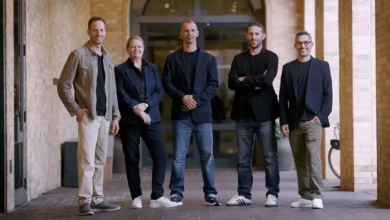
The company’s Chief Product Officer, Paritosh Kumar, stated their focus is on building a holistic health ecosystem centered on nutrition-driven data and seamless integrations. From an AI standpoint, they are implementing tools to enhance user accountability. With over 45 million registered users and several million active monthly, Healthify is also launching a new premium AI plan in the United States. Priced at $20 per month, it includes the updated Ria assistant and personalized meal planning, marking a shift from previous tests with text-based AI and certified coaches.
Future initiatives include forming partnerships for GLP-1-based weight loss programs and collaborating with health tracking device manufacturers to incorporate their data streams directly into Ria. Given its strong growth and adoption in the U.S. market, CEO Tushar Vashisht indicated that Healthify may seek a new round of funding in the near future to further accelerate its vision of an AI-powered health companion.
(Source: TechCrunch)