$100M AI Super PAC’s Attack on Democrat Alex Bores May Have Backfired
▼ Summary
– A super PAC called Leading the Future, backed by $100 million from Silicon Valley figures, is targeting New York Assembly member Alex Bores for his AI regulation efforts.
– Bores coauthored the RAISE Act, which would allow New York’s attorney general to impose up to $30 million in penalties on AI developers for failing to publish safety reports.
– The RAISE Act has passed the New York legislature and awaits Governor Kathy Hochul’s decision, positioning it as a state-level AI safety initiative amid federal pushback.
– Leading the Future plans to spend millions to defeat Bores’ congressional campaign, arguing his legislation threatens AI innovation and job creation in the U.S.
– Bores believes his computer science background and prior engineering experience at Palantir make him a credible threat to AI industry interests.
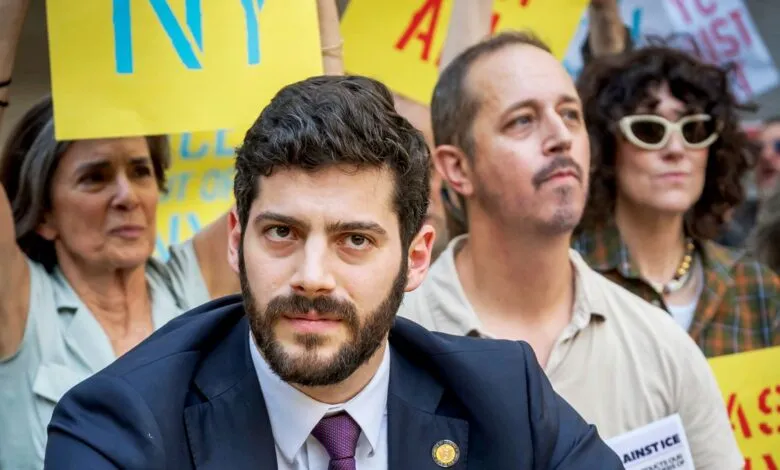
A recent political attack by a well-funded artificial intelligence super PAC appears to have unintentionally amplified the profile of its intended target, New York Assembly member and Democratic congressional candidate Alex Bores. Rather than damaging his campaign, the negative attention has given Bores a platform to discuss his legislative efforts to regulate powerful AI systems. Bores responded to the opposition with a tone of gratitude, framing the PAC’s campaign as an unexpected partnership in raising public awareness about the need for AI safety standards.
Bores, together with state senator Andrew Gounardes, authored the RAISE Act, a significant piece of state legislation focused on AI developer accountability. The bill successfully passed New York’s legislature in June and now awaits action from Governor Kathy Hochul, who must decide to sign or veto it by year’s end. This legislation would grant the state’s attorney general authority to impose civil penalties as high as $30 million on AI companies, including industry giants like OpenAI and Google, if they neglect to publish detailed safety reports about their technologies. The RAISE Act represents one of several state-level initiatives emerging across the U.S. to establish AI safety rules, even as the federal government considers moves that could limit such state regulations.
The introduction of this bill is what drew the opposition of Leading the Future, a super PAC with substantial financial backing from prominent Silicon Valley figures. The group has received $100 million in support from venture capital firm Andreessen Horowitz, along with contributions from OpenAI cofounder Greg Brockman and Palantir cofounder Joe Lonsdale. Leading the Future has declared its intention to spend millions to defeat Bores’ congressional campaign, arguing that his legislation would hinder both New York’s and the nation’s competitiveness in AI innovation and job creation. PAC leaders Zac Moffatt and Josh Vlasto stated that Bores has promoted “ideological and politically motivated legislation” that risks America’s ability to benefit from artificial intelligence. They confirmed the PAC will actively oppose other policymakers who share similar views, though they have not yet identified additional targets.
Bores suggests that his background in technology makes him a particularly credible and therefore threatening figure to AI industry interests. He holds a master’s degree in computer science from Georgia Tech and previously worked for four years as an engineer at Palantir. He left the company in 2019 due to its decision to renew a contract with U.S. Immigration and Customs Enforcement (ICE). Bores believes that his technical expertise is what alarms the PAC’s wealthy backers most. He asserts, “The part that scares Trump’s megadonors the most is that I actually understand AI,” positioning himself as a lawmaker who can engage with the technology on its own terms while advocating for necessary public safeguards.
(Source: Wired)