Google Defends Bumpy Gemini AI Launch as Successful
▼ Summary
– Google has begun rolling out its new Gemini voice assistant for smart speakers, with the company highlighting positive user feedback about its usefulness.
– Early users are reporting issues with Gemini misunderstanding queries and failing to properly control home devices, which are core functions of a voice assistant.
– The rollout is very slow and won’t be available to all users until next spring, coinciding with the launch of Google’s new smart speaker.
– Gemini promises more conversational abilities, natural language understanding, and the ability to handle multiple commands at once for better smart home control.
– Generative AI assistants like Gemini face challenges in reliably performing repetitive smart home tasks, indicating both Google and Amazon still have significant progress to make.
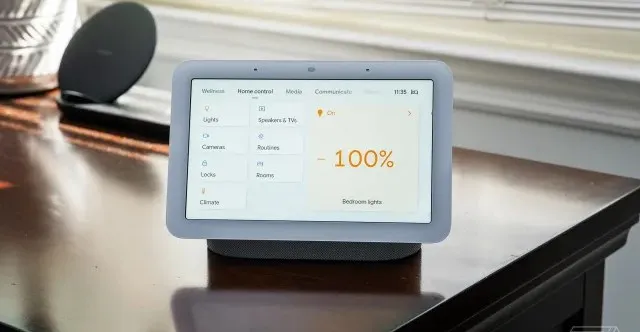
Google is currently characterizing the initial rollout of its Gemini AI voice assistant for smart speakers as a successful endeavor, despite emerging reports of user difficulties. A recent company blog post commemorating the launch quoted a satisfied user, but a deeper look into the accompanying FAQ reveals a less polished picture. Users are reporting fundamental problems, such as the assistant failing to comprehend basic commands and struggling to operate connected home devices reliably.
These issues strike at the core of what a voice assistant is supposed to do. Since Gemini is slated to become the default assistant on all Google Home products, its performance in these basic areas is absolutely critical. The rollout itself is proceeding at a very gradual pace, with a full public launch not expected until next spring, coinciding with the anticipated release of a new Google Home smart speaker.
When it does arrive, Google promises that Gemini will represent a significant upgrade. It is designed to be a more conversational partner, capable of understanding natural language and context in a way its predecessor could not. A key selling point is its purported ability to handle smart home control more intelligently. The idea is that users won’t need to memorize specific phrases and can instead issue multiple, complex commands in a single sentence.
However, early user feedback on platforms like Reddit suggests that this “chaining” of commands is not yet functioning properly. In fact, some indications are that this feature may have regressed from the limited version that was already available on the older Google Assistant. This points to the significant technical hurdles involved in integrating generative AI with smart home ecosystems.
The cautious rollout strategy for Gemini is likely a direct response to these challenges. Unlike the previous generation of assistants that operated on a more predictable “if-then” logic, large language models (LLMs) like the one powering Gemini are inherently different. While they excel at creativity and understanding nuance, they can be less reliable at executing repetitive, precise tasks with consistent accuracy. This inherent unpredictability is a major obstacle that both Google and Amazon, with its own Alexa Plus, are actively working to solve.
Based on early testing of these new AI assistants, it appears there is still a considerable journey ahead before they can be fully trusted to manage the complex and precise demands of a modern smart home. The path to a truly intelligent and reliable home assistant is proving to be a challenging one.
(Source: The Verge)