How Falconeer’s Tomas Sala Survives in the Viral Gaming Era
▼ Summary
– Tomas Sala shifted from hoping his games would succeed to focusing on sustainable development by nurturing communities, inspired by games like Dwarf Fortress.
– The gaming market in 2025 is dominated by viral hits and algorithmic systems on platforms like Steam, where success breeds more visibility in a flywheel effect.
– Sala’s games, The Falconeer and Bulwark, divided audiences at launch, but he improved them post-release through community feedback, making them better over time.
– He released a free major overhaul, The Falconeer: Revolution Remaster, to build trust and support from players, avoiding the “casino” of new game launches.
– Sala now prioritizes working with players to enhance games sustainably over launching new titles, finding this approach more enjoyable and less stressful.
In today’s fiercely competitive gaming landscape, independent developers like Tomas Sala face the constant challenge of standing out in a market increasingly dominated by viral hits. Sala, the creator of titles such as The Falconeer and Bulwark, has navigated this environment by shifting his focus from chasing overnight success to building lasting relationships with his player community. His journey reflects a broader industry trend where sustainable development and direct player engagement are becoming vital for long-term survival.
Sala recalls that his earlier approach involved spending years on a project, releasing it, and hoping for the best. While this method brought some recognition, The Falconeer launched alongside the Xbox Series S/X, gaining significant visibility, it also came with intense scrutiny and mixed reactions. Similarly, Bulwark polarized players, with some praising its originality and others expressing frustration. These experiences taught Sala that the traditional “build and release” model no longer aligned with his goals or well-being.
The gaming market has transformed dramatically over the past decade. Sala observes that 2025 represents what he calls “mean-gaming,” a period defined by the pursuit of viral success. Platforms like Steam operate on algorithmic flywheels: if a game starts selling, it gets shown to more people, accelerating its growth. Recent breakouts like Escape from Duckov, Megabonk, and Peak illustrate how small-team projects can explode in popularity almost overnight, fueled by social media and short-form video content. These titles capture massive attention in brief, intense bursts, often leaving more conventional games in the shadows.
Despite the allure of viral potential, Sala consciously resists this trend. He believes that creating games designed solely to go viral is neither sustainable nor personally fulfilling. Instead, he looks to developers behind titles like Dwarf Fortress and Brigador, who have built enduring businesses by nurturing dedicated communities. These creators, Sala notes, enjoy their work more and face less stress because they aren’t chasing one-off hits. They cultivate audiences who return not just for a game, but for an evolving experience.
This philosophy has shaped Sala’s post-launch strategy. Both The Falconeer and Bulwark received substantial updates and refinements based on player feedback. He admits that criticism can be emotionally difficult, but he values honesty from his community. “You need people to challenge your work, otherwise you can’t improve,” he explains. By maintaining open communication on platforms like Steam, Sala involves players in the development process, fostering mutual respect and resulting in better games.
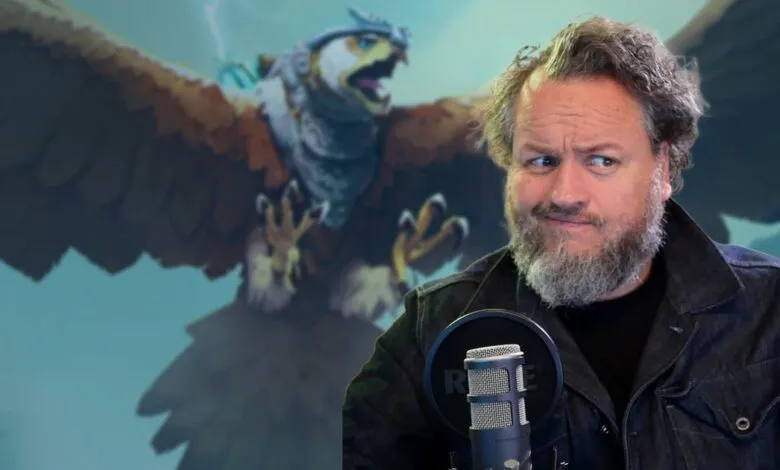
That commitment is evident in The Falconeer: Revolution Remaster, a comprehensive overhaul released for free. Sala integrated technology from Bulwark to expand the game’s world, redesigned the giant falcons, improved travel mechanics, and finally introduced proper mouse and keyboard support. Though the update required significant effort without direct financial return, it reinforced player trust and strengthened his community. For Sala, that support is more valuable than any short-term payout.
This community-centered approach has allowed Sala to reframe his role as a developer. He no longer focuses solely on launching new games but on sustaining and improving existing ones. His upcoming project, Ancient Waves, the third installment in his Ursee trilogy, will benefit from ideas tested openly within Bulwark. By working transparently with players, Sala has found a more relaxed and rewarding way to create. He sums it up: “I’ve grown into someone who wants to not just release games, but to make games sustainably.” In a volatile industry, his model offers a compelling alternative to the pressures of virality.
(Source: EURO GAMER)

