Unlock Your Flow State with Arturia KeyStep mk2
▼ Summary
– The KeyStep mk2 is an updated version of Arturia’s popular MIDI controller, adding new sequencing and composition features while maintaining a similar price and basic design.
– New features include doubled arpeggiator modes (16), eight times more sequencer save slots (64), and generative sequencing tools like Spice and Mutate for creative inspiration.
– The generative features help overcome creative blocks by introducing randomness to arpeggios and sequences, making it easier to start making music quickly.
– Users can build complex polyphonic sequences by recording overdubs and using the “user sequence” arp mode to apply sequence patterns to new chords.
– While functionally improved, the KeyStep mk2 has lower build quality than the original, with a plastic base replacing metal and less solid-feeling controls.
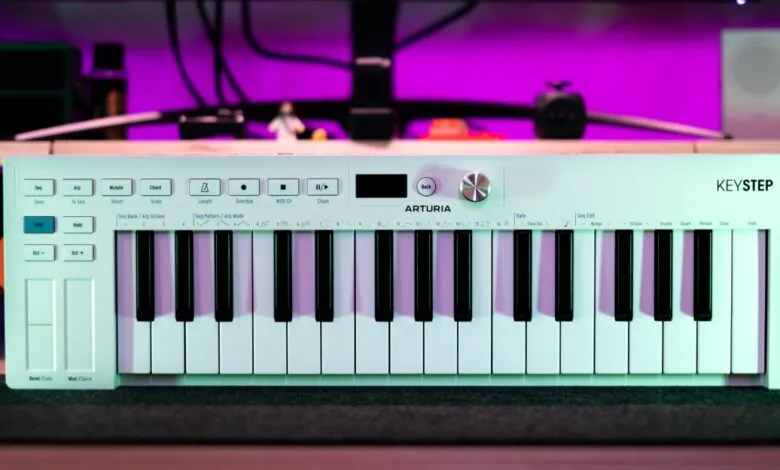
For musicians seeking to overcome creative hurdles and unlock their artistic potential, the Arturia KeyStep mk2 presents a powerful and accessible solution. This updated version of a beloved MIDI controller builds upon its predecessor’s strengths by integrating advanced generative sequencing and arpeggiation tools designed to kickstart the imagination. Priced at $139, it remains an affordable entry point for both studio work and live performance, packing a significant upgrade in creative functionality without a drastic change to its familiar, compact form factor.
Enhancements over the original model are substantial. The arpeggiator now boasts sixteen distinct modes, a considerable jump from the previous eight. Perhaps more critically for composers, the sequencer provides sixty-four save slots, a massive increase that allows for extensive project development. New additions like a dedicated chord mode and a scale mode are particularly useful for musicians still honing their keyboard skills, as they ensure every note played remains musically coherent.
The most transformative features, however, are the generative tools dubbed Spice and Mutate. These functions act as creative catalysts, especially during moments of stagnation. Starting with a simple arpeggio, a press of the Mutate button begins subtly shifting notes, introducing octave jumps and rhythmic rests. A brief tap adds a hint of randomness, while holding it down can completely transform the original pattern into something new and unexpected.
Following this, the Spice parameter takes over, dynamically altering the gate length of notes and introducing ratcheting effects for more complex rhythms. If the initial Spice setting isn’t inspiring, a simple shortcut, holding shift and tapping the Spice touchstrip three times, randomly generates a fresh set of parameters to experiment with. This iterative process of creation and modification makes it remarkably easy to bypass the initial intimidation of a blank canvas.
Once a compelling short phrase is crafted, the polyphonic sequencer becomes the central hub for expansion. Phrases can be duplicated and extended to 32 or 64 steps. The ability to record overdubs means you can layer counter-melodies, chords, and basslines on top of your generative foundation. The workflow can then circle back to the arpeggiator by selecting the “user sequence” mode, which uses your saved sequence as a rhythmic and melodic template for any new chords you play, offering a brilliant method for revitalizing stagnant chord progressions.
Arturia has maintained the controller’s portable, 32-key design, but the control surface has been modernized. The physical knobs and switches have been replaced with clicky buttons, complemented by a new endless encoder and a small OLED screen for clearer parameter feedback.
A notable point of contention lies in the build quality. The original KeyStep featured a sturdy metal base that gave it a premium, road-ready feel. The mk2 model substitutes this for a plastic construction, resulting in a lighter, less substantial unit. While it doesn’t feel cheap, it lacks the indestructible heft of its predecessor.
Ultimately, the KeyStep mk2 isn’t a magical cure for writer’s block. What it provides is a structured yet flexible toolkit for breaking through creative inertia. It shifts the focus from aimless tweaking to active play, encouraging musicians to generate ideas quickly and follow their instincts, making it an invaluable companion for anyone staring down an empty DAW session.
(Source: The Verge)