Battlefield 6: Will EA’s Big Bet Succeed?
▼ Summary
– Battlefield 6 is EA’s ambitious new military shooter aiming to compete with Call of Duty, backed by record preview buzz but representing a major financial gamble.
– Four EA-owned studios collaborated globally on development, with leadership claiming the game is “probably unbeatable” in its offerings to players.
– The game restores a single-player campaign and incorporates lessons from the poorly received Battlefield 2042, including early community playtests that received positive feedback.
– Despite promising signs, success is uncertain as the game must attract players from established rivals and overcome concerns from EA’s recent leveraged buyout by a Saudi-led group.
– EA is exploring generative AI for development efficiency but confirms Battlefield 6 contains no AI-made content, focusing instead on creative human input for this release.
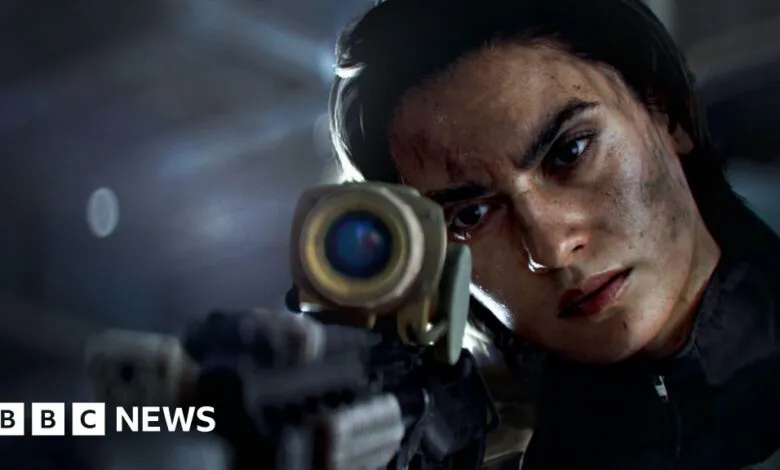
The upcoming release of Battlefield 6 represents a significant strategic move for Electronic Arts as it aims to directly challenge the dominance of the Call of Duty franchise. While the series has historically trailed its primary competitor in both player count and commercial performance, early indicators suggest this new installment could narrow that gap considerably. A recent preview event shattered participation records, generating substantial pre-launch excitement. However, the project remains a major financial gamble for EA, with development costs rumored to be in the hundreds of millions of dollars.
Development is being handled by four studios under the Battlefield Studios umbrella. This collaborative effort includes the original creator, Sweden’s DICE, alongside Canada’s Motive Studios, LA’s Ripple Effect Studios, and the UK’s Criterion. Rebecka Coutaz, who oversees the European studios, expressed strong confidence in the final product, stating that in terms of player offerings, “Battlefield 6 is probably unbeatable.”
This new title follows the poorly received Battlefield 2042, a futuristic entry from four years ago that the franchise never fully recovered from. Coutaz acknowledges that the development team could not have created Battlefield 6 without the hard lessons learned from that previous misstep. One crucial takeaway was the importance of involving the community early; the team conducted exclusive playtests this year, which reportedly yielded “explosively positive” feedback. Another key change is the restoration of a dedicated single-player campaign, a feature absent from the last game.
Fasahat ‘Fas’ Salim, the design director at Criterion, is leading his studio’s work on the campaign, focusing on ensuring the missions are as engaging as possible. He views the multi-studio, cross-continental collaboration as a positive challenge. Working with diverse cultures and backgrounds creates a stimulating daily environment, he notes, describing the entire approach as both new and genuinely exciting. While acknowledging the immense pressure of working on what is likely the biggest project of their careers for many team members, Salim finds the experience thrilling.
That sentiment is shared by lighting artist Vlad Kokhan, a 21-year-old who is contributing to the single-player campaign’s atmospheric effects while simultaneously completing his visual effects degree. A longtime fan of the series, Kokhan finds it surreal to be working on a Battlefield game as his first industry job. Seeing the extensive marketing and knowing he has contributed his own work to the project feels “really crazy” and doesn’t seem entirely real to him.
Industry analysts are forecasting a massive launch, with predictions of up to five million copies sold in the first week. However, true success in the volatile gaming market will be measured over months or even years. To achieve longevity, the game must not only attract players but also retain them, competing for attention against heavyweights like Call of Duty, Fortnite, and Roblox.
When asked about her confidence, Coutaz offers a measured response. She feels both yes and no, explaining that the only thing that truly matters is not disappointing the Battlefield community, a goal she has emphasized for the past four years.
The recent news of EA’s planned sale to a Saudi Arabia-led group for $55 billion has raised concerns about the franchise’s future. The deal, a leveraged buyout that saddles EA with $20 billion in debt, has led to fan worries about potential budget cuts. The company has assured staff of “no immediate changes” to their employment. Coutaz insists that for the Battlefield 6 team, the plan remains unchanged, with details already shared for monthly updates and new content. Her focus, she states, is still on helping her team produce their best career work.
Amid industry-wide discussions, EA has been open about its intentions to use generative AI in game development, a strategy its potential new owners are reportedly banking on to increase profitability. While these tools are controversial, Coutaz clarifies that players will not encounter any GenAI-created content within Battlefield 6. It is currently used in preparatory stages to free up more time for creative tasks. She describes GenAI as “very seducing” and shares the company’s optimism for its potential to foster innovation, though she notes there isn’t yet a seamless way to integrate it into developers’ daily workflows.
Salim shares a pragmatic view on the technology, stating it is “not anything to be scared of in our industry.” He points out that working at the forefront of technology means the team is accustomed to constant change. The real challenge, he believes, is figuring out how to productively incorporate these tools into workflows to elevate their games to the next level.
For now, the entire team’s energy is concentrated on ensuring a successful launch for Battlefield 6. Salim reflects on the years of work done behind closed doors, emphasizing that the ultimate reward is seeing the game in players’ hands. Witnessing people have a great time, getting excited and shouting, is what he and fellow developers look forward to most, they simply want to see players enjoy the final product.
(Source: BBC)