India Pioneers AI-Powered E-Commerce with ChatGPT, Gemini & Claude
▼ Summary
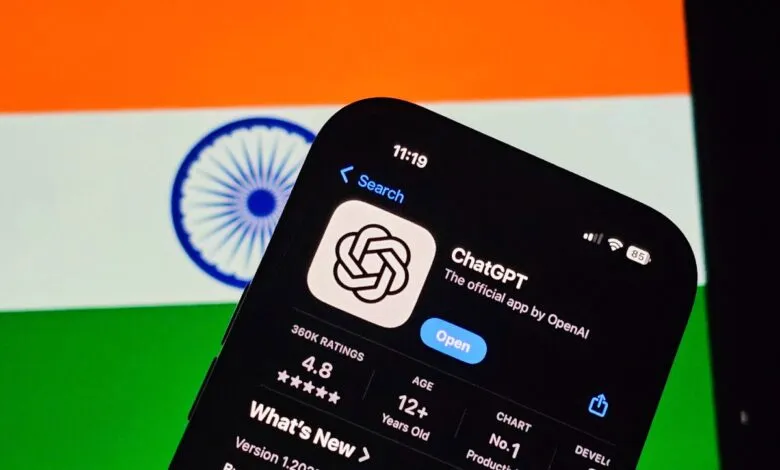
– India has launched a nationwide pilot enabling consumers to shop and pay directly through AI chatbots, starting with ChatGPT and with integrations for Google’s Gemini and Anthropic’s Claude in development.
– The pilot is powered by NPCI’s UPI Reserve Pay and UPI Circle protocols, allowing payments within ChatGPT without switching apps, with Razorpay providing the merchant integration layer.
– Initial merchant partners include Bigbasket for groceries and Vi for mobile recharges, while Axis Bank and Airtel Payments Bank handle the banking infrastructure.
– AI companies will not access payment data, and users authorize transactions through two-factor authentication, with no current revenue-sharing model for partners.
– This initiative aims to drive UPI adoption and deepen engagement in India’s digital economy, with broader merchant rollouts and additional AI chatbot integrations expected in coming months.
India is launching a groundbreaking pilot program that enables consumers to shop and pay directly through artificial intelligence chatbots. OpenAI’s ChatGPT is leading this initiative, with plans to integrate Google’s Gemini and Anthropic’s Claude in the near future. This positions India as a key growth market for global AI firms, leveraging the country’s massive digital user base and advanced payment infrastructure.
The National Payments Corporation of India (NPCI), which operates the widely adopted Unified Payments Interface (UPI), has teamed up with OpenAI and fintech company Razorpay. This collaboration allows shoppers to complete purchases without leaving the ChatGPT environment. Razorpay confirmed the pilot is being rolled out across the country and will become widely accessible in the coming months.
This new shopping experience is built on two innovative UPI features: UPI Reserve Pay, which lets users reserve funds for future transactions with specific merchants, and UPI Circle, a solution that handles UPI authentication within the chat interface. Together, these eliminate the need to switch to external apps or websites. Razorpay developed the merchant integration layer, enabling businesses to accept payments through AI chatbots.
Early participants in the pilot include Bigbasket, an online grocer owned by the Tata Group, and telecom operator Vi. Customers can order groceries or recharge mobile plans directly via ChatGPT. Axis Bank and Airtel Payments Bank are providing the necessary banking support for these transactions.
With over a billion internet users, India represents one of the largest and fastest-growing markets for OpenAI. The company has been actively expanding its presence, introducing a budget-friendly ChatGPT Go subscription last August to attract more users. This commerce pilot is part of a broader strategy to increase user engagement and tap into India’s booming digital economy.
Razorpay co-founder and CEO Harshil Mathur emphasized that the initiative goes beyond simple payments. He described it as “a whole new discovery and commerce experience,” integrating shopping and payment into a single, seamless interaction.
UPI already processes more than 20 billion transactions each month, making it India’s dominant digital payment system. By embedding UPI into AI chatbots, the NPCI aims to drive even greater adoption, especially if consumers begin using conversational agents for everyday shopping.
Mathur also revealed that Razorpay has completed proof-of-concept testing for similar agentic payment experiences with Google’s Gemini and Anthropic’s Claude. These integrations are expected to go live for consumers within a few weeks. The company is in discussions with additional merchants beyond the current partners, anticipating a broader rollout in the next couple of months.
Both Google and Anthropic are experiencing rapid user growth in India. While Google already has a strong foothold through products like Android and YouTube, OpenAI and Anthropic are actively localizing their AI services to capture more of the Indian market.
No specific revenue-sharing model has been established for the agentic payments initiative. However, the program is expected to help AI companies improve user retention. Mathur assured that under the new system, AI firms will not have access to payment data, and users will authorize transactions via two-factor authentication.
Recently, OpenAI introduced an “Instant Checkout” feature and its Agentic Commerce Protocol, developed with Stripe, to help businesses connect with consumers through AI agents. Similarly, Google launched its own Agent Payments Protocol, enabling AI assistants to conduct transactions on behalf of users.
Reeju Datta, co-founder of Cashfree Payments, noted that while the concept is still in its early stages, it holds significant potential. He explained, “Its adoption will naturally grow in line with how fast shopping agents take off.”
In addition to Razorpay, Cashfree Payments has introduced its Agentic Payments MCP, allowing merchants to accept payments directly through their shopping agents. The solution supports all major payment methods, including cards and UPI. However, merchants using Cashfree’s platform must develop their own shopping agents to integrate with the MCP system.
The startup demonstrated the capability through a video where a chatbot helps a user purchase an iPhone. Datta did not disclose the names of initial merchant partners but mentioned they are “exploring this with a few large enterprise merchants across categories like e-commerce and lending.”
(Source: TechCrunch)