GEO Strategies to Boost Your AI’s Visibility in 2025

▼ Summary
– AI search platforms now make initial purchase decisions before buyers visit websites, relying on intent and third-party sources rather than keywords or self-promotional content.
– Brands risk invisibility if not cited in AI answers, with 89% of B2B buyers using AI like ChatGPT for research and AI favoring trusted publications, community threads, and recent content.
– Fixing citation gaps involves getting mentioned on pages that already mention competitors, as one placement can create visibility across multiple AI search variations.
– Engaging in Reddit, Quora, and other user-generated content discussions is crucial, as AI increasingly cites these sources and values genuine insights over promotional content.
– Technical optimizations are essential, including allowing AI crawlers in robots.txt, fixing broken pages and JavaScript issues, and keeping content fresh to ensure AI can access and cite it.
The landscape of search is shifting dramatically, with AI platforms now serving as the primary gateway for discovery and decision-making. Before a potential customer even lands on your website, AI tools like ChatGPT are already shaping their choices. If your brand fails to appear in these AI-generated responses, you’re effectively excluded from consideration. Research shows that nearly 90% of B2B buyers now turn to AI for initial research, making visibility within these systems absolutely essential.
Imagine a scenario where a founder searches for the best CRM for their small SaaS team. The AI responds by pulling information from a TechRadar roundup, a Reddit thread, and a recent comparison article, none of which include your solution. While your competitors secure demos, you remain completely unaware of the opportunity. This happens because AI prioritizes intent over keywords, relying heavily on third-party citations, community discussions, and trusted publications. What others say about you carries more weight than what you say about yourself.
Many tools claiming to optimize for generative engines fall short. They track mentions and list missed prompts but rarely explain why you’re invisible or how to fix it. After analyzing millions of conversations and conducting controlled tests, we’ve identified eight actionable strategies to enhance your AI visibility.
Building off-page authority is critical for AI search visibility. One of the most overlooked yet high-impact tactics involves identifying and addressing citation gaps. A citation gap occurs when AI sources mention competitors but omit your brand. For instance, if TechRadar lists the top collaboration tools and includes Asana and Monday.com but not your product, you’re missing out on countless AI responses. Getting featured on these trusted pages can dramatically increase your visibility across multiple queries.
To bridge these gaps, reach out to authors with genuine value, exclusive data, unique use cases, or recent updates. Securing even ten high-authority placements can multiply your AI presence exponentially.
Another powerful approach involves engaging in user-generated content discussions. AI increasingly favors real user conversations over polished marketing content. Reddit citations alone have surged by over 450% in recent months. By contributing thoughtful insights to relevant threads on platforms like Reddit, Quora, or LinkedIn, without overt self-promotion, you can position your brand as a trusted source. Focus on threads with high engagement, and provide genuine value such as hidden costs, scaling advice, or migration tips.
On the content front, it’s vital to identify and cover topic clusters that AI frequently cites. If multiple articles around a specific intent, like project management tools for small teams, are consistently referenced, create a comprehensive piece that addresses the entire cluster. Ensure your content is not only thorough but also up-to-date, as AI heavily favors recent information. Regularly refresh top-performing pages with new statistics, case studies, or updated FAQs to maintain relevance.
Comparison content also performs exceptionally well in AI search. Users often ask AI to compare options, and pages that provide detailed, balanced comparisons dominate responses. Create structured comparisons that include pricing breakdowns, feature tables, and honest assessments of strengths and weaknesses. AI trusts fair evaluations over biased reviews, so transparency is key.
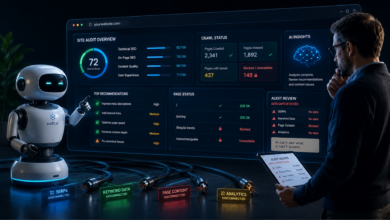
On the technical side, ensure your website is fully accessible to AI crawlers. Many sites inadvertently block essential bots like ChatGPT-User, Claude-Web, or PerplexityBot through their robots.txt file. Whitelist these agents to allow proper crawling. Additionally, monitor for broken pages, server errors, or timeout issues that might prevent AI from accessing your content. If your main content relies on JavaScript to render, AI crawlers may not see it, consider server-side rendering or static site generation as alternatives.
In summary, enhancing your AI visibility hinges on three core actions: earning mentions on trusted sources, creating content that AI wants to cite, and removing technical barriers. While these steps can be managed manually, specialized tools can streamline the process by identifying high-impact opportunities and tracking performance. With AI rapidly becoming the first touchpoint for buyers, prioritizing these strategies is no longer optional, it’s essential for staying competitive.
(Source: Search Engine Journal)