Fix AI Citations: Stop Optimizing for Google, Start Sourcing
▼ Summary
– Traditional SEO rankings on page one do not guarantee visibility in AI outputs because LLMs rely on their own trusted citation sources rather than standard search results.
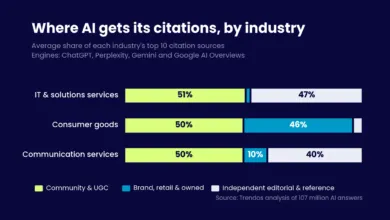
– Citation profiles vary significantly across industries, with specific domains being consistently preferred by different LLM engines like ChatGPT and Gemini.
– The webinar provides a breakdown of which domains each major AI engine cites most frequently, highlighting the divergence between search maps and citation maps.
– Getting cited by these authoritative sources requires targeted outreach and content strategies tailored to the specific requirements of each domain type.
– Attendees will receive industry-specific data and actionable steps to improve their brand’s presence in AI-generated responses through proper source validation.
Why SERP Rankings Don’t Guarantee AI Visibility
You have secured a top spot in the search engine results pages (SERPs) for your primary keywords, leading to the assumption that large language models like ChatGPT and Claude will naturally reference your brand in their responses. However, when you engage with these systems, they often highlight competitors instead of your business, despite your strong organic ranking. This discrepancy exists because standard position tracking tools cannot account for how LLMs independently retrieve and validate sources to construct their answers. A high ranking is achieved within the traditional search ecosystem, but an AI citation is earned through a complex amalgamation of data points that the model deems trustworthy and relevant for validation.
Understanding LLM Trust Patterns Across Industries
Trust profiles vary significantly depending on the sector, meaning that the domains LLMs cite are rarely aligned with the websites dominating the current search map. Each industry tends to revolve around a specific cluster of authoritative sources that models repeatedly pull from, creating a distinct citation profile that differs from one category to another. The composition of these trusted domains also shifts between different engines, such as ChatGPT, Perplexity, and Gemini. Understanding which specific sites hold weight in your niche is crucial for bridging the gap between traditional SEO performance and AI visibility.
Navigating Different Source Requirements
Securing publication or mention in these high-trust domains is primarily a strategic outreach challenge rather than a technical SEO task. The requirements for inclusion vary widely based on the type of source. Some platforms welcome contributed articles, while others demand verified listings and positive reviews before acknowledging a brand’s existence. Still others operate as community-driven spaces where the credibility of the posting account matters just as much as the content itself. These differing standards mean that the timeline for appearing in AI outputs can fluctuate greatly depending on the approach taken. It is essential to identify which source types are most receptive to your industry and prioritize them accordingly.
Strategic Insights from Trendos
The upcoming webinar features Gintare Rimolaityte of Trendos, who will present detailed data regarding which sources each major LLM cites most frequently across various industries. Attendees will receive granular breakdowns tailored to their specific sectors, moving beyond generic advice to actionable, industry-specific strategies. The session will explore the divergence between the citation map and the search map, helping businesses decide where to invest their efforts for maximum impact. Participants will gain a clear, ordered roadmap of the content creation and outreach steps necessary to secure citations. The live event includes a dedicated Q&A segment, encouraging attendees to bring their specific industry challenges and target models for personalized guidance.
(Source: Search Engine Journal)