Solid-State Batteries Enter Mass Production at 6,000 Packs Yearly
▼ Summary
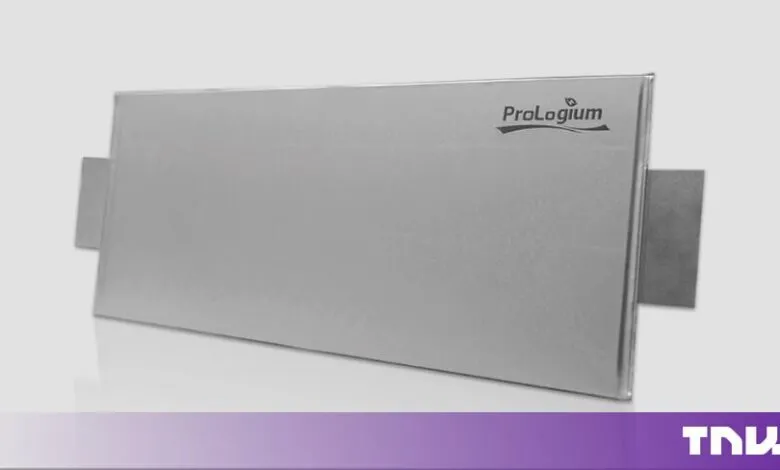
– ProLogium has commenced mass production of its Gen 3.5 all-solid-state battery cells in Taiwan, achieving a verified energy density of 381 Wh/kg.
– The company’s new Dunkirk gigafactory in France is under construction with government subsidies, aiming to scale up to 44 GWh capacity by the early 2030s.
– European battery manufacturing faces significant challenges following Northvolt’s bankruptcy, leaving ProLogium as a key player in the region’s supply chain.
– ProLogium’s cells have passed rigorous testing against Chinese standards and show performance significantly higher than current nickel-manganese-cobalt batteries.
– Despite technical success, questions remain regarding whether ProLogium can deliver large-format cells at European scale quickly enough to meet market demands.
ProLogium has officially commenced mass production of all-solid-state battery cells at its facility in Taiwan, marking a significant milestone for the energy storage industry. The company’s latest generation technology, known as the Gen 3.5 lithium ceramic cell, has achieved an impressive energy density of 381 Wh/kg, a figure verified by TUV Rheinland. This performance metric represents a substantial leap forward, sitting approximately 30% higher than the nickel-manganese-cobalt (NMC) cells currently dominating the electric vehicle market, which typically cap out near 300 Wh/kg. For context, standard lithium iron phosphate batteries operate in a much lower range of 150 to 200 Wh/kg.
The technical robustness of these new cells was further validated through testing under China’s stringent GB/T 43568-2026 standard. Introduced in July, this regulation is designed to distinguish genuine all-solid-state technologies from those that still rely on liquid electrolytes. During vacuum tests conducted at 120°C, the ProLogium cell demonstrated exceptional stability, losing less than 0.05% of its mass, well below the 0.5% threshold allowed by the standard. Additionally, the cells boast a volumetric energy density of 903 Wh/L, suggesting they are compact enough for high-performance applications.
Despite these technological achievements, the current scale of production remains modest. The manufacturing line in Taoyuan operates at an annual capacity of 0.5 GWh, which translates to roughly 6,000 battery packs with an 80 kWh capacity each. While this volume is negligible compared to conventional gigafactories, it serves as a critical proof-of-concept phase. ProLogium has already shipped 2.4 million cells to date, primarily for consumer electronics and specialized uses. These deliveries include over 900,000 units to an American audio equipment supplier and approximately 10,000 automotive samples. The company also maintains a technology cooperation agreement with Mercedes-Benz, signaling early interest from major automakers.
The strategic focus is now shifting toward Europe, where ProLogium is constructing a subsidized gigafactory in Dunkirk, France. Ground was broken on February 10 adjacent to the Gravelines nuclear power plant, leveraging local infrastructure and French subsidies agreed upon in 2023. However, the project’s timeline has seen revisions. Initial plans outlined a phased rollout starting with 0.8 GWh in 2028, scaling to 4 GWh by 2030, and reaching 12 GWh by 2032. Recent communications suggest a revised target of starting at 4 GWh and eventually expanding to 44 GWh, creating some ambiguity regarding the immediate output. This follows a previous slowdown in French expansion efforts announced in 2024.
The urgency of establishing European production capabilities is underscored by the collapse of Northvolt, Europe’s former battery champion. With Northvolt entering bankruptcy and its assets acquired by Lyten, the continent lacks a dominant domestic player. Industry skepticism persists; just three weeks ago, LG Energy Solution’s president stated that solid-state vehicles are likely a decade away, citing challenges in scaling large-format cells. Yet, ProLogium’s move to Dunkirk positions it as a key contender in filling this void. The facility will be Taiwanese-owned, French-subsidied, powered by nuclear energy, and certified against Chinese standards, illustrating the complex geopolitical and industrial realities of modern battery manufacturing. As Europe seeks to rebuild its supply chain independence, the success of the Dunkirk plant will be a decisive factor in determining whether solid-state technology can transition from laboratory promise to mass-market reality.
(Source: The Next Web)