Robot Snakes Search for Quake Survivors in Venezuela Rubble
▼ Summary
– Snake robots, equipped with video cameras, were used to search for survivors in collapsed buildings after Venezuela’s June 24 double earthquake, which killed over 5,000 people.
– Unlike traditional tools like dogs and thermal cameras, snakebots could squeeze into tight spaces in rubble to extend rescuers’ visual reach safely.
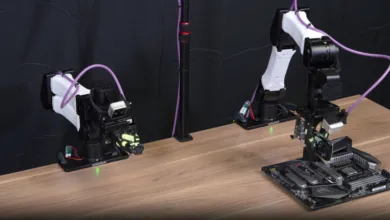
– The robots are 4 feet long, modular, and controlled via a video game controller, with software that autonomously coordinates body movements for travel.
– Howie Choset from Carnegie Mellon University compared the snakebots’ use in search and rescue to performing minimally invasive surgery on a structure.
– The snake robots were first deployed in a real search and rescue scenario following a 2017 earthquake in Mexico City.
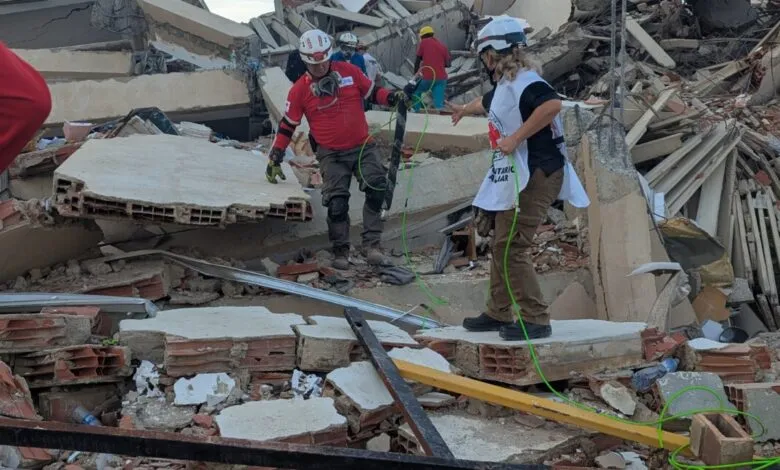
In the wake of a devastating double earthquake that struck Venezuela on June 24, killing over 5,000 people and injuring 16,740 more, international rescue teams turned to an unexpected ally: snake-like robots designed to slither deep into the rubble of collapsed buildings in search of survivors.
These snakebots, equipped with video cameras, offered a unique technological advantage amid a broader toolkit that included trained dogs, seismic and acoustic listening devices, video cameras on sticks, and thermal imaging. Their slender, flexible design allowed them to squeeze into tight spaces where human rescuers and machinery could not reach, extending the visual reach of search teams deep within the debris.
“The reason why snake robots are useful is they can get into tightly packed volumes that machinery and people otherwise cannot,” said Howie Choset, head of the Biorobotics Lab at Carnegie Mellon University in Pittsburgh. “That’s important in search and rescue because we were able to extend the visual reach of the rescue workers in a safe way. In a sense, you’re doing minimally invasive surgery on a structure with a snake robot.”
Each four-foot-long snakebot features a modular design, with individual body segments that can be swapped out, replaced, or upgraded as needed. A human operator controls the robot using a video game controller and a control case laptop tethered to the device. But software algorithms also allow the robot to autonomously coordinate its body segments for the appropriate movements when directed to travel from point A to point B.
Choset and his colleagues have spent nearly two decades developing various versions of these snake robots, which have been used to explore archaeological sites, swim underwater, and even assist with minimally invasive surgery. Their first real-world test in search and rescue came after the earthquake that struck Mexico City on September 19, 2017, when they helped search a collapsed apartment building. Now, in Venezuela, these robotic serpents are proving their worth once again, slithering through destruction to give hope to those trapped beneath.
(Source: Ars Technica)