White House Weighs Next Steps on Chinese AI
▼ Summary
– The White House and Commerce Department are split on how to handle China’s AI rise, with the White House favoring stricter controls and Commerce viewing them as unworkable.
– China’s Moonshot AI lab released its Kimi K3 model, rivaling top US models from Anthropic and OpenAI, escalating tensions.
– Senior White House officials have discussed measures to stop Chinese labs from using “distillation” to train models on US AI, following a major alleged attack by Alibaba on Anthropic.
– Treasury Secretary Scott Bessent described covert distillation as “IP theft” that could lead to sanctions, and the White House announced Moonshot used distillation to develop Kimi K3.
– Commerce Secretary Lutnick has considered incentives for US labs to create open weight models as a counterbalance to China, while also imposing export controls on Anthropic.
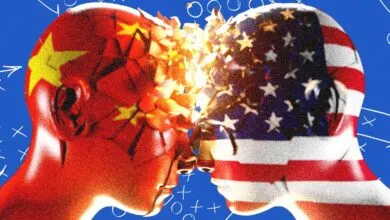
The Trump administration is navigating internal divisions over how to address the rapid advancement of Chinese AI models, with key factions at odds over the best approach. Sources familiar with the deliberations reveal a split between the White House, which favors stricter controls on AI that could soon match U.S. capabilities, and the Commerce Department, which argues such restrictions are impractical.
This tension has intensified following the release of Moonshot AI’s Kimi K3 model, which rivals top U. S. systems from Anthropic and OpenAI. The White House is reportedly considering measures to prevent Chinese labs from using model distillation,a technique where AI is trained by mimicking U. S. models,to accelerate their development. The debate has become a central flash point for the administration’s broader AI strategy.
Senior White House officials have discussed potential actions to curb distillation, particularly after Anthropic accused Chinese tech giant Alibaba of executing the “largest known distillation attack” to date. While a presidential response is expected, it is unlikely to take the form of an executive order, according to one insider. A White House spokesperson declined to comment.
The administration views distillation as a serious threat. On Wednesday, it announced that Moonshot had developed Kimi K3 by distilling Anthropic’s Claude Fable 5 model. Treasury Secretary Scott Bessent labeled covert distillation as “IP theft” and suggested it could lead to sanctions. However, no formal request for input has yet been sent to the Commerce Department, which has its own proposals.
The Commerce Department, led by Howard Lutnick, has become a key player in the intra-administration split, partly due to its oversight of export controls via the Bureau of Industry and Security. Lutnick has explored incentives for top U. S. labs to create open weight models as a counterbalance to China, and has consulted with AI lab leaders in recent weeks. He appears to favor a middle-ground approach, having imposed export controls on Anthropic to enforce compliance, though he remains more flexible than some White House officials.
Earlier this month, the administration’s primary AI concern was the potential for Anthropic’s Claude Mythos and Fable 5 models to expose vulnerabilities in government systems and critical infrastructure. But the rise of Chinese open weight models, which lack safeguards and can be freely downloaded, has escalated policy challenges. These models pose risks of hacking and misuse, adding urgency to the administration’s search for a coherent response.
(Source: Wired)