Top 5 Places AI Agents Fail on Your Website
▼ Summary
– AI agents process websites differently than humans, needing clear, fetchable, and citable facts, and most B2B sites are agent-ready except for pricing pages.
– Pricing is the hardest task for agents, with a 79% first-party answer rate compared to 93% for integrations and 92% for security, causing 77% of all third-party citations.
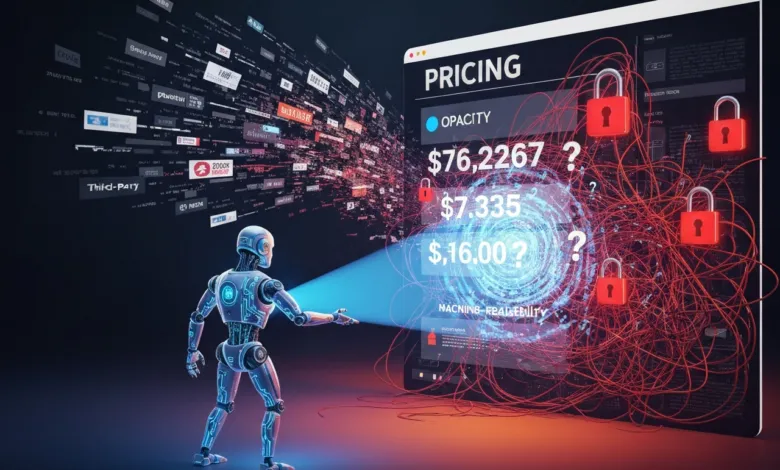
– Agents fail to retrieve pricing due to three reasons: opacity (hidden or vague pricing), machine-readability (hard-to-extract prices from structure or JavaScript), and access friction (blocked or slow pages).
– When agents fall back on third-party sources for pricing, 52% come from editorial content and 46% from directories like G2 or Capterra, leading to spotty, uncontrolled information.
– To make sites agent-proof, companies should publish real prices in text, use crawlable HTML with schema markup, allow AI crawlers, and keep pages light and early in the DOM.
The next frontier of AI is agentic, and it is already reshaping how websites are visited. Google has introduced agentic tasks into Search, bots now outnumber human visitors across the web, and Salesforce notes that 20% of sales originating from agents is a significant milestone. Currently, 60% of companies have AI agents operating in production, and three out of four are actively investing in them.
To assess how well B2B websites handle these new visitors, I collaborated with David Kaufman, founder of Siteline, to analyze where AI agents encounter obstacles. The key finding: most sites are agent-ready, but one critical breaking point exists.
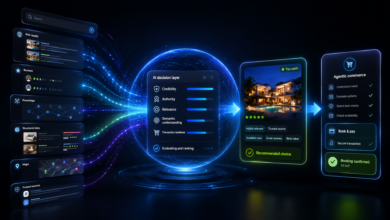
AI agents do not interpret websites like people do. They receive a task, search the web, fetch pages, extract data, and cite sources. A page that persuades a human can still fail an agent if the facts are difficult to find, hard to fetch, or challenging to cite. Essentially, agents turn websites from showrooms into barcodes.
Our methodology was straightforward. The agent had to locate the official site independently, without any starting links. We assigned three buyer-related tasks across 100 B2B products: find pricing and features, integrations, and security or compliance details. Each task was repeated five times to account for the probabilistic nature of LLMs. We measured whether the agent could reliably answer from the vendor’s own site, not simply whether the information existed somewhere online.
1. Pricing is the primary point of failure for first-party sites
When a prospect seeks pricing, they shift from browsing to comparing. This indicates high buyer intent and bottom-of-the-funnel activity. Consequently, pricing is the most challenging and telling test of a site’s ability to serve agents.
Pricing sits at the intersection of three competing needs: companies want to control disclosure, buyers want fast comparison, and agents need clear, fetchable, citable facts. When AI agents attempt to retrieve pricing, they encounter far more difficulty than with security or integration data.
- Pricing and features: 79% first-party answer rate, 84% first-party citation share.Pricing and features alone accounted for 77% of all third-party citations. While some might assume this is because many B2B companies hide their prices, that is only part of the story.2. Hidden pricing is only one factorConcealing prices forces agents to look elsewhere, but even published prices do not fully resolve the issue. Among pricing runs where a vendor did not disclose a real price, 45% cited at least one third-party source. The remaining 55% stayed with first-party citations, usually stating the vendor required contacting sales or did not publish a concrete figure.Even when a vendor displayed a numeric public price, agents still cited a third-party source in 18% of runs. This suggests that price may be on the page but remains difficult for the agent to extract, trust, or cite reliably. If you hide your pricing, ensure no one else writes about it. Once information is out there, it is too late. For complex pricing models, clarity and accessibility for agents are the best strategies.Some pricing pages are visible to humans but not reliable enough for agents to parse and cite. You cannot always trust what your eyes see.3. Agents fail for three distinct reasonsAgents struggle to retrieve pricing from a brand due to opacity, machine-readability, and access friction.
- Opacity means the brand does not publicly disclose the price or it is vaguely packaged. This drives elevated fallback to third-party sources.The impact of errors on agent run cost is significant. Comparing the 90th and 10th percentiles in our study revealed a 4.4x cost difference, 4.7x token usage, and 2.0x time difference. Brands do not pay that bill directly, but it is a useful proxy for friction. The harder your site is to retrieve, the more work an agent must do before it can answer from your page. If your pricing page is blocked, slow, or hard to parse, the agent has two choices: spend more effort on your site or get the answer somewhere else.4. The fallback web is unreliableFallback occurs when agents rely on third-party sources due to the three failure modes. This is the biggest risk because third-party information is inconsistent and beyond your control. Agents do not fall back to one clean source category. They reconstruct pricing from a mixed web of explainers, directories, app stores, partner pages, and low-trust aggregators.Key stats from the 580 pricing third-party citations:
- 52% were editorial, including blogs, media articles, comparison guides, and explainers.These examples highlight the risk of missing pricing transparency and agent stumbling blocks on your site.5. How to make your site agent-proofAn agent-proof pricing page keeps the agent quoting you instead of a directory like Vendr. The fixes address the three failure modes.
- Disclose the fact (opacity): Publish real prices in text for every self-serve tier. If a tier is genuinely custom, explain what drives the number instead of saying “contact sales.” Keep plan names, prices, limits, and features on one canonical pricing URL, and point every other mention back to it. Mark legacy plans clearly so third-party content cannot keep stale tiers alive.Fix opacity and machine-readability first, as they drive most of the fallback. Then run the query yourself: “Find all pricing and features for [product],” and measure it with the skill described above.