Gemini Intelligence ushers in new era for search and commerce

▼ Summary
– Google unveiled Gemini Intelligence, an AI layer running beneath Android on laptops, phones, watches, and glasses, alongside the new Googlebook laptop built around an AI agent that can act on screen content.
– The AI agent shifts search from users clicking links to the agent reading pages, filling forms, and completing tasks on their behalf, fundamentally changing search and commerce.
– A 2025 preprint found that using structured interaction data for agentic AI in ecommerce cut processing requirements by 67.6% and costs by 34% to 63%, with task success at 97.9% versus 98.8%.
– Gemini Intelligence relies on two protocols: WebMCP for websites to declare callable functions, and the Universal Commerce Protocol (UCP) for agents to complete sales, co-developed with major companies like Google, Microsoft, Shopify, and Walmart.
– To prepare for agentic AI, websites should audit key actions, check their Lighthouse Agentic Browsing score, and ensure ecommerce checkouts are reachable through UCP or ACP.
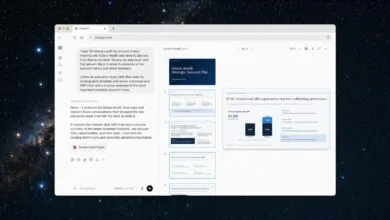
On May 12, during the Android Show, Google officially unveiled Gemini Intelligence, a new AI-powered system that will operate beneath the Android OS across laptops, phones, watches, and glasses. Alongside this announcement, the company introduced the Googlebook, a laptop designed entirely around an AI agent capable of interpreting on-screen content and executing tasks autonomously. For example, pointing at a date in an email triggers an automatic meeting setup, or selecting furniture in an app instantly visualizes it within your own living room.
This development signals a profound shift in how users will search, discover, and shop. With an operating system now able to complete tasks without ever requiring a person to open a webpage, the dynamics of search and commerce are set to transform completely.
How an agentic operating system changes the game
Traditionally, a user with a question or intent would type a query into a search engine, browse a list of links, and choose one. The entire SEO industry was built around earning that single click by ranking high on the results page.
Gemini Intelligence takes a fundamentally different approach. The user still has search intent, but an AI agent now handles the intermediate steps , reading pages, filling out forms, and even completing the task. Instead of you visiting a website, the agent does it on your behalf.
One early example is Chrome Auto Browse, launched in January and built on Gemini 3. This feature manages multi-step processes like researching flights, scheduling appointments, filling out forms, and managing subscriptions. It pauses only to ask for confirmation before making a purchase.
Why ecommerce is moving toward agentic AI
A 2025 preprint evaluated the declared-tools approach across online shopping, authentication, and content management. The study found that providing an agent with pre-structured interaction data reduced processing requirements by 67.6% and cut costs by 34% to 63% compared to parsing full HTML documents. Task success remained nearly identical: 97.9% with the agent versus 98.8% with traditional methods.
The architecture supporting Gemini Intelligence
AI agents naturally prefer sites they can transact with cleanly because it is far more efficient. For Gemini Intelligence to function effectively, agents must be able to reliably perform tasks on websites.
Two key protocols enable this: WebMCP makes a site’s actions callable by an agent, while the Universal Commerce Protocol (UCP) allows the agent to complete a sale. Together, they let the agent finish the job without a human ever loading a page.
WebMCP is an API that allows a website to declare its functions as structured tools an agent can call , such as searching inventory, initiating checkout, or submitting a support request. Think of it as handing an AI agent a labeled menu. Google co-developed this protocol with Microsoft. An origin trial is currently live in Chrome 149, Firefox has committed to the third quarter of 2026, and Safari is expected to follow in the fourth quarter.
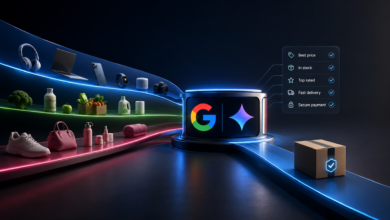
The Universal Commerce Protocol (UCP) gives AI agents a common language to discover products, build a cart, complete checkout, and handle orders without the user ever visiting the site. Google also offers a consumer-facing layer called Universal Cart, which collects items as users move across Search, Gemini, YouTube, and Gmail. UCP was co-developed by Google, Shopify, Walmart, Target, Etsy, Wayfair, PayPal, and Stripe, and launched in January.
How to prepare for agentic AI
Websites are rapidly evolving from destinations into backends , from places people visit to environments where agents quietly operate. The operating system itself is becoming the search layer. The critical question is no longer whether you rank, but whether an AI agent can use your site.
To prepare, audit your most valuable actions , whether that’s a lead form, booking flow, or checkout page , and ask whether an agent could complete them instead. Check your Lighthouse Agentic Browsing score the same way you monitor Core Web Vitals, to see if an agent can use your site in addition to reading it.
If you run an ecommerce operation, verify whether your checkout is reachable through UCP or ACP. Continue your retrieval work, because an agent still needs to find and trust you before it can act on your behalf.
(Source: Search Engine Land)