Android Phones May Soon Alert You to Stingray Surveillance
▼ Summary
– Smartphones hold valuable personal data, making them prime targets for hackers and law enforcement using hard-to-detect tools like Stingrays.
– Stingrays mimic cell towers to trick phones into revealing location data and intercepting calls/messages without the user’s knowledge.
– Law enforcement widely uses Stingrays because suspects often carry cell phones, and the devices operate undetected during surveillance.
– Stingrays can collect data from bystanders’ phones, raising privacy concerns, and may also be used by non-law enforcement groups.
– Android 16 will soon enable phones to detect Stingray spying, though hardware limitations have delayed Google’s security solution.
Smartphones hold vast amounts of sensitive personal data, making them prime targets for both cybercriminals and surveillance efforts. While hackers often dominate headlines, law enforcement agencies also employ sophisticated tools to monitor mobile activity, sometimes without users ever knowing. Among these tools, cell site simulators, commonly known as Stingrays, pose a significant privacy threat by mimicking legitimate cell towers to intercept communications. Fortunately, upcoming changes in Android 16 could empower phones to identify and alert users about these covert surveillance attempts.
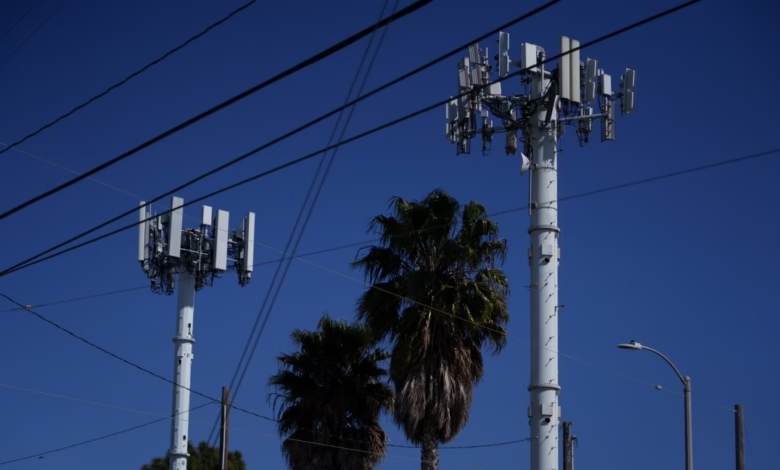
Stingrays work by exploiting a phone’s automatic connection to the strongest available signal. When deployed, these devices masquerade as legitimate cell towers, forcing nearby phones to connect to them instead of genuine network infrastructure. Once linked, operators can track a device’s precise location and even downgrade its connection to older, less secure protocols, enabling the interception of calls and text messages. Since the process happens silently, targets remain unaware their communications are compromised.
The widespread adoption of Stingrays by law enforcement raises concerns beyond targeted surveillance. These devices collect data indiscriminately, meaning bystanders near an investigation could unknowingly have their information swept up in the dragnet. Reports also suggest that unauthorized groups, including foreign actors, have deployed similar technology for espionage. The lack of transparency around their use further complicates the issue, leaving ordinary users vulnerable to unwarranted tracking.
Google has been working on countermeasures for over a year, but hardware limitations delayed progress. With Android 16, the company is finally integrating features that allow phones to detect suspicious tower behavior, such as unexpected signal strength fluctuations or unusual authentication requests. While this won’t prevent surveillance outright, it will provide users with critical alerts, enabling them to take protective steps like disabling cellular data or enabling airplane mode.
As mobile security evolves, the ability to identify and resist Stingray surveillance marks a significant step forward in safeguarding user privacy. With Android’s upcoming update, millions of devices could soon gain the tools needed to fight back against these invasive tactics.
(Source: Ars Technica)