Amazon Has Enough Satellites to Launch Starlink Rival
▼ Summary
– Amazon’s Project Kuiper has deployed 396 satellites, enough for initial continuous service, with commercial availability targeted for mid-2026.
– SpaceX’s Starlink started beta service in 2020 with nearly 900 satellites, offering limited coverage and inconsistent performance, but improved significantly by 2022.
– Early Amazon Kuiper users can expect similar initial limitations as Starlink’s beta, with future satellite launches enhancing performance and coverage.
– SpaceX now operates over 10,000 Starlink satellites, providing robust connectivity in over 160 countries with median download speeds of 200Mbps.
– Amazon is behind schedule on its planned 3,232-satellite constellation, partly due to delays with Blue Origin’s New Glenn rocket.
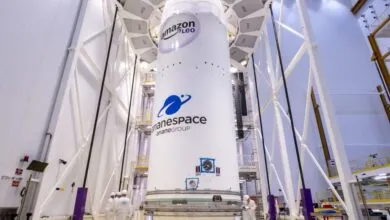
Amazon has announced that its satellite constellation in low-Earth orbit has reached a critical milestone, giving the company enough hardware to begin rolling out its Starlink competitor. Following last night’s launch, Amazon Leo now has 396 satellites deployed. According to Chris Weber, the vice president overseeing business and product for the project, that number is “enough to support continuous service across initial latitudes.” This puts the company firmly on track to hit its “mid-2026” target for commercial availability. But early users should keep their expectations in check.
When SpaceX launched its “Better than nothing beta” in 2020, it already had nearly 900 satellites in orbit. The service initially covered a small region of the northern United States and Canada. Early adopters reported frequent service dropouts and a high sensitivity to obstructions, with download speeds ranging from 50Mbps to 150Mbps and latency between 20ms and 40ms. By 2022, both the coverage area and performance had improved dramatically.
Amazon Leo’s first customers can expect a similar trajectory. Future satellite launches will gradually boost performance, increase capacity, and extend global coverage.
Today, SpaceX operates more than 10,000 Starlink satellites, delivering robust internet connectivity across land, sea, and air in over 160 countries. Performance varies depending on the dish, service tier, time of day, and user location, but median download speeds now sit at 200Mbps, with uploads ranging from 10Mbps to 40Mbps and latency around 25ms.
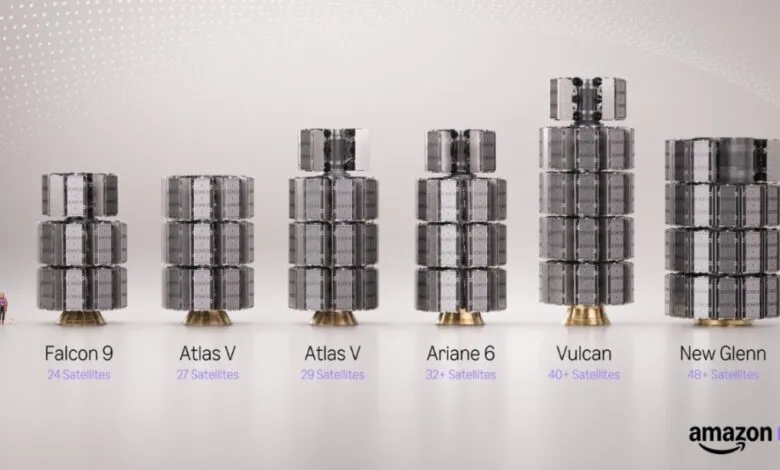
Amazon still has a long road ahead before it can match those numbers. The company plans to launch a total of 3,232 Leo satellites, and it is currently running well behind schedule. Part of the delay stems from Jeff Bezos’ ongoing struggle to get Blue Origin’s reusable New Glenn launch vehicle into regular operation.
(Source: The Verge)