Humanoid Robot Proves a Shockingly Capable Office Intern
▼ Summary
– Flexion Robotics, a Swiss startup founded by ex-Nvidia researchers, trains robots to perform complex tasks like opening doors and climbing stairs by teaching individual skills in simulation and using a master AI to combine them.
– Unlike typical humanoid demos that rely on teleoperation for specific tasks, Flexion’s system trains robots in simulation with limited human instruction for more reliable autonomous performance.
– The system operates by having a main AI model digest videos of humans doing chores, then match learned simulation skills to real-world tasks, controlling the robot’s motors for balance and movement.
– In a demonstration, a Unitree humanoid autonomously retrieved a parcel using stairs and an elevator, then unpacked and placed snacks into a drawer based on a single command.
– The “secret ingredient” is extensive use of reinforcement learning through trial and error across all software layers, from the master AI to motor control.
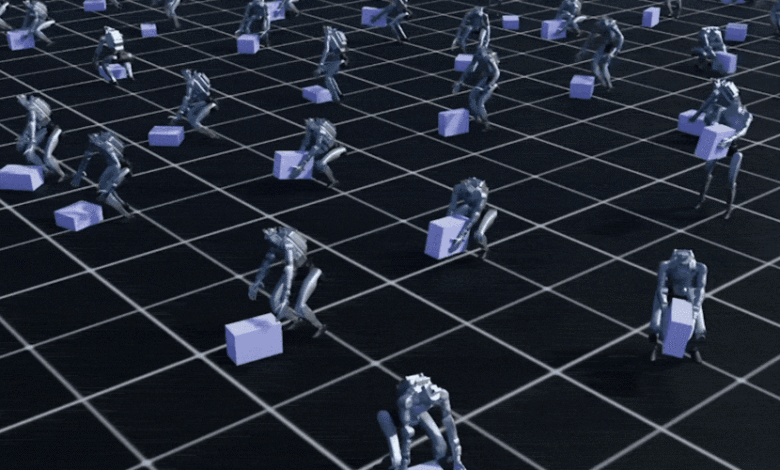
Humanoid robots are already capable of running, dancing, and occasionally knocking people over, but to truly integrate into human environments, they must master the mundane tasks of the workplace. Flexion Robotics, a Swiss startup founded by former Nvidia robotics researchers, believes it has cracked that code. The company has developed a training method that allows robots to handle complex, multi-step tasks like opening doors, climbing stairs, and transporting boxes. The breakthrough lies in teaching individual skills within a simulated environment, then letting a master AI algorithm decide how to combine them in real-world scenarios.
Most promotional videos for humanoid robots showcase machines trained for a single job, such as folding laundry or restocking shelves. Typically, this is achieved through teleoperation, where a human operator controls the robot’s movements behind the scenes. But this method often fails when the robot encounters unfamiliar surroundings. Flexion claims its system is different and far more efficient, relying on simulation-based training with minimal human input.
A demonstration video shows the software in action: a modified Unitree humanoid robot executes the following command autonomously: “A parcel with snacks has been delivered for Flexion. Retrieve it using the stairs and come up using the elevator. Then unpack it and place the items into the empty drawer on the shelf in the snack area.”
Flexion’s approach works by layering different AI systems. The primary AI model learns how to perform chores by analyzing videos of humans completing various tasks. The software then matches the skills it has developed in simulation to those video examples and executes them in the physical world. To reach an office mail room, for instance, the model might determine it needs to open specific doors and use the elevator. The system also manages the robot’s motors, enabling walking, limb movement, and balance.
Nikita Rudin, Flexion’s cofounder and CEO, who previously worked as a robotics research scientist at Nvidia, describes the software’s “secret ingredient” as its heavy reliance on reinforcement learning. This method trains computers to master tasks through repeated trial and error. Every layer of the software, from the top-level AI model down to the simulation and motor control, uses this technique.
(Source: Wired)