Why Universal Remote Controls Always Fail
▼ Summary
– A universal remote is a useful device that can control multiple home entertainment components.
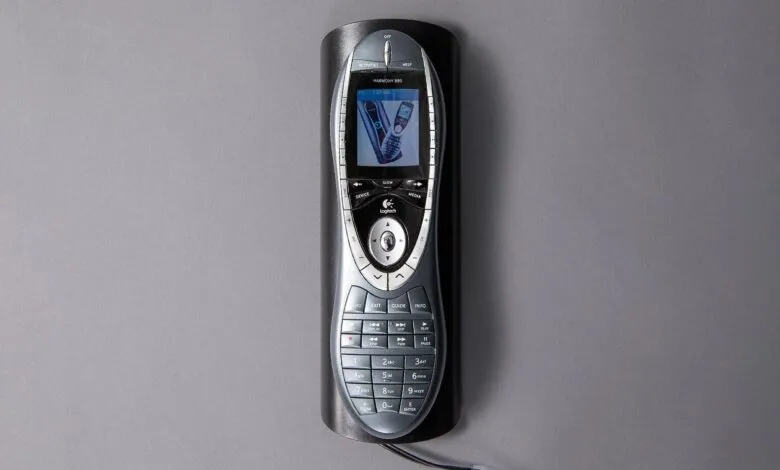
– The Logitech Harmony was considered the best and most important universal remote on the market for many years.
– Despite its success, the Harmony universal remote ultimately failed to sustain its business.
– The Verge’s podcast *Version History* covers the story of the Harmony remote.
– The episode features David Pierce, Nilay Patel, John Higgins, and guest Matt Rogers.
The appeal of a universal remote control is almost self-evident. You have a stack of devices: a TV, a soundbar, a streaming box, a game console. Instead of juggling four different clickers, you pick up one. It should be simple. Yet, despite decades of attempts, the market has proved this concept is remarkably difficult to get right. One product, however, came tantalizingly close to perfection. That product was the Logitech Harmony, and for years, it was widely considered the only universal remote that actually mattered. But even the Harmony, with all its promise, ultimately couldn’t escape the fundamental flaws that plague the category.
In the latest episode of Version History, The Verge’s David Pierce, Nilay Patel, and John Higgins sit down with Matt Rogers, the CEO of Mill and a former co-founder of Nest, to unpack the story of the Harmony’s rise and fall. The conversation digs into why a device that solved a real, universal pain point became a relic rather than a staple.
The core problem, as the discussion reveals, isn’t about hardware. It’s about complexity and maintenance. A universal remote has to know about every device in your home, from obscure AV receivers to the latest streaming sticks. The Harmony required a desktop app to set up, a process so labyrinthine that it often required a dedicated computer just to teach the remote which buttons controlled which inputs. It was powerful, but it was also a project.
Furthermore, the ecosystem of consumer electronics changes constantly. A new soundbar arrives with a different code set. A firmware update changes how a device responds. The remote, which was supposed to simplify your life, suddenly demands you become a system administrator. For the average user, that tradeoff is a non-starter.
The Harmony’s story is a cautionary tale. It proves that a great idea isn’t enough if the execution requires a manual and a support forum. The ultimate failure of the universal remote isn’t that it can’t control everything. It’s that it asks too much of the user to keep it working. As the team discusses, the dream of one remote to rule them all may only be achievable when the devices themselves learn to talk to each other, without needing a middleman that requires a PhD to configure.
(Source: The Verge)