Datadog vets launch Niteshift to challenge Big AI lock-in
▼ Summary
– Niteshift, founded by former Datadog engineers, raised a $7 million seed round led by Greylock to build an AI coding cloud.
– The startup targets companies that fear trusting sensitive code to AI model makers like OpenAI and Anthropic, which compete with their customers.
– Niteshift’s platform routes between multiple coding models and open-source options, allowing customers to avoid vendor lock-in.
– Instead of selling tokens, Niteshift charges per-minute usage rates as an infrastructure provider, not a labor replacement service.
– The company faces a crowded market of AI coding tools, but its founders argue their experience scaling Datadog gives them an edge.
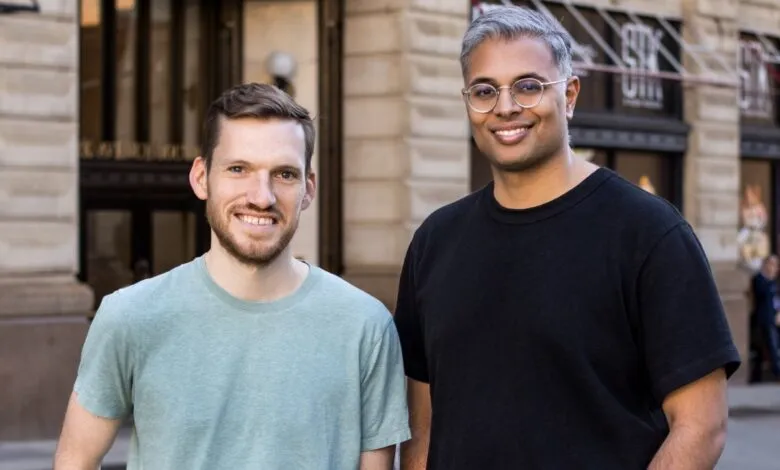
A pair of former Datadog engineers, who helped scale the monitoring giant from a startup to a multi-billion-dollar public company, are now taking aim at a growing anxiety in the AI world: vendor lock-in. Their new venture, Niteshift, has secured a $7 million seed round led by Greylock’s Jerry Chen, with backing from an all-star cast including Reid Hoffman, Datadog co-founders Olivier Pomel and Alexis Lê-Quôc, Braintrust’s Ankur Goyal, and Reflection AI’s Misha Laskin.
The pitch is straightforward, yet provocative. Why would any company hand over its most critical intellectual property,the code that powers its products,directly to the same model makers that are aggressively building competing applications? Founders Sajid Mehmood and Conor Branagan see a pattern repeating. At Datadog, they watched e-commerce clients refuse to build on Amazon Web Services out of fear that Amazon would use their data to crush them. That fear was validated by the so-called “retail apocalypse.” Now, Mehmood argues, the same dynamic is unfolding in AI, as companies like Anthropic and OpenAI move into vertical software markets,a trend he calls the “SaaSocalypse.”
“At Datadog we saw this clearly,” Mehmood said. “A big part of our multicloud business came from e-commerce businesses who did not want to run on Amazon… We are absolutely going to see the same dynamic as Anthropic goes to compete in legal and healthcare and finance and whatever else.”
Niteshift’s solution is not to replace popular coding agents like Claude Code or Codex. Instead, it aims to reduce dependence on them. The startup is building an AI coding cloud that routes between different models,including open-source options,based on the specific needs of each project. The goal is to provide the orchestration and vetting infrastructure that separates the coding model from the rest of the pipeline, giving companies a neutral vendor with no competing agenda.
“Being able to switch between GPT and cloud models is important,” Mehmood said. “Everybody’s worried about getting stepped on by these giants.”
That argument resonated with Greylock’s Chen. “As the frontier labs move up the stack, there’s an opportunity to offer customers an alternate path: unbundling their agents from the infrastructure they run on,” Chen told TechCrunch. “Niteshift is building the platform that enables this for coding agents, letting customers invest deeply in their developer tooling without locking themselves into a single model or agent vendor.”
Unlike many AI startups that sell tokens or “labor replacement intelligence,” Niteshift sells infrastructure. It charges like a cloud provider, using per-minute usage rates. “Everybody else is selling labor replacement intelligence,” Mehmood said. “We’re selling software to agents, as opposed to humans,but we’re still out here selling software.”
The market is undeniably crowded. Competitors include Cursor, Cognition (which just raised $1 billion at a $26 billion valuation), Amazon Bedrock, and OpenRouter (which raised $113 million at a $1.3 billion valuation). Model independence is not a new concept. But Mehmood argues that his team’s experience is the differentiator. He and Branagan didn’t just study the challenges of scaling AI-generated code,they lived them at Datadog, navigating the exact growing pains that large engineering organizations now face. Teams, he said, need infrastructure built by people who have already run, tested, and verified software autonomously in real production environments at massive scale.
(Source: TechCrunch)