IQM, Europe’s first quantum firm, says tech’s future unclear
▼ Summary
– IQM went public on Nasdaq via a SPAC merger at a $1.9 billion valuation, but share prices traded below the IPO price.
– The company’s own prospectus warned that large-scale commercial traction for quantum computing may never occur.
– IQM sells physical quantum computers and cloud services to customers like VTT and Leibniz Supercomputing Centre.
– IQM grew from eight customers in 2024 to 22 in 2025, including two from the private sector.
– The company is the first European quantum firm to list in the U.S. and will also debut on Nasdaq Helsinki.
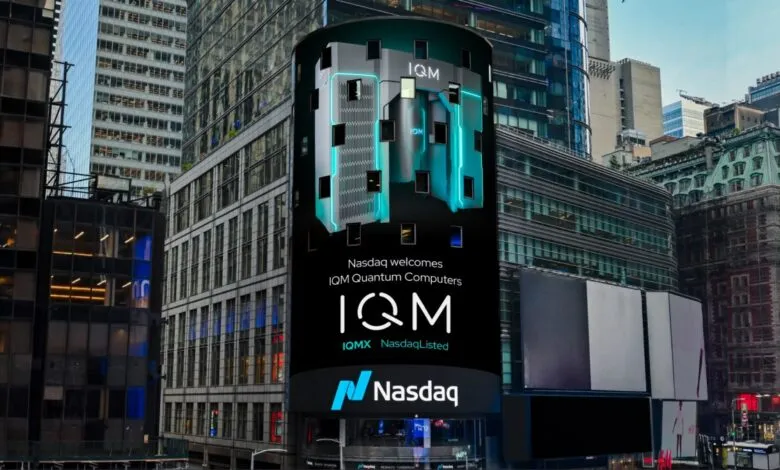
Finland’s IQM, Europe’s first full-stack quantum computing company, made its public market debut on the Nasdaq Thursday through a SPAC merger valued at roughly $1.9 billion. The reception, however, was far from explosive. Shares traded mostly below the IPO price throughout the day, signaling a tepid investor response.
While SPAC mergers often struggle to attract retail enthusiasm in the current climate, IQM’s own prospectus likely dampened the mood. The company candidly acknowledged that “large-scale commercial traction of quantum computing technology may never occur.” To be fair, that caveat applies across the quantum sector. Yet it hasn’t stopped IQM or its peers from landing real customers who already use the technology for simulations and optimization tasks. IQM sells both physical quantum computers and cloud-based access, counting the VTT Technical Research Centre of Finland and Germany’s Leibniz Supercomputing Centre among its clients.
“We sell computers into advanced supercomputing centers and data centers, and we sell computing time through the cloud,” CEO and co-founder Jan Goetz told TechCrunch. The company’s customer base has grown from eight in 2024 to 22 in 2025, with two recent additions coming from the private sector. That expansion is worth celebrating, but it also underscores a critical bottleneck: demand won’t truly scale until the industry achieves quantum advantage , the point at which quantum chips consistently outperform classical computers for a wide range of complex, lengthy tasks. That breakthrough could unlock applications from biotech to fintech and potentially upend encryption. But no one, not even the companies building these machines, can predict when it will arrive.
Investors, however, remain undeterred. They have poured capital into both public and private quantum firms, encouraged by President Trump’s recent executive orders aimed at accelerating the quantum timeline. In response, the U. S. Department of Energy has committed to deploying “the world’s first fault-tolerant, scientifically relevant quantum computer” by 2028. Similar pledges have come from France, Germany, and the U. K., but Trump’s orders carry particular weight for IQM, which recently opened a quantum tech center in Maryland and deployed a system at Oak Ridge National Laboratory, a DOE facility. “We can benefit directly from it,” Goetz said.
Despite its growing U. S. presence, IQM is not shifting its center of gravity across the Atlantic. Alongside its IQMX listing on Nasdaq, where most quantum peers trade, the company is set to debut Friday on Nasdaq Helsinki. There, it expects continued backing from Tesi, Finland’s sovereign wealth fund. IQM’s identity remains deeply tied to Finland. Founded in 2018 as a spinout from Aalto University in Espoo, a tech and quantum hub near Helsinki, roughly two-thirds of its 420 employees still work there. Another hundred are based in Munich, with the rest spread across locations supporting global deployment.
In its prospectus, IQM noted that this dual European-American footprint appealed to RAAQ, the blank-check company that facilitated the SPAC merger. “As evidenced by over €200 million in public support for IQM, European sovereign states and companies have supported IQM’s emergence as a prominent quantum computing company in Europe. IQM also demonstrated its ability to operate outside of Europe,” the RAAQ board stated.
Goetz expressed pride in making IQM the first European quantum company to list in the U. S., narrowly beating French competitor Pasqal, which also announced SPAC plans. “It always feels good to be first and to be a pioneer, but ultimately it’s about long-term success,” he said. The listing will generate roughly €198 million in new liquidity after costs. That follows a $300 million Series B raise last September. “It’s a big success raising very shortly after the Series B,” Goetz noted, adding that the primary goal was to position IQM more prominently in a race still filled with unknowns.
(Source: TechCrunch)