Tech CEOs Struggle With AI Psychosis

▼ Summary
– Tech CEOs may suffer from “AI psychosis,” believing AI agents can fully automate work because they are distant from the detailed, hands-on processes required to make AI effective.
– Box CEO Aaron Levie argues that executives see only the “happy path” results of AI prototypes, missing the complex tasks like debugging code or training models on specific company data.
– Despite record revenues, tech layoffs in the first five months of 2026 nearly matched the total for all of 2025, with many companies citing AI as a reason for job cuts.
– Research shows no robust link between AI adoption and aggregate productivity gains, with studies noting a “productivity paradox” where perceived improvements exceed measured ones.
– Experts predict AI may reach basic competence on most text tasks by 2029, but will still require several more years to outperform humans, risking organizational chaos if CEOs overestimate its current capabilities.
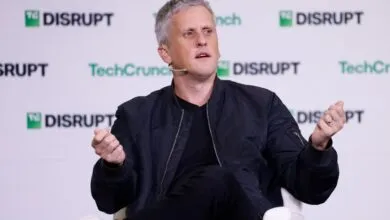
There is a peculiar energy running through the tech industry right now, one that echoes past upheavals like the early days of cloud computing, when costs spiraled out of control. Yet it also feels unprecedented, with record revenues coexisting alongside mass layoffs. A compelling theory has emerged to explain this contradiction: tech executives, particularly CEOs, are suffering from a shared delusion fueled by artificial intelligence. At least one CEO has admitted it publicly: Aaron Levie, founder of Box.
“CEOs are uniquely prone to AI psychosis because they’re sufficiently distant from the last mile of work that still has to happen to generate most value with AI,” Levie posted on X.
According to Levie, CEOs tinker with AI tools, build a prototype, or generate a contract, and then leap to the conclusion that AI agents can handle the entire job. But these executives are not the ones reviewing code, tracking down bugs, or catching calls to hallucinated libraries before software ships. They are not responsible for training models on a company’s unique contract language, nor do they spend days scrutinizing legal documents for hidden clauses.
Levie’s theory suggests that CEOs lack a granular understanding of the workflows they seek to automate. That knowledge gap, however, does not stop them from acting on their assumptions. It is worth clarifying that Levie is no AI skeptic. He regularly posts optimistic content about AI to his 2.7 million followers, writes blog posts like “Headless software is the future,” and actively invests in AI startups as an angel investor.
So what should CEOs do instead? Levie recommends they use AI extensively to truly grasp its capabilities and limitations, “and come out the other side with an appreciation for both the upside and the real work.”
I believe some leaders are genuinely trying to follow that advice, but they appear to be in the minority. In just the first five months of 2026, the tech industry has already seen nearly as many layoffs as in all of 2025. According to Layoffs.fyi, 115,430 people have been laid off from 152 tech companies this year, compared to 124,636 from 275 companies last year. Most of those companies have cited AI as the reason for the cuts. Critics argue that many are AI washing, attributing past or future productivity gains to AI when other business factors are the real drivers.
Some stories are especially startling. Zeb Evans, CEO of project management software ClickUp, proudly announced on X that he laid off 22% of his workforce after deploying roughly 3,000 AI agents for internal tasks. Evans insisted the move was not about cutting costs. Instead, he envisions a workforce where people manage AI agents and quickly review their output, creating what he calls a “100x org.”
Despite such enthusiasm, the data on AI and productivity tells a more cautious story. A meta-analysis published in October in UC Berkeley’s California Management Review found “no robust relationship between AI adoption and aggregate productivity gain.” Research from March by the National Bureau of Economic Research did find that AI adoption improved productivity, but noted a “productivity paradox, in which perceived productivity gains are larger than measured productivity gains.”
MIT researchers, after deploying thousands of agents on real tasks, concluded that agents are not yet producing human-quality work in many cases. They predict that at the current rate of improvement, large language models will “be able to complete most text-related tasks with success rates of, on average, 80%–95% by 2029 at a minimally sufficient quality level.” That means AI is on track for basic competence in about three years, with a few more years needed to outperform humans.
Meanwhile, a Harvard Business Review study found that when everyone uses AI to produce more output, the bottleneck simply shifts to executives. Their work gets stuck waiting for approvals on all the content being generated. If everyone is empowered to act, the chaos OpenAI experienced last year suggests things can quickly spiral.
Are CEOs ready for that reality? If not, the most likely outcome of this ongoing CEO AI psychosis will be nothing less than organizational chaos.
(Source: TechCrunch)