Pichai Admits Google Is Behind on AI Coding
▼ Summary
– Google CEO Sundar Pichai acknowledged the company is “a bit behind” in agentic coding, tool use, instruction following, and long-horizon tasks.
– Pichai attributed the gap to a lack of a developer product surface generating coding data, citing Anthropic’s relationship with Cursor as an example of what Google lacked.
– Google is addressing the gap with Antigravity 2.0, a standalone desktop app for agentic coding, which Pichai says is seeing internal usage double every week.
– Pichai acknowledged early complaints about Gemini 3.5 Flash, including pricing, model quality, and usage limits, promising fixes for regressions and progress on limits soon.
– Pichai described the coding gap as a feedback loop problem, which Google is now building through Antigravity after lacking a similar developer-facing surface.
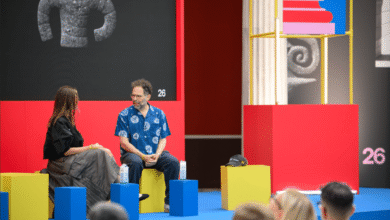
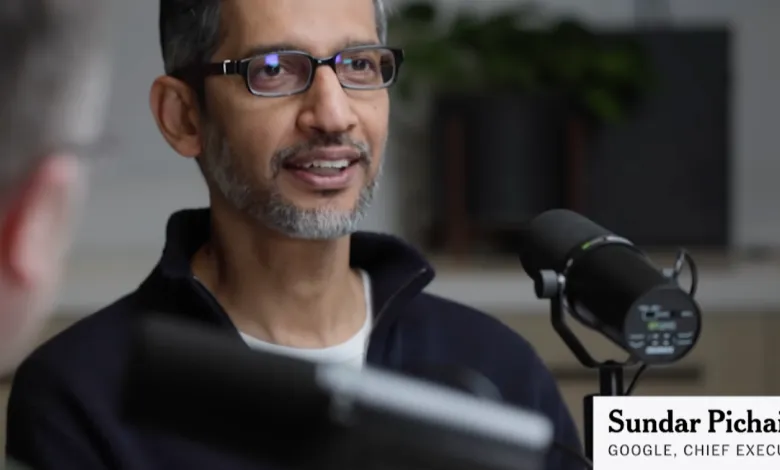
In a candid moment during a recent episode of the New York Times Hard Fork podcast, Google CEO Sundar Pichai admitted the company is “a bit behind” in the race for agentic coding, calling the technology “very foundational” to Google’s AI efforts. The interview came just days after Google’s I/O developer conference, offering a more honest assessment of the competitive landscape than the event’s keynote messaging.
Pichai acknowledged that while Google’s models are “very capable” in areas like text, multimodality, voice, audio, and reasoning, the company trails in agentic coding, tool use, instruction following, and long-horizon tasks. He drew a clear distinction for developers: Google has excelled at creating single-shot web front ends, but the gap widens with longer-running tasks on complex codebases. “There is a gap to the frontier where others are, but we are working, you know, we are well aware of it,” Pichai said.
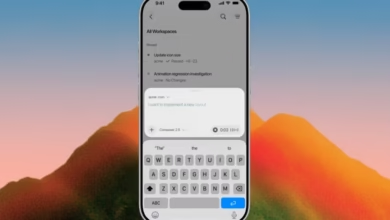
The CEO attributed the lag to a developer product gap. Google lacked the same external coding product surface that generates developer data flows, unlike competitors such as Anthropic, which has a strong relationship with Cursor. “We maybe quite didn’t have the surface,” Pichai added. This is now changing. At I/O, Google introduced Antigravity 2.0, a standalone desktop application for agent-based coding workflows. Internal usage at Google has been growing fast, with Pichai noting, “We are doubling every week and people are really putting the models to work. That is helping us hill climb quite a bit.” He previously called the growth in internal token usage unlike anything he’d seen inside the company.
The interview came a day after Google launched Gemini 3.5 Flash and made it the default model for AI Mode globally. Pichai addressed early complaints about pricing, model quality, and usage limits, calling the restrictions “rightfully a source of frustration.” He explained that Google tightened limits at launch to avoid outages and promised progress “very soon.” On model quality, he acknowledged potential regressions in some areas but said many issues are “easy to address” through post-training and would be fixed quickly.
Pichai’s comments reveal a feedback loop problem at the heart of Google’s competitive position. Coding products that developers use daily generate interaction data that improves the next model. By his own account, Google is now building that loop through Antigravity after lacking a similar developer-facing surface. Looking ahead, Pichai described the coding space as “very dynamic” and noted that Google is making progress. Gemini 3.5 Pro is being used internally and is expected to roll out next month, though it remains unclear whether it will close the coding gap Pichai described.
(Source: Search Engine Journal)