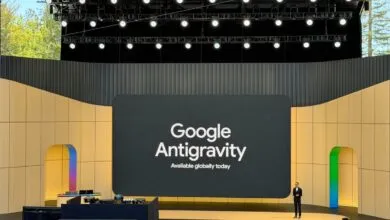
Google’s AI Studio lets anyone build Android apps in minutes

▼ Summary
– Google announced new native Android app creation in Google AI Studio, reducing setup and coding from weeks to minutes.
– Gemini AI will help consumers discover apps on the Play Store and web, expanding developer reach.
– The tools target both seasoned developers for rapid prototyping and non-technical creators, competing with AI development tools like Cursor and Replit.
– Apps are built with Kotlin and Jetpack Compose, supporting hardware sensors, but can only be used personally for now.
– Google plans to allow publishing for family and friends, add Firebase integrations, and use AI for app discovery via “Ask Play” and Gemini.
The era of AI-driven software creation has officially reached Android app development. On Tuesday, Google unveiled new functionality within its web-based Google AI Studio, enabling users to build native Android applications in minutes rather than the weeks typically required for setup and coding.
The company also announced that consumers will soon be able to leverage Gemini AI to discover apps across the Play Store and the web, giving developers fresh avenues for visibility. According to Google, these tools are designed for everyone from experienced developers looking to rapidly prototype ideas to first-time creators with no coding background.
By allowing users to essentially “vibe-code” Android apps through a browser, Google is intensifying competition with other AI-powered development platforms such as Cursor, Replit, Lovable, and Claude Code. At the same time, this move opens Android development to a new audience: non-technical creators. It expands on Google’s earlier integration of Gemini-powered coding within the desktop version of Android Studio.
The apps are built using the Kotlin programming language and Google’s Jetpack Compose toolkit, with support for hardware sensors like GPS, Bluetooth, and NFC. For now, however, the resulting apps are intended for personal use only. Publishing for family and friends remains a future feature.
Google envisions these tools being used to create personal utilities, simple social apps, hardware-enabled experiences, or AI-powered applications. Developers can preview their work using an embedded Android Emulator directly in a web browser, then install the app on a physical Android phone via a USB cable using the integrated Android Debug Bridge (adb) .
For those ready to advance their projects, AI Studio can automatically generate the app record, package the bundle, and upload it to an internal testing track in Google Play Console. This allows continuous iteration and updates on connected devices. Users who want to publish more broadly can export the project to Android Studio by downloading a zip file or pushing it directly to GitHub. Eventually, Google plans to enable publishing for family and friends and add support for Firebase integrations including Firestore, Firebase Auth, and Firebase App Check.
This vision points toward an Android app ecosystem where discovery happens through personal networks, not just the Play Store. But Google is also infusing AI into the Play Store experience itself. A new “Ask Play” AI-powered overlay will let users discover apps through natural conversations with AI inside the store. More significantly, apps will begin appearing in users’ conversations with Gemini on both the web and Android, exposing developers’ work to millions of potential users. This feature will roll out in the coming weeks. Later this year, Gemini will also surface over 450,000 movies and TV shows, along with live sports streaming options, linking users directly to relevant Android apps.
While Google previewed several Android-related announcements last week, it held back this news until the start of its annual developer conference, Google I/O. That timing suggests the company views native Android app creation in AI Studio as a major development, closely tied to its broader theme of putting AI to practical use. Across this year’s event, AI was woven into everything from workspace productivity tools to search, mobile apps, and beyond.
(Source: TechCrunch)