Find Data Centers Near You on This Interactive Map
▼ Summary
– Oregon resident Isabelle Reksopuro built an interactive map tracking AI policy and data center backlash after learning about a dispute over land and water for Google’s data centers in The Dalles.
– The Dalles sought ownership of 150 acres of Mount Hood National Forest for its watershed, but critics claim the city is securing more water for Google, which already uses about one-third of the city’s water supply.
– Reksopuro’s map, powered by Claude, self-updates four times daily by searching for new sources and adding summaries to a news feed.
– She designed the map to be simple for anyone, including her younger sisters, to explore data center locations and related policies rather than relying on TikTok for information.
– Reksopuro believes tech giants benefit from opaque data center policies, and public awareness would give communities leverage to negotiate for job training, tax revenue, and environmental monitoring.
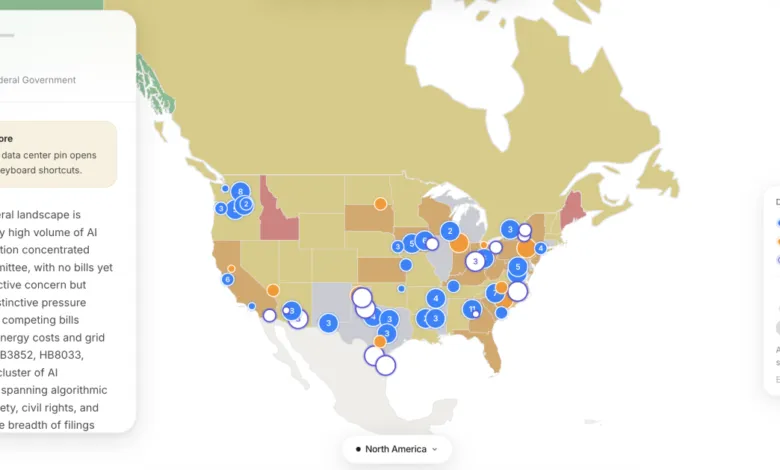
An Oregon resident concerned about the lack of transparency surrounding data center development took matters into her own hands by creating an interactive global map that tracks AI policy and related opposition in real time.
Isabelle Reksopuro, a University of Washington student studying the intersection of technology and public policy, became frustrated when she heard conflicting reports about Google’s land use in her home state for its data centers. “There’s a lot of misinformation about data centers,” she said. “Google has denied taking that land.” She clarified that The Dalles, a city near the Washington border, actually requested ownership of a 150-acre section of Mount Hood National Forest to access the mountain’s watershed for its growing population of roughly 16,010 people. Critics, including environmental advocates, argue that the city is really trying to secure more water for Google’s massive data center campus, which already uses about one-third of the city’s water supply.
This controversy spurred Reksopuro to investigate how other communities are reacting to similar projects. She built her map using data scraped from legislation on data centers and information from Epoch AI. The tool is designed for accessibility, allowing anyone to explore what data centers exist in their area and what policies are being enacted. “I wanted it to be something that my younger sisters could play through and explore to understand what are the data centers in the area and what’s actually being done about it,” she said, hoping to educate them outside of social media platforms like TikTok.
The map is powered by Claude, an AI that searches for new sources four times daily and cross-references them with Reksopuro’s existing database. “Once it does that, it will write a new summary, add it to the news feed, and populate it on the sidebar,” she explained. “I wanted it to be self-updating, since I’m also a student.”
While Reksopuro does not oppose data centers outright, she believes technology companies benefit from the current lack of transparency around data center policies. “Right now, it’s this really opaque thing , and all of a sudden, there’s a facility,” she said. She argues that if communities knew about planned data centers in advance, they could negotiate for job training programs, tax revenue, environmental monitoring, and other benefits. “I think that if people knew about data centers beforehand, it would give them leverage,” she added.
(Source: The Verge)