Turn Webinars Into Your Top Lead Gen Channel in 5 Phases
▼ Summary
– B2B marketers report three main webinar pain points: heavy workload with low ROI, insufficient qualified leads, and a lack of clear attribution for leadership.
– The article outlines a five-phase system for high-converting webinars: attract the right ICP, simplify setup, qualify with content, generate pipeline signals live, and follow up to convert.
– Choose webinar topics based on business objectives and target audience needs, not just personal or leadership interest, using data from sales teams and analytics tools.
– A conversion-optimized landing page should hook with the title, build trust with the speaker, and make registration the obvious next step.
– Measure success with metrics leadership cares about, such as MQL conversion rate and pipeline influence in dollars, rather than just registrations or attendance rates.
A few weeks ago, we sat down with B2B marketers running webinar programs at agencies and in-house teams. We asked what was working, what wasn’t, and where they felt stuck.
Three recurring pain points surfaced in nearly every conversation:
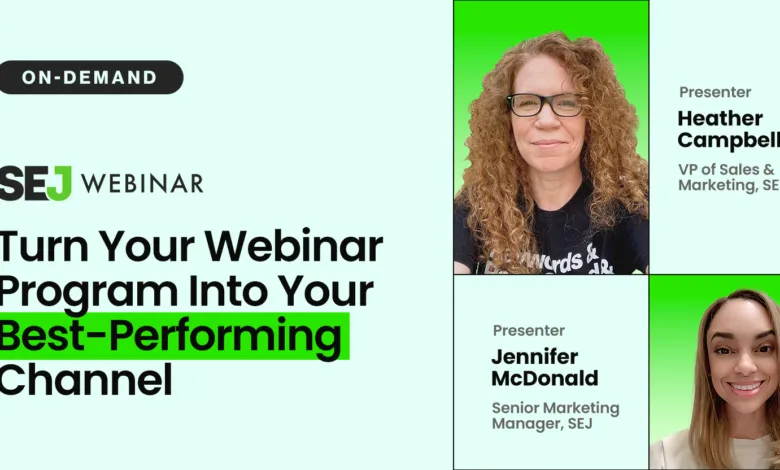
- “Webinars are a heavy lift with little proven ROI.”If any of those statements sound familiar, you’re not alone, and more importantly, you’re not the problem. The system around you is.The real leaks in the pipeline happen during topic selection, promotion, follow-up, and measurement. Those gaps are precisely what we addressed live last week in our 60-minute tell-all webinar. We showed attendees how to transform webinars into their top-performing lead gen channel.Here’s the system we use to run 50+ webinars a year with just a three-person team.
The 5 Phases of a Webinar That Converts
Attract the Right ICP: topic, speaker, title. Make Setup Easy: platform and landing page. Content That Qualifies: copy, promotion, emails, handouts. Going Live: generating pipeline signals. Follow-up & Convert: segment, repurpose, measure.
Below are the key takeaways from each phase. For the full nuances that help you drive more qualified leads on your next webinar, watch the on-demand session.
One live attendee summed it up: “Great information, I had several takeaways as we did our first webinar on Tuesday. Thanks!”
Here’s what she learned.
How to Choose Your Webinar Topic Based on Business Needs, Not Just a Fun Idea
Before any tactics matter, get clear on how the webinar can support business objectives. Who is the target audience that best fills that objective? Then, finally, what does that audience need before they can convert?
Start by asking yourself: Are you driving net new pipeline to showcase your brand as a thought leader? Building credibility for a new product line? Or warming an account list for sales?
We share more topic identification questions in the on-demand session, but the pattern is clear: each goal points to a different topic, speaker, promo plan, and follow-up strategy.
The key is to stop picking topics based on what you want to talk about (and yes, that includes leadership).
5 Tools That Identify High-Conversion Topic Gaps for Webinars
The best marketing strategies are built on data, not just excitement.
- Sales Team CRM: Learn the key events to track.Your first stop: go to your sales team and ask one question: “What’s the number one thing prospects are struggling with right now?” You’ll get your next three webinar topics from that single conversation. If you don’t have a sales team, we share four data-driven ways to pick your topic in the session.Once you have a personalized topic, you can proceed with the rest of the creation process.
Phase 1: Choose a Formulated Title That Specifically Attracts Your Target Audience
The title is your first impression and the most impactful element for driving the right ICPs. A great webinar title tells the reader you understand their pain and what they can expect from giving you their time.
For context, one interviewee said a single title change doubled their attendance.
Best Webinar Title Formulas:
- [Pain] + [Promised Outcome]: Name the problem, promise the fix.We also share two title tests you can run to ensure your title attracts the right leads.
Phase 2: How to Make Webinar Setup Easy
Teams that run profitable webinars at scale setup once and refine as new tests prove successful. Utilize templates as much as possible.
From templating platform setup, emails, and landing page copy, to duplicating nurture sequences, this is where you ease time to market and reduce team load.
In that setup, look for these recommended webinar platform functionalities:
- Breakout rooms for high-intent conversations.The most impactful element to template is a conversion-optimized landing page that speaks directly to their pain. Your landing page should do three things: hook them with the title, build trust with the speaker and the promised outcome, and make registering feel like the obvious next step. Every element on that page must earn its spot.
Phase 3: How to Create & Distribute Content That Qualifies
This phase is where lead quality gets decided. Most webinar programs frame promotion as a seat-filling exercise, but the real job is filtering for intent.
The wrong title and channel mix pull a wide audience with no buying signal. The right ones bring the ICPs your sales team actually wants to talk to. That comes down to three leverage points:
- A promo cadence built on relevance instead of frequency.Get those right, and your webinar program will stop chasing volume and start producing pipeline.
Phase 4: What to Do When Going Live to Warm Your Target Audience
This is what you planned for, and this is where most presenters need coaching to teach, not pitch. B2B buyers convert on trust, and this is your time to show expertise and thought leadership.
Your webinar should mirror their pain (based on your earlier research) and walk them through actionable takeaways. Sell through education, focus on their needs, tell them how to do something, and then show why they need your solution.
The live hour isn’t just content delivery. It’s where intent shows up. Every poll response, Q&A entry, and breakout room opt-in is behavioral data your sales team can act on, often more reliable than a form-fill or download. Done right, the live hour produces a list of high-intent leads sales is already eager to chase.
Phase 5: How to Follow-Up After a Webinar and Convert Attendees
First, consider the 5% Rule. Reach out to the top 5% of attendees immediately. The other 95% aren’t ready to buy. Stop selling to them. Push value, share takeaways, and send a related framework. When they move into market, you’re the brand they already trust. If you treat both groups the same, you lose both.
How to Measure What Leadership Cares About
If your CMO thinks webinars are a “nice to have,” it’s almost never a webinar problem. It’s a measurement problem. Stop reporting on registrations, attendance rates, and recording views. Start reporting on breakout room opt-ins, MQL conversion rate, pipeline influence in dollars, and closed-won deals tied to webinar engagement.
When you put the right stats in front of leadership, webinars stop being a line item and start being a revenue channel.
Watch the Full Webinar Session
The recording goes deeper on each phase, includes live polls and audience Q&A, and walks through how we built and promoted this exact webinar as a worked example.
Build Your Next Webinar With Us – Cohort Starts May 11
Reading about a system is not the same as running one. Our four-week cohort fixes that. You’ll work through all five phases with us, from topic selection to landing page, promo plan, live execution, and follow-up. You leave with a shipped webinar that drives real registrations and a repeatable playbook for the next one.
Seats are limited to 20 so every team gets direct feedback. Reserve your seat. Cohort starts May 11.
(Source: Search Engine Journal)