Moto G Stylus finally sheds its bloatware problem
▼ Summary
– The 2026 Moto G Stylus features an active stylus with pressure sensitivity, handwriting recognition, and a text magnify feature, plus a headphone jack and MicroSD slot.
– Bloatware has been reduced compared to previous models, with fewer pre-downloaded apps and the removal of the privacy-concerning MotoHub widget.
– The phone’s price increased to $499, but its Snapdragon 6 Gen 3 chipset and 8GB of RAM show occasional lag, raising concerns about future performance.
– Camera quality is a weakness, with overly punchy colors and red-channel clipping in the main lens, and a fake third camera lens housing a light sensor.
– Software support is limited to two major OS upgrades and three years of security updates, falling short of competitors like the Google Pixel 10A.
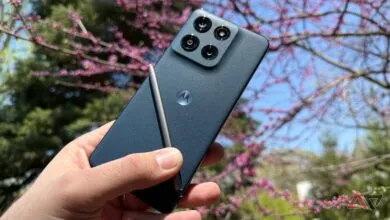
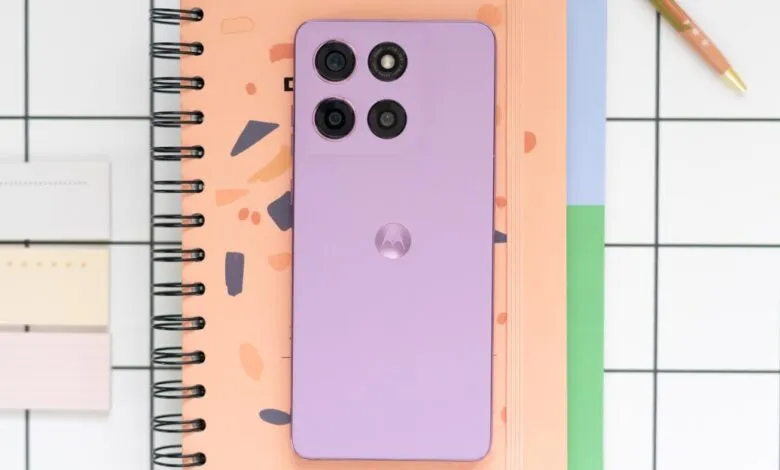
The 2026 edition of the Moto G Stylus finally feels like a phone worth talking about, and for the first time in years, its biggest problem isn’t the junk software that comes preinstalled. My review unit arrived in a charming lilac finish, with a pleasantly textured back panel, a MicroSD slot, and what might be the last headphone jack still standing on a mainstream phone sold in North America. The stylus itself has evolved from a basic plastic stick into an active tool with genuinely useful tricks.
Let’s talk about the bloatware situation, because it has been a persistent black mark on Motorola’s reputation. It is still there, but the scale has shifted dramatically. Instead of three unwanted app folders cluttering the home screen, there is now just one. The dreaded full-page MotoHub widget, which raised serious privacy concerns, is gone. The third-party weather app now clearly labels itself as “developed by OneLouder Apps” on its splash screen, a transparency I specifically demanded in my 2023 review. If an app wants to track your location constantly, you should at least know who built it without a deep dive into search results.
The fact that bloatware has dropped to a secondary concern is a major win. However, the price has climbed to $499, a full $100 increase year over year. The ongoing memory crisis likely contributes to this jump, but it pushes the Stylus squarely into midrange territory. And here is the critical question: does it perform like a midrange phone should?
Once you clear out the unwanted apps, the experience improves significantly. The active stylus is a genuine highlight. It is pressure sensitive, handles handwriting recognition reasonably well, and can even magnify text when you hover over it. I suspect that feature will become invaluable as my eyes age. The notes app now supports collections, transforming it from a chaotic dumping ground into an organized repository for random thoughts and discoveries. Honestly, the stylus integration rivals the much pricier Samsung Galaxy S26 Ultra, which is no small compliment.
But the Moto G Stylus stumbles on fundamentals, particularly camera performance. The main 50-megapixel sensor with optical stabilization is adequate in daylight, but colors are aggressively punchy, and red-channel clipping introduces unpleasant shifts. The result is an artificial look. The ultrawide camera doubles as a macro lens, offering autofocus for close-ups that actually produce usable images, a welcome improvement over the terrible dedicated macro cameras of the past.
Now, look at the back of the phone. You will see four lens-like circles. One houses the flash. Two are actual cameras. The fourth is a “3-in-1 light sensor.” Motorola spokesperson Brendan Hall explained it “helps with Auto White Balance, Exposure, and Anti-Flicker.” Which, fine. But its primary job seems to be making the phone look like it has three rear cameras. That feels like a cheap trick.
Durability is excellent. The phone boasts both IP68 and IP69 ratings, meaning it can survive water immersion and high-pressure spray. Software support, however, is less impressive: only two major OS upgrades and three years of security updates, delivered slowly by Motorola’s own track record.
The Snapdragon 6 Gen 3 chipset with 8GB of RAM feels just adequate. I noticed slight hesitations after waking the phone and opening apps. It is not a dealbreaker today, but this is the fastest the phone will ever run. I worry about noticeable slowdowns after its two scheduled OS upgrades.
I genuinely appreciate the Moto G Stylus. It offers something truly different: an active stylus, a stylish design, a headphone jack, and a MicroSD slot. The bloatware is more manageable. But the cameras need improvement, and the software support is too thin to compete with the Google Pixel 10A, the undefeated midrange champion.
At a significant discount, the Moto G Stylus becomes a much more compelling value. Before the memory crisis, I would have predicted Motorola would offer steep discounts quickly. Now, I am not so sure. If you want a phone that lasts as long as possible and you take a lot of photos, stick with the Pixel.
(Source: The Verge)