BMW 7 Series adopts Neue Klasse platform
▼ Summary
– BMW has unveiled its new 7 Series, built on the next-generation “Neue Klasse” electric vehicle platform, marking the technology’s arrival in its flagship model.
– The vehicle will launch with six powertrain variants, including electric, internal combustion, and plug-in hybrid models, reflecting diverse global market demands.
– Its electric i7 models feature new high-density batteries from Rimac, offering over 350 miles of estimated range and 250 kW fast-charging capability.
– The interior is dominated by multiple screens, including a new Panoramic Vision display and an optional 31-inch rear Theater Screen, emphasizing its role as a “computing platform.”
– Pricing starts at $99,800 for the base gas model, with electric versions beginning at $106,200, representing a modest increase over the previous model year.
The long wait is over for BMW enthusiasts. The automaker’s flagship sedan, the BMW 7 Series, has officially transitioned to the advanced Neue Klasse platform, a move first hinted at in 2021. Unveiled simultaneously in New York and Beijing, this new generation blends the brand’s signature, if debated, styling with a profound technological shift. BMW is signaling a bold evolution from its “Ultimate Driving Machine” heritage toward becoming an Ultimate Computing Platform, embedding sophisticated digital architecture into a luxury experience that starts above the $100,000 mark.
A key strategic decision is the model’s extensive lineup. The new 7 Series will launch with six distinct variants, catering to diverse global market demands. This includes the i7 50 xDrive and i7 60 xDrive electric models, the 740 and 740 xDrive internal combustion versions, a 750e xDrive plug-in hybrid, and a planned V8 M performance model for 2027. This multi-powertrain approach reflects the current automotive landscape, where EV adoption rates vary significantly by region.
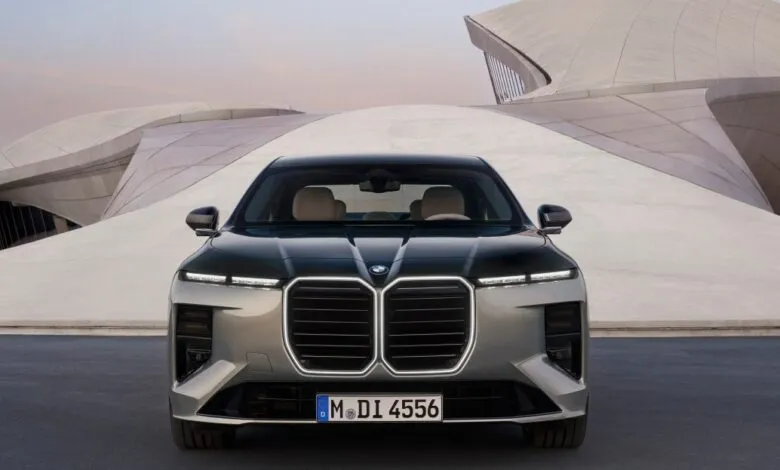
Externally, the design remains assertive. The large illuminated kidney grille, now slightly slimmer, is flanked by accent light “eyebrows,” while adaptive headlights are discreetly integrated into the front air curtains. Despite polarized opinions on this aesthetic, market performance has validated BMW’s direction. The company has further elevated exterior luxury with options like adaptive LED headlights featuring crystal elements, intricate light projection carpets for entry, and an exclusive painting process that manually blends matte and metallic finishes, reportedly requiring over 75 hours per vehicle.
The true revolution, however, lies beneath the surface. The electric i7 models benefit from a new Gen6 cylindrical battery developed through a partnership with Rimac. This technology increases energy density by 20 percent, providing a usable capacity of 112.5 kWh and an EPA-estimated range exceeding 350 miles. Charging speeds see a major upgrade, with a maximum rate of 250 kW enabling a 10 to 80 percent charge in approximately 28 minutes. Furthermore, a native NACS charging port will grant seamless access to Tesla’s extensive Supercharger network. On performance, the i7 60 xDrive delivers 536 horsepower, while the i7 50 xDrive offers 449 horsepower, with both featuring dual-motor all-wheel drive.
The Neue Klasse platform’s core is its centralized computing system, or “superbrain.” This architecture consolidates functions into four control units, enabling advanced features like an AI-enhanced voice assistant, sophisticated driver-assist systems including automated lane changes, and comprehensive over-the-air software updates. Complementing this tech-forward approach is a “shy tech” design philosophy, which hides sensors and hardware to maintain a clean, serene cabin aesthetic until they are actively needed.
This subtlety does not extend to the interior displays. The cabin is dominated by multiple screens, including a 17.9-inch floating central display and a 14.6-inch touchscreen for the front passenger. A standout feature is BMW Panoramic Vision, a projected information band across the base of the windshield that serves as a shared instrument cluster. For rear passengers, an optional 31.3-inch Theater Screen with 8K resolution descends from the headliner, operating as a dedicated Fire TV device for streaming over the vehicle’s 5G connection.
This extensive digital suite commands a premium. Pricing starts at $99,800 for the gas-powered 740, rising to $102,800 for the 740 xDrive. The electric i7 50 xDrive begins at $106,200, with the range-topping i7 60 xDrive starting at $124,700. These figures represent a modest increase over the previous model year, attributed to the new platform and battery technology.
As the 7 Series arrives at dealerships this summer, it enters a competitive arena against rivals like the Mercedes-Benz EQS and Lucid Air. BMW’s strategy of offering multiple powertrain options, including a forthcoming plug-in hybrid, provides a distinct advantage by blending luxury with customer choice, potentially creating a compelling formula in the high-end sedan market.
(Source: The Verge)