AI Startup Identifies Promising Drug Candidates
▼ Summary
– Google DeepMind’s AI for predicting protein structures is a major scientific advance, but a bottleneck exists in characterizing the resulting drug candidates for testing and production.
– The startup 10x Science, founded by biochemists and an AI expert, raised $4.8 million to address this by speeding up molecular characterization.
– Its platform combines chemistry-based algorithms with AI agents to interpret complex mass spectrometry data, making analyses faster and traceable for regulatory compliance.
– An early user, a scientist at an analysis firm, reports the platform efficiently automates data interpretation and adapts to different molecules, accelerating research.
– Investors see the platform as a valuable SaaS tool for drug development that generates recurring revenue, independent of any single drug’s success.
While Google DeepMind’s breakthroughs in predicting protein structures have showcased artificial intelligence’s transformative power in science, a new challenge has emerged. The sheer volume of promising drug candidates generated by AI models has created a significant bottleneck in the characterization process. Before any potential treatment can proceed to testing or production, each molecule must be meticulously analyzed and measured, a slow and expertise-intensive step that now limits the pace of discovery.
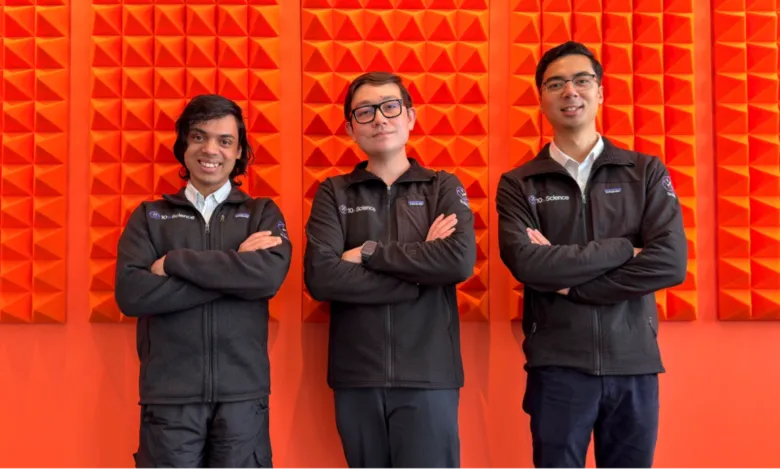
Addressing this critical gap is the mission of startup 10x Science. Founded in December 2025, the company recently announced a $4.8 million seed funding round led by Initialized Capital, with participation from Y Combinator, Civilization Ventures, and Founder Factor. The founding team combines deep scientific and technical expertise: biochemists David Roberts and Andrew Reiter, and serial founder Vishnu Tejas, who brings computer science and AI model knowledge.
The trio previously collaborated in the Stanford laboratory of Nobel laureate Dr. Carolyn Bertozzi, where their research into cancer-immune system interactions highlighted a persistent frustration. “When biopharma tries to create a drug candidate, they have all of these really nice prediction tools,” Roberts explained. “You can add as many candidates as you want to the top of the funnel, but they all have to pass through this characterization process. Everything needs to be measured.” For biologic drugs like Merck’s cancer immunotherapy Keytruda, which are designed to precisely target specific cells, understanding protein structure is fundamental.
The gold standard for this molecular assessment is mass spectrometry, a technique that determines atomic structure by measuring molecules in an electric field. However, interpreting the complex data it produces requires rare specialist knowledge and consumes vast amounts of researcher time. 10x Science’s platform tackles this by merging deterministic algorithms grounded in chemistry and biology with AI agents capable of interpreting spectrometry data. A major focus has been training these models to provide traceable, explainable analyses, a non-negotiable requirement for tools used in the regulated drug development pipeline.
Early users report promising results. Matthew Crawford, a scientist at chemical analysis firm Rilas Technologies, has used the platform for several weeks. He notes it accelerates his work and has been impressed by its intuitive functionality and reasonable assumptions. “I ran a particular protein through it, and it just kind of figured out, from what I named the file, what the protein probably was,” Crawford said. “It then searched databases online for the sequence for that protein, so I didn’t have to program in the sequence.” He contrasts this with other AI tools that have over-promised, attributing 10x’s practical performance to the founders’ deep domain expertise.
The startup is already engaging with multiple major pharmaceutical companies and academic labs. The new capital will fuel hiring and further model refinement to onboard additional customers. Roberts envisions the platform evolving beyond protein characterization to offer a broader, integrated understanding of biology by combining structural data with other cellular information. “The deeper thing behind what we’re building is actually a new way to define molecular intelligence,” he stated.
For investors, the company presents a compelling proposition within biotech. Its success is not tied to the risky, years-long journey of any single drug gaining regulatory approval. Instead, it offers a SaaS platform that could become a staple operational tool across the industry. “This is a SaaS platform that pharma has to pay for, every single month, to go through all of these potential candidates,” said Zoe Perret, a partner at Initialized. She believes the founders’ specialized knowledge creates a formidable barrier to entry for potential competitors.
Ultimately, the platform’s value may lie in democratizing advanced analytical techniques. As Crawford observes, many research groups focused on creating new drugs simply need clear, actionable answers from their mass spec data without getting bogged down in complexity. “This software is going to help keep that can of worms closed and just get them the answer they actually need to then do the next thing in their research,” he said, highlighting its potential to streamline the entire drug development pipeline.
(Source: TechCrunch)