Zoom integrates World ID to verify human participants

▼ Summary
– Zoom has integrated World’s Deep Face technology to verify meeting participants as human by matching live video against a pre-scanned iris profile.
– This feature responds to a significant rise in deepfake fraud, which caused over $200 million in corporate losses in early 2025 alone.
– The verification process requires users to have a World ID, obtained by physically scanning their irises at an Orb device, limiting its broad adoption.
– World’s Orb system faces regulatory actions and privacy investigations in multiple countries, including Spain, Germany, and the Philippines.
– For Zoom, the partnership is a strategic move to build trust for high-stakes calls, while for World, it represents a major distribution channel into enterprise security.
In a significant move to combat the growing threat of AI impersonation, Zoom has announced a partnership with World, the biometric identity firm co-founded by Sam Altman. This collaboration introduces a new method for participants to confirm they are genuine humans during video conferences. The system leverages World’s Deep Face technology, which compares a user’s live video feed against a pre-scanned biometric profile. When a match is confirmed, a “Verified Human” badge appears next to the participant’s name. Meeting hosts can now activate a Deep Face waiting room, mandating verification before entry, and users can request identity confirmation from others during an active call.
This feature responds to a surge in costly deepfake fraud. Earlier this year, engineering giant Arup lost $25 million after an employee authorized transfers during a call where every other participant was a convincing deepfake of company executives. A similar attack struck a Singapore-based multinational in 2025. Industry-wide, losses from such fraud surpassed $200 million in just the first quarter of 2025, with the average corporate incident now causing over half a million dollars in damage.
The verification process employs a three-part check. Deep Face cross-references a cryptographically signed image taken during a user’s initial registration via World’s Orb device, a spherical scanner that captures unique iris patterns. This is matched against a real-time face scan from the user’s device and the live video frame seen by others. Verification only succeeds when all three elements align. The company emphasizes the process runs locally, with no personal data leaving the user’s device.
This biometric verification represents a fundamental shift from existing deepfake detection tools on Zoom’s platform, such as those from Pindrop or Reality Defender. Those solutions analyze video frames for artifacts of AI manipulation. Zoom and World contend that as AI video generation improves, such detection methods are growing less reliable. Deep Face avoids this arms race by confirming identity against a trusted biometric record instead of trying to judge the authenticity of pixels.
A key limitation is the requirement for a World ID, which necessitates a prior in-person iris scan at an Orb location. While World’s network includes roughly 1,500 Orbs and about 18 million verified users globally, this remains a small fraction of Zoom’s total user base. Consequently, the feature is tailored for high-stakes calls where absolute identity assurance justifies the hurdle of biometric pre-registration. For most everyday meetings, existing detection tools will remain the pragmatic choice.
From a business perspective, Zoom frames this as part of its open ecosystem approach, offering customers another tool to build trust. The company is not endorsing World ID as a default standard but presenting it as one option in a marketplace of verification solutions. Strategically, the partnership is defensive. With revenue growth slowing, Zoom aims to solidify its position as the trusted platform for critical business communication, especially where a single compromised call could result in eight-figure losses. This move complements its other AI initiatives, like avatars and notetakers, by addressing the distinct threat vector of impersonation.
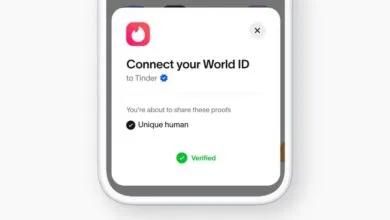
For World, the Zoom integration is a major distribution win. Having rebranded from Worldcoin, the company has sought to expand beyond its crypto-adjacent early adopters. Partnerships with firms like Visa and Tinder have increased utility, but a corporate security use case drives immediate, institutional demand. If a company mandates World ID verification for any call involving financial authorizations, it creates adoption that consumer applications cannot match.
However, the integration arrives amid ongoing regulatory scrutiny of World’s practices. Authorities in Spain and Germany have issued warnings and data deletion orders related to GDPR compliance. The Philippines has issued a cease-and-desist order concerning consent obtained through incentives, with investigations also occurring in Kenya, Hong Kong, and elsewhere. Emerging frameworks like the EU AI Act, which classifies such systems as high-risk, add further complexity.
World maintains its zero-knowledge proof architecture protects privacy by performing verification without exposing data, storing encrypted iris images only on users’ devices. Critics counter that the very act of collecting biometrics via physical Orbs presents inherent risks, particularly as recruitment has often targeted lower-income communities. For enterprises, the decision hinges on whether the security benefit outweighs the potential regulatory and reputational risk of aligning with a scrutinized platform.
This partnership underscores how rapidly the deepfake threat has escalated. What was once a theoretical concern is now a billion-dollar criminal enterprise, pushing the question of human authenticity to the forefront of enterprise security. The proposed solution, while technically effective, introduces complex trade-offs involving privacy, compliance, and accessibility. It is designed for specific, high-value scenarios, not for every routine meeting. Yet its very existence signals a shifting landscape where proving you are human, even face-to-face on a screen, can no longer be assumed.
(Source: The Next Web)