Dropbox Integrates ChatGPT With 3 New Productivity Apps
▼ Summary
– Dropbox is launching three new apps—a core file app, a Dash enterprise search app, and a Reclaim AI calendar app—directly inside ChatGPT’s interface.
– The core Dropbox app allows users to access, preview, and save files from ChatGPT while preserving existing sharing permissions and access controls.
– The Dash app integration lets users query ChatGPT and receive answers drawn from a broad company knowledge base that aggregates content from over 30 workplace tools.
– The Reclaim AI app enables users to manage their Google Calendar or Microsoft Outlook schedules directly within ChatGPT for tasks like adding events or finding meeting times.
– This strategy positions Dropbox within the ChatGPT ecosystem to reinforce its relevance as a storage endpoint for AI content, rather than building a competing AI assistant.
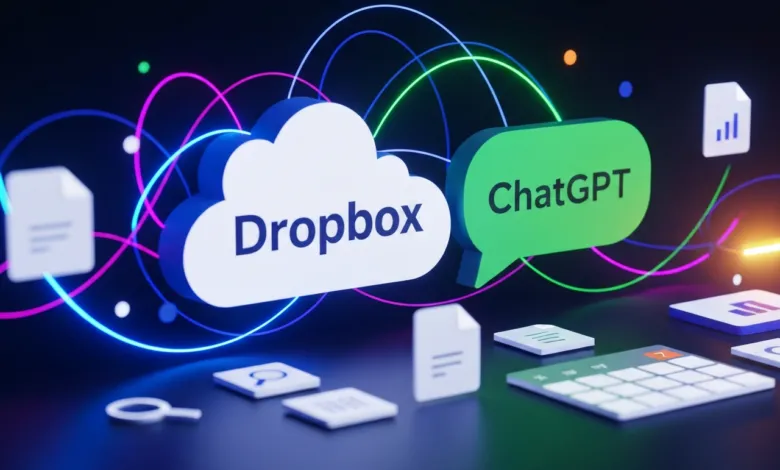
The integration of AI-powered productivity tools into daily workflows is accelerating. Dropbox has launched three new applications directly within the ChatGPT interface, a strategic move that transforms the popular chatbot into a more comprehensive productivity operating system. Users can now manage files, search enterprise knowledge, and optimize their calendars without ever leaving the AI conversation.
Available now or in the coming weeks via the ChatGPT app directory, these tools address the constant context-switching knowledge workers face. The suite includes a core Dropbox file application, the Dropbox Dash enterprise search tool, and the Reclaim AI calendar scheduler. This integration allows for a seamless flow between asking questions and taking immediate action on the answers.
The globally available Dropbox app enables users to access, preview, and share files from their accounts. A key feature is the ability to save AI-generated content directly back to Dropbox, creating a closed loop for content creation and storage. When answering questions or generating drafts, ChatGPT can also reference files already stored in a user’s Dropbox, leveraging existing content for context without manual uploads. The company confirms that all existing file permissions and access controls remain fully enforced through this integration.
Expanding that contextual awareness, the Dropbox Dash app connects ChatGPT to a user’s broader work ecosystem. Dash aggregates information from over 30 workplace applications like Gmail, Slack, and Google Workspace. Through the ChatGPT interface, a user can now pose a question and receive an answer synthesized from this unified company knowledge base, personalized to their specific access privileges. The Dash app will launch for existing customers in the coming weeks, with a 30-day trial offered to new users.
For calendar management, Dropbox is bringing its recently acquired Reclaim AI directly into the chat. This tool, purchased for $40.2 million last July, uses artificial intelligence to automatically manage Google Calendar and Microsoft Outlook schedules. It protects focus time, schedules around personal preferences, and resolves meeting conflicts. Within ChatGPT, users can now add events, find optimal meeting times, analyze personal productivity patterns, and get a quick overview of their day. The Reclaim app is available globally in English to users on its latest system version.
This trio of launches signals a significant strategic pivot for productivity software firms. Instead of building standalone AI assistants to compete directly with giants like OpenAI, Google, and Microsoft, Dropbox is embedding its services where users are already engaged. This approach of building specialized apps for the ChatGPT ecosystem acknowledges the platform’s evolution from a simple conversational agent into a robust task-execution layer for work.
For Dropbox, this integration offers a vital opportunity to reinforce its core service. As it contends with fierce competition from Google Drive and Microsoft OneDrive, positioning Dropbox as the default storage endpoint for AI-generated content could be crucial for maintaining long-term user relevance and product stickiness in an AI-centric future.
(Source: The Next Web)