Japan Mines Deep-Sea Rare Earths to Cut China Reliance
▼ Summary
– Japanese researchers successfully recovered rare-earth element sediments from a deep-sea deposit near the remote island of Minamitorishima.
– This achievement could strengthen Japan’s economic security by reducing its reliance on Chinese rare earth imports.
– The underwater deposit is estimated to contain over 16 million tons of rare earths, potentially the world’s third-largest reserve.
– Japan’s strategic shift began after a 2010 Chinese export embargo exposed its extreme vulnerability in the supply chain.
– Japan has reduced dependence through a multi-pronged strategy including foreign mine investments, material recycling, and technological innovation to use fewer rare earths.
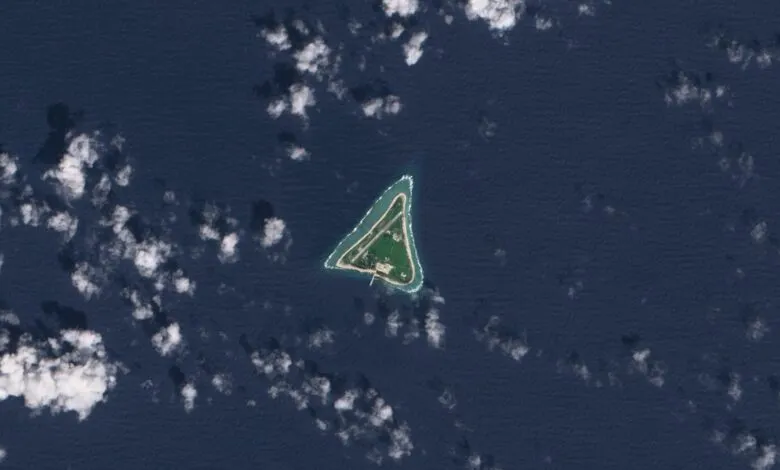
The remote Pacific atoll of Minamitorishima, located nearly 2,000 kilometers from Tokyo, has become the focal point of a major breakthrough in resource security. Japanese researchers have successfully recovered rare-earth element-rich sediments from an astounding depth of 6,000 meters, marking a world-first achievement in deep-sea sampling. This technical triumph could significantly bolster Japan’s economic and strategic position in a sector dominated by geopolitical tensions.
The operation, conducted from the deep-sea drilling vessel Chikyu, was described by the government as a milestone for economic security and maritime development. While analysis continues to confirm the exact quality and volume of the deposit, the strategic implications are already clear. The 17 metals classified as rare earths are indispensable for modern technology, powering everything from electric vehicle motors and wind turbines to advanced defense systems. Initial estimates suggest the area holds vast reserves of critical elements like dysprosium and yttrium, potentially totaling over 16 million tons and ranking as the planet’s third-largest known deposit.
This push for mining self-sufficiency stems from a pivotal moment in 2010. Following a maritime incident near the Senkaku Islands, China imposed a two-month embargo on rare earth exports to Japan, which then relied on Beijing for over 90% of its supply. The shock to Japanese industry, particularly automotive manufacturing, and a subsequent tenfold price surge globally, served as a stark warning. Tokyo viewed the episode not as a temporary dispute but as a fundamental vulnerability, prompting a comprehensive strategic overhaul.
In response, Japan launched a multi-pronged national strategy. The government spurred investment in technology to reduce rare earth usage, funded research into alternative materials, enhanced recycling systems, and built strategic stockpiles. It also supported Japanese companies in securing stakes in overseas mines, notably through partnerships with Australia’s Lynas Group. This integrated approach has yielded remarkable results, slashing dependence on Chinese rare earths to approximately 50% in recent years, a level unmatched by any other major industrial economy.
A critical component of this success has been the establishment of strategic reserves. These government-held stockpiles provide a crucial buffer against supply shocks, granting industries vital time to adapt without facing immediate paralysis. This policy demands significant long-term investment and foresight, resources not all nations have committed.
Japan’s high technological integration has further amplified these efforts. The nation is not merely an importer but a leader in transforming raw materials into high-value components like advanced magnets. This expertise has driven innovation in material efficiency, allowing Japanese firms to use fewer critical minerals without sacrificing performance. The capacity to accomplish more with less has evolved into a distinct competitive advantage, turning a former vulnerability into a pillar of long-term industrial resilience.
(Source: Wired)