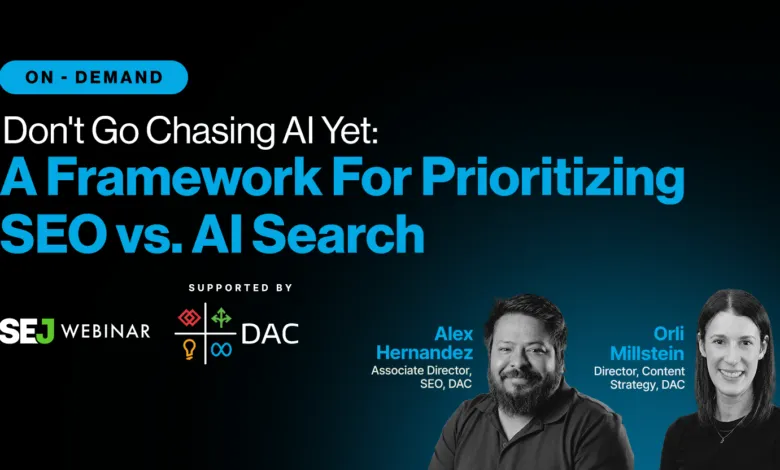
Prioritize SEO or AI Search: A Strategic Framework
▼ Summary
– The webinar challenges the assumption that increased AI optimization automatically leads to business growth.
– It argues that a company’s business model, product complexity, and customer journey should determine its AI visibility strategy.
– The session provides diagnostic questions to ask before investing in AI visibility and content optimization.
– It teaches signals that influence AI-generated answers and offers a content readiness audit model.
– The goal is to provide a structured evaluation method for strategic fit and revenue impact before shifting SEO budget.
Many organizations feel pressure to immediately shift resources toward AI search optimization. However, a strategic approach requires more than following the trend. The critical question is not whether to use AI, but where and how it will genuinely contribute to growth without undermining existing performance. A reactive shift in budget can dilute effective strategies rather than strengthen them.
The assumption that more AI optimization automatically leads to more growth is flawed. The appropriate strategy depends on your specific business model, the complexity of your product or service, and the nature of your customer’s journey. For some companies, accelerating AI visibility is essential, for others a balanced approach is wiser, and some may find it prudent to deprioritize it in favor of proven channels. Before reallocating your SEO budget, you must validate where AI will actually drive incremental growth within your overall channel mix.
Key diagnostic questions can guide this evaluation. You need to understand the signals that influence AI-generated answers, which allows you to pinpoint opportunities more efficiently. Assessing your content readiness is also crucial. A structured audit model can determine if your current site architecture, messaging, and authority signals are even prepared to support AI visibility effectively.
This process provides a framework to evaluate three core areas: strategic fit, content readiness, and potential revenue impact. The goal is to build an AI search strategy that complements and enhances your efforts, not one that creates conflict or wastes resources. By taking a measured approach, you can make informed decisions about rewriting your roadmap, ensuring that investments in generative engine optimization contribute to sustainable performance.
(Source: Search Engine Journal)