Ugandan Chimps Form Factions, Kill Rivals
▼ Summary
– In the 1970s, Jane Goodall observed a chimpanzee community in Gombe splitting into two factions, leading to lethal violence between males.
– Researchers have now documented the largest known chimpanzee community in Uganda permanently splitting into two rival groups with similar violence.
– The split involved chimpanzees killing former group members, overriding long-standing cooperative relationships.
– The study identified three phases: initial polarization, a period of avoidance and aggression, and finally a permanent fissure by 2018.
– The authors suggest this observed polarization and collective violence may offer insight into similar dynamics in human societies.
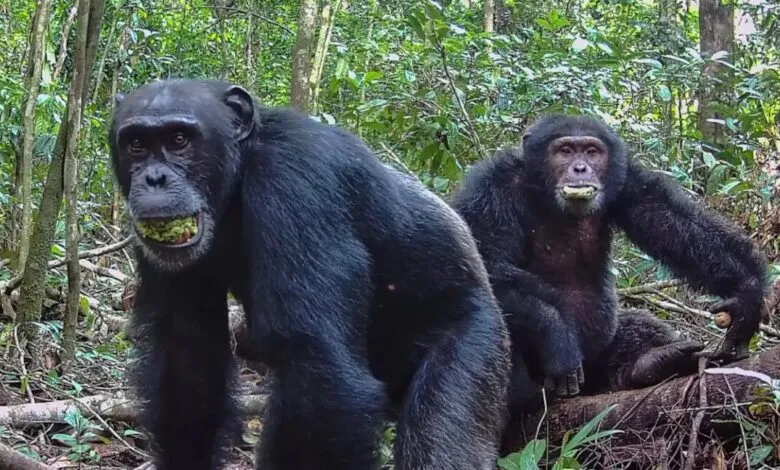
The largest known community of chimpanzees in Uganda has permanently fractured into two rival factions, culminating in lethal violence that echoes a rare and infamous event documented decades ago. Researchers analyzing decades of data from the Ngogo chimpanzees in Kibale National Park have detailed a community split that mirrors the brutal conflict Jane Goodall observed in Tanzania in the 1970s. This new case, described in the journal Science, provides compelling evidence that such violent schisms are a rare but recurring feature of chimpanzee society, offering a potential window into the origins of human intergroup conflict.
The study draws on an extensive dataset, including 24 years of social network analysis, a decade of GPS tracking, and three decades of demographic records. This long-term observation allowed scientists to identify three clear phases in the community’s rupture. Initially, social relationships underwent a dramatic polarization, dividing the chimps into two distinct clusters labeled the Western and Central groups. For the following two years, members of each cluster increasingly avoided one another, with interactions across the divide becoming exceptionally rare. During this period, Western male chimpanzees began conducting territorial patrols and displaying heightened aggression toward their former companions in the Central group. By 2018, the division was complete and irreversible.
What makes this event particularly significant is that the violence was directed at former allies. “What’s especially striking is that the chimpanzees are killing former group members,” said Aaron Sandel, a co-author of the study. “The new group identities are overriding cooperative relationships that had existed for years.” This observation challenges simple explanations and highlights the powerful role of emerging social identities. While researchers caution against labeling the event a “civil war,” the patterns of polarization and collective violence provide a stark parallel to human behavior.
The earlier Gombe conflict was long considered an anomalous tragedy. Genetic evidence suggests such full community splits are exceedingly rare, perhaps occurring only once every 500 years. The documentation of a nearly identical process at Ngogo confirms that, while uncommon, this is a real phenomenon in chimpanzee populations. The findings suggest that the capacity for profound social fragmentation and lethal intergroup aggression is deeply rooted in our shared evolutionary history, providing a sobering perspective on the potential drivers of conflict within our own species.
(Source: Ars Technica)