NVIDIA DLSS 5: Latest Features and Release Details
▼ Summary
– DLSS 5 is a new AI-driven neural rendering technology that enhances frames with photorealistic lighting and materials, moving beyond previous upscaling and frame generation.
– It was officially unveiled at GTC 2026 and is scheduled to launch in Fall 2026.
– The technology works by analyzing per-frame color and motion vectors with an AI model trained to understand scene semantics and lighting.
– Early demonstrations used a dual GeForce RTX 5090 setup, but NVIDIA promises a final version optimized for single-GPU consumer systems.
– Game support will include major titles via the Streamline framework, though full hardware compatibility details are not yet officially confirmed.
The next major leap in AI-driven graphics is on the horizon. Officially unveiled at GTC 2026 and slated for a Fall 2026 release, NVIDIA DLSS 5 represents a fundamental shift in real-time rendering. Moving beyond its predecessors’ focus on upscaling and frame generation, this new technology introduces a real-time neural rendering model designed to synthesize photorealistic lighting and materials directly into each frame. This promises a generational leap in visual fidelity, fundamentally altering how games look and perform.
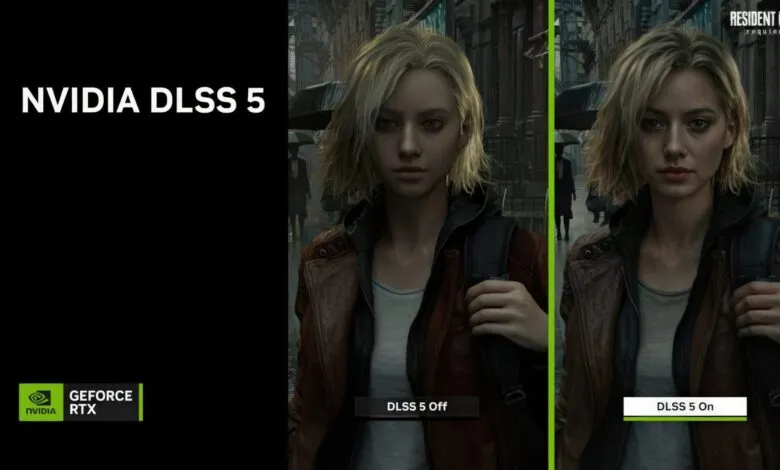
So, what exactly is DLSS 5? NVIDIA describes it as the most significant advancement since the introduction of real-time ray tracing. It is not merely an enhancement tool but a comprehensive AI model that actively understands and reconstructs a scene. The system analyzes per-frame color data and motion vectors, applying a model trained to recognize semantic categories like skin, fabric, and hair alongside complex lighting contexts. The result is a final image with dramatically improved photorealism, including effects like subsurface scattering and material sheen, all while maintaining temporal stability and staying true to the original game content.
A key feature is developer control. Unlike a blanket filter, the technology is designed to be tunable, allowing studios to adjust intensity, color grading, and apply masking. This addresses potential concerns about preserving a game’s unique artistic vision, ensuring the AI enhancement aligns with creative intent rather than overriding it.
Initial demonstrations, however, sparked important discussions about hardware demands. Early previews at GTC 2026 reportedly utilized a dual-GeForce RTX 5090 configuration, with one GPU dedicated solely to the neural rendering workload. This setup is far from a typical consumer environment and raised immediate questions about real-world performance, latency, and final system requirements. It highlights the immense computational cost of this new tier of AI image synthesis. NVIDIA has clarified that these demos were an unoptimized proof of concept and that the final version is being refined to run efficiently on a single GPU, with significant improvements to memory usage and performance expected before launch.
Official GPU compatibility and minimum specifications have not yet been detailed. While early information suggests a close tie to the GeForce RTX 50 Series and beyond, NVIDIA has not released a definitive list. The technology will integrate via the Streamline framework, the same system used for current DLSS and Reflex features, which should streamline adoption for developers.
Major publishers and studios are already on board, with a first wave of supported titles announced, including Starfield and Hogwarts Legacy. This ecosystem support will be crucial for DLSS 5’s impact. When it arrives, the technology is poised to target high-end AAA experiences first, potentially redefining expectations for visual realism in PC gaming before evolving further with future hardware and software.
(Source: Wccftech)