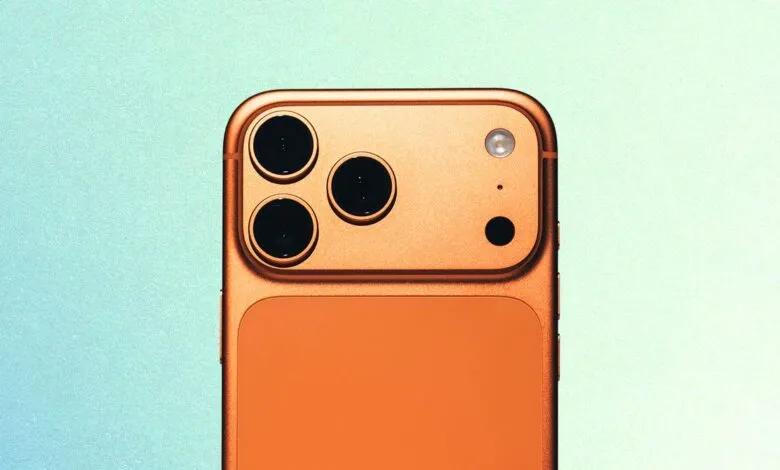
iPhone Repairability Score: D–
▼ Summary
– The iPhone received the lowest repairability score (D–) in a new report, with Samsung and Google phones also scoring poorly.
– The “Failing the Fix” report by US PIRG uses data from European repairability laws to grade products on factors like disassembly and part availability.
– Laptops generally scored better than phones, with Asus receiving a B+ and Apple’s MacBooks at the bottom with a C–.
– The report’s authors hope publishing low scores will pressure manufacturers to design longer-lasting, more repairable products.
– US PIRG’s ratings also deduct points for companies that lobby against right-to-repair legislation.
A new analysis reveals a stark reality for smartphone owners: Apple’s iPhone currently holds the lowest repairability score on the market, earning a D– in the latest assessment. This finding comes from the consumer advocacy group US PIRG in its annual “Failing the Fix” report, which leverages data now available due to European transparency laws. While Motorola phones led with a B+, competitors like Google and Samsung also scored poorly, receiving a C– and a D respectively. The report marks a significant shift, as it is the first to clearly track corporate progress,or lack thereof,since France began mandating repairability scores on products in 2021.
The picture is somewhat brighter for laptops, though Apple again finds itself at the bottom. Asus earned the top score of B+, while Apple’s MacBooks received a C–. The core intent of publishing these ratings is to apply public pressure. “Putting these right incentives in place could push these companies to make innovations that are actually beneficial,” said Nathan Proctor, senior director of US PIRG’s right to repair campaign. He argues that instead of focusing on features like AI, companies should prioritize creating durable, fixable products.
These low scores arrive despite many manufacturers publicly offering repair manuals, tools, and parts. The decline in ratings is largely attributed to new, more rigorous data. European regulations now force companies to self-report on specific criteria. France’s law evaluates products on disassembly ease, documentation, tool availability, and spare parts cost. Furthermore, the broader European Union requires registration in the European Product Registry for Energy Labelling (EPREL), which grades devices on factors like battery endurance, waterproofing, and durability.
To compile its rankings, US PIRG combines these European indexes with U. S.-specific factors, including whether a company lobbies against right to repair legislation. “If you’re buying your equipment from a company that’s spending their money to lobby against your right to repair that thing, that doesn’t speak well for their support,” Proctor explained. Companies lose points for such political activities.
Interestingly, Apple’s iPhone scores have improved from an F in 2022 to a C– in 2025. The current D– rating, however, highlights persistent issues, particularly around software support and how the company reports its compliance. When judged against the strict, non-negotiable standards of EU law, rather than on a curve against other poor performers, the shortcomings become clear. “But why are we grading on a curve?” Proctor asked. “We should just have longer-lasting products.”
The broader mission is to elevate repairability and waste reduction as critical consumer and environmental issues. Proctor describes a cycle of discarding functional hardware due to software obsolescence as “totally unsustainable” and a path toward a “dystopia.” He remains hopeful for change, noting that the engineering talent exists within these companies to solve the problem. “Apple engineers are good at making stuff. They’re good at solving problems,” he stated, expressing confidence that mounting pressure will eventually lead to better, more repairable designs.
(Source: Wired)