Trump’s Immigration Crackdown: The Paramilitary Forces Involved
▼ Summary
– On September 30, federal agents, including a heavily armed Border Patrol Tactical Unit (BORTAC) team, conducted a dramatic raid on a Chicago apartment building.
– This deployment is part of the Trump administration’s unprecedented use of these specialized border units for street-level immigration operations in U.S. cities.
– The raid was based on unsubstantiated intelligence claiming gang activity and weapons in the building, which is now under state investigation.
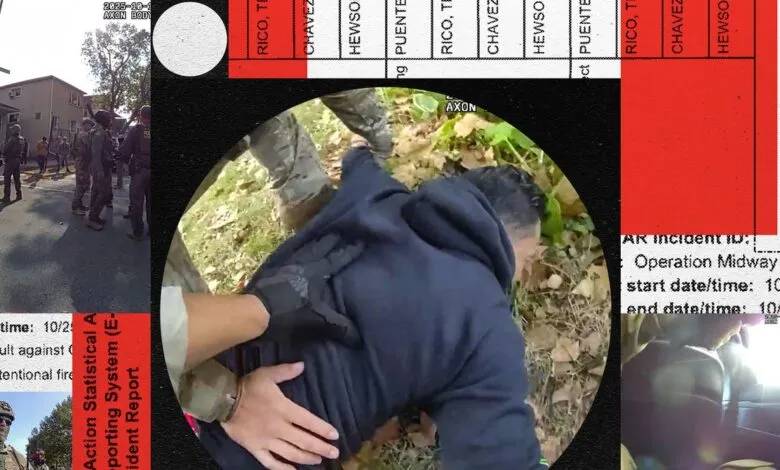
– During the raid, a BORTAC agent released a dog on an undocumented immigrant who was not the raid’s target, causing severe injuries before his arrest.
– An analysis indicates such forceful tactics during these operations have escalated tensions, marking a new, militarized approach to domestic enforcement.
In the pre-dawn hours of September 30, a Chicago apartment complex became the stage for a dramatic federal operation. Heavily armed agents descended from a helicopter while others breached doors, detaining residents under the glare of tactical lights. This scene, unfolding far from any international boundary, marked a significant shift in domestic enforcement. The operators were not local police but members of Border Patrol Tactical Unit (BORTAC), an elite paramilitary force now being deployed deep inside American cities.
The team that morning included agents like Padraic Daniel Berlin and David Dubar Jr., moving in precise formation under the leadership of Marine veteran Corey Myers. They represent units once reserved for extreme situations along the border, such as armed confrontations with drug cartels or complex desert rescues. Under the current administration, their mission has radically expanded. This deployment is the largest domestic use of BORTAC and its sister unit BORSTAR on record, though official secrecy makes the full scope difficult to confirm. Their presence in urban neighborhoods signals a profound policy change, effectively militarizing street-level immigration enforcement.
Intelligence briefed to the agents claimed the building was a stronghold for Tren de Aragua, a Venezuelan gang the administration had designated a foreign terrorist organization despite contradictory assessments from its own agencies. Reports suggested stored weapons and a wanted suspect. This intelligence was never publicly verified, and Illinois authorities later investigated whether the allegations were fabricated. Nevertheless, it propelled the raid forward.
The operation escalated quickly. At one apartment, Berlin issued a warning before releasing his Belgian Malinois, Yoda, on a man inside. The dog repeatedly bit Tolulope Akinsulie, an undocumented Nigerian immigrant who was hiding and was not the operation’s target. Akinsulie, with no known gang ties or violent criminal history, was treated for his injuries and taken into immigration custody. Berlin’s conduct was not an anomaly during Operation Midway Blitz, the 2025 initiative that flooded Chicago with hundreds of federal agents. Government records indicate his involvement in multiple use-of-force incidents, and his team’s actions often heightened tensions with civilians rather than restoring order.
This pattern extends beyond a single raid. Over the past year, BORTAC and BORSTAR agents have spearheaded numerous high-profile operations in U. S. cities. Their tactics frequently involve a theatrical display of force, captured in news broadcasts and social media videos, that underscores their role as the “tip of the spear” for domestic immigration crackdowns. The deployment of these specialized units into urban centers represents a historic and controversial fusion of border militarization and interior enforcement.
(Source: Wired)