FPGA Revives the 3DFX Voodoo Graphics Card
▼ Summary
– The 3DFX Voodoo 1 was a popular early mass-market GPU for gamers, known for enabling smooth 3D graphics in games supporting its Glide API.
– It was implemented as a separate PCI card that connected to a user’s primary 2D SVGA graphics card to provide 3D processing.
– A project has successfully recreated this GPU’s architecture using SpinalHDL for implementation on a modern FPGA.
– The implementation process revealed challenges, as the Voodoo’s fixed-function hardware design caused specific bugs and timing issues on the FPGA.
– The original 3DFX company was eventually acquired by its rival Nvidia, which surpassed it in the market by the late 1990s.
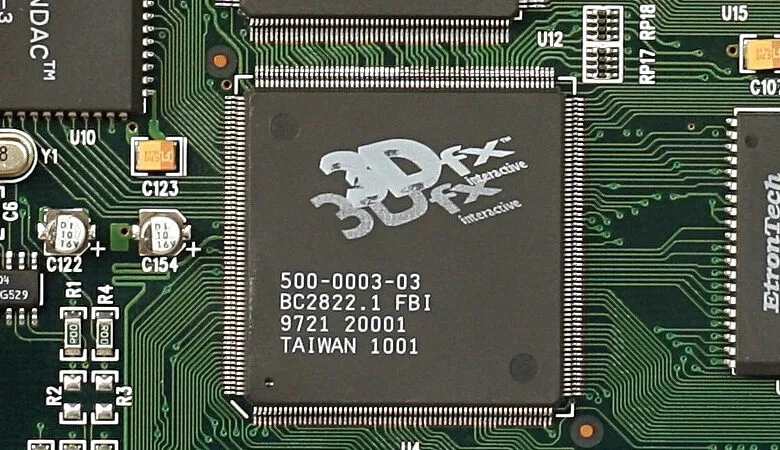
While not the first dedicated 3D accelerator, the 3DFX Voodoo 1 defined an era for PC gaming. This iconic card, which connected via a PCI slot and a feature connector to a primary 2D SVGA card, delivered a transformative visual experience. It rendered games that supported its proprietary Glide API with a level of smooth, textured 3D that was groundbreaking for its time. Original hardware now commands a premium among collectors, but a new project offers a modern path to nostalgia. Developer Francisco Ayala Le Brun has successfully recreated the Voodoo 1 graphics processor using SpinalHDL, targeting implementation on an FPGA.
The project’s documentation provides a deep dive into the chip’s distinct architecture. Unlike today’s highly programmable GPUs, the Voodoo’s design relied on fixed-function hardware blocks, each dedicated to a specific graphical operation like texture mapping or rasterization. Translating this dedicated logic into an FPGA design introduced significant challenges, including intricate timing closure issues and hardware bugs, which the write-up explores in comprehensive detail.
The complete, open-source implementation is available in a GitHub repository, serving as a fascinating resource for enthusiasts of 1990s retrocomputing. The legacy of 3DFX, which was ultimately acquired by rival Nvidia as its own products gained dominance, remains a special chapter in graphics history. For those who possess an original card, a practical memory upgrade is often still possible to extend its life.
(Source: Hackaday)