Touchscreen-Friendly Nail Polish Solves Long Nail Issues
▼ Summary
– Long fingernails do not register on capacitive touchscreens because fingernails are non-conductive.
– A conductive nail polish is being researched as a potential solution to this problem.
– The project was initiated by an undergraduate student interested in cosmetic chemistry and touchscreen compatibility.
– Existing conductive polishes use additives like carbon nanotubes, which can be hazardous and limit color options.
– The new research aims to develop a safe, clear, and colorless conductive polish that can be applied over any manicure.
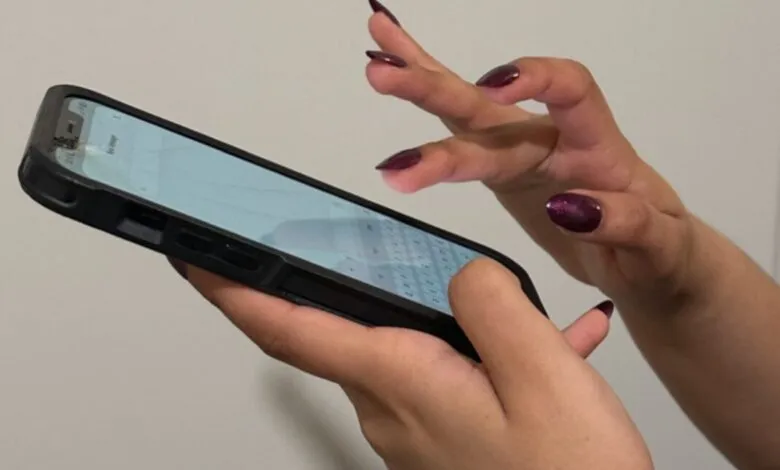
For individuals with long nails, the convenience of modern touchscreen devices can be frustrating. Because fingernails are non-conductive, they fail to interact with the capacitive screens found on smartphones and tablets. While workarounds like using a stylus or the finger pad exist, a more elegant solution may be on the horizon. Recent research suggests that a specially formulated conductive nail polish could allow people to use their actual nails to operate touchscreens.
This innovative concept originated from a project by Manasi Desai, an undergraduate student at Centenary College of Louisiana. With a passion for cosmetic chemistry, Desai set out to solve the compatibility problem between long nails and touchscreen technology. Current options are limited. Some existing conductive polishes incorporate additives like carbon nanotubes or metallic particles, which can pose inhalation risks and typically result in dark or metallic finishes. Another past concept, a press-on false nail with a capacitive tip showcased at CES, never reached the commercial market.
Desai aimed to create a superior alternative. Collaborating with her advisor, organometallic chemist Joshua Lawrence, she focused on developing a clear and colorless formula. The goal was to produce a safe polish free from toxic materials that could be applied over any existing manicure, preserving the wearer’s chosen color while adding functionality. This approach directly addresses the safety and aesthetic limitations of previous attempts, potentially offering a seamless way to bridge fashion and technology.
(Source: Ars Technica)