Aspen Deploys Firefighting Drones to Beat Blazes Faster
▼ Summary
– A Bay Area startup named Seneca has signed its first customer, the Aspen Fire Protection District, to deploy its wildfire-fighting drones.
– Aspen will be the first U.S. wildfire agency to use this “strike team” of five drones, which are designed to reach and extinguish small fires before human crews can.
– Each drone can carry enough water to create over 50 gallons of foam suppressant, slowing a fire’s consumption of fuel.
– Fire officials highlight the drones as an early suppression resource, crucial for reaching remote fires that are difficult for ground crews to access quickly.
– Wildfires are becoming larger, more frequent, and more destructive, with Colorado’s average fire season now 78 days longer than in the 1970s.
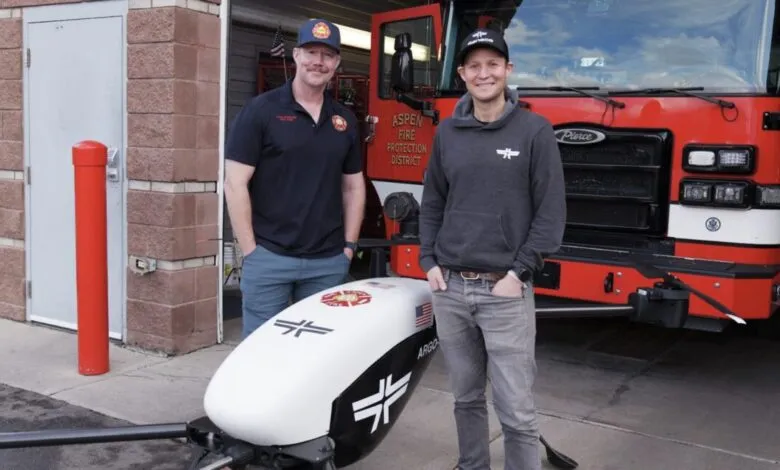
A pioneering firefighting initiative is launching in Aspen, Colorado, as the local fire protection district becomes the first agency in the United States to deploy a specialized drone strike team for rapid wildfire response. This move represents a significant shift in emergency management strategy, leveraging cutting-edge technology to combat the growing threat of blazes in challenging terrain. The fleet of five drones, developed by Bay Area startup Seneca, is designed for immediate intervention, aiming to suppress fires in their earliest and most vulnerable stages before they can escalate into major disasters.
The core mission of these drones is early suppression. Each aircraft can carry enough payload to generate over fifty gallons of finished foam suppressant. This substance is crucial for slowing a fire’s advance by reducing the speed at which it consumes available fuel. The primary advantage lies in their rapid deployment capability; these drones can reach remote ignition points far faster than ground crews, providing a critical window for containment.
Jake Andersen, Chief of the Aspen Fire Protection District, emphasized the strategic value. The district already utilizes AI-powered panoramic cameras that excel at swift fire detection. The historical challenge has been the mobilization time for personnel, especially for blazes in inaccessible areas. Andersen noted that responding to fires six or eight miles into the wilderness requires arduous hikes, costing precious minutes. With an operational range of three to five miles, the drone fleet fundamentally alters the response calculus, enabling immediate action the moment a threat is identified.
Seneca, founded earlier this year, is part of an emerging sector of “firetech” companies innovating new methods for wildfire prevention and suppression. Their technology arrives at a critical juncture. Wildfires across the nation are increasing in both frequency and severity, with seasons growing longer and more intense. Data from the Colorado Division of Fire Prevention & Control underscores this trend, indicating that the average core wildfire season is now 78 days longer than it was in the 1970s. Colorado now faces the potential for large fires during any month of the year, highlighting the urgent need for advanced, adaptive solutions like autonomous aerial response teams.
(Source: Ars Technica)