Laurel Halo: Midnight Zone Original Soundtrack
▼ Summary
– Polymetallic nodules are ancient rock formations that grow extremely slowly on the deep ocean floor over millions of years.
– They contain critical minerals like manganese and cobalt, which are essential for renewable-energy technologies.
– Deep-sea mining companies propose extracting these nodules, but the environmental impact on deep-sea ecosystems remains largely unknown and scientifically contested.
– The article discusses an artistic film, “Midnight Zone,” which explores the deep-sea mining zone and themes of technology, nature, and the unknown.
– The film’s soundtrack, described in detail, creates an immersive and shifting soundscape that mirrors the overwhelming and mysterious deep-sea environment.
Polymetallic nodules, those lumpy and unassuming rocks scattered across the deep ocean floor, represent a profound collision of deep geological time and urgent modern ambition. Formed over millions of years as minerals slowly accrete around a tiny nucleus, these formations hold within them a vast history of our planet. Yet, their newfound value lies in a future they might enable; they are rich in critical minerals like manganese, cobalt, and nickel, which are essential for manufacturing batteries and other renewable energy technologies. This potential has ignited a fierce debate, pitting the promise of a carbon-free future against the unknown ecological consequences of mining one of Earth’s last pristine frontiers.
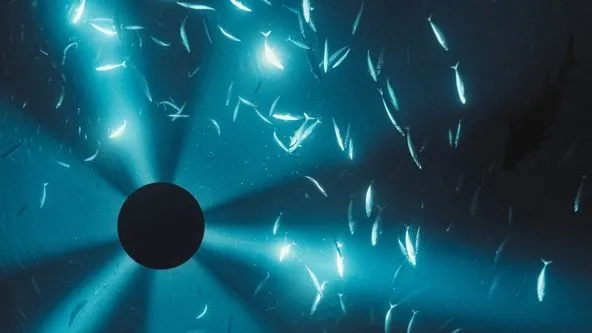
The deep-sea environment where these nodules are found remains largely mysterious, a fact that underscores the risk of industrial intrusion. The long-term impact on delicate benthic ecosystems is simply not understood. This tense and uncertain landscape provides the conceptual foundation for artist Julian Charrière’s film Midnight Zone, which documents a lighthouse lens sinking into the abyssal plain of the Clarion-Clipperton Zone, a region holding billions of tons of these very nodules. The film is a silent, contemplative exploration of light penetrating darkness, a metaphor for human knowledge confronting the vast unknown. Laurel Halo’s original soundtrack for the film is a masterful audio companion, translating this visual journey into a dense, immersive, and deeply claustrophobic sonic experience.
The eleven-minute opening piece, “Sunlight Zone,” establishes the album’s haunting atmosphere. It begins not with a melody, but with a distant, harmonic hum reminiscent of machinery operating far away. The sound is blurred and indistinct, making it difficult to isolate specific musical notes. Within this steady drone, midrange tones slide and warp, evoking the Doppler effect of a siren or the warped playback of a vinyl record. While the overall density feels constant, closer listening reveals a world of subtle motion. Pinprick details emerge from the mix: strange panning effects and the faint, eerie suggestion of water moving through a pipe.
As the track progresses, the drone undergoes a gradual but monumental transformation. It expands in frequency, with bass tones growing into subterranean rumbles and high frequencies sharpening into metallic shrieks akin to subway brakes. The soundscape imperceptibly shifts from a warm, almost comforting ambient murmur to something far more unsettling, a cacophonous, apocalyptic din that feels like witnessing the forging of bells in some infernal fire. This evolution mirrors the film’s descent from the familiar surface into a profound and alien darkness, audibly charting a path from curiosity into overwhelming sublime terror.
(Source: Pitch Fork)