Intel Panther Lake Core Ultra Review: A Game-Changing Laptop CPU
▼ Summary
– Intel’s recent Core Ultra processor generations have been inconsistent, with each iteration excelling in one area (like CPU or GPU) while regressing in another.
– The new Core Ultra Series 3 (Panther Lake) chip, tested in an Asus Zenbook, demonstrates strong, balanced performance in both CPU and graphics, surpassing recent Intel chips and competing with AMD.
– Panther Lake also shows excellent power efficiency and battery life in the tested laptop, marking a significant improvement over previous generations.
– This release represents a break from Intel’s recent pattern of uneven advancements, aiming to provide a more well-rounded processor.
– The long-term success depends on Intel making this balanced performance a consistent foundation for future chips, rather than a one-time achievement.
Intel’s latest Panther Lake processors represent a significant step forward for the company’s mobile computing ambitions, finally delivering a balanced and powerful package that addresses previous shortcomings. For years, the company’s laptop CPU releases have felt like a series of trade-offs, where gains in one area came with noticeable compromises in another. The new Core Ultra Series 3 chips, however, break this frustrating cycle by offering substantial improvements across the board, making them a compelling choice for users seeking top-tier performance and efficiency.
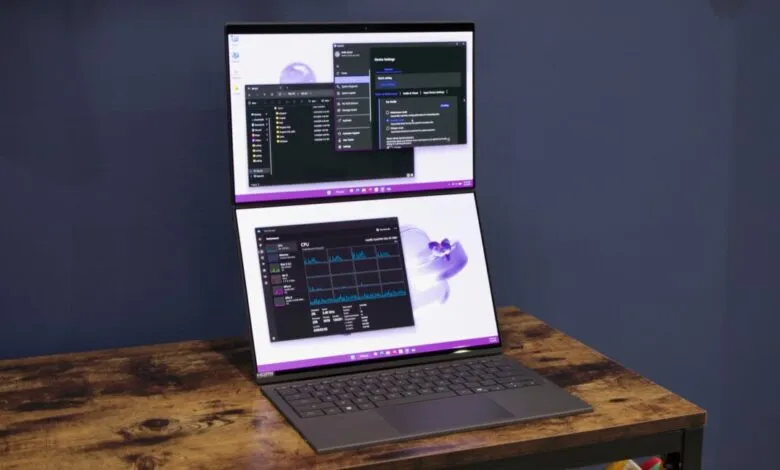
Our testing focused on the flagship Core Ultra X9 388H processor housed within the innovative Asus Zenbook Duo UX8407. The results were impressive, showcasing a chip that decisively outperforms its recent predecessors. Both CPU and integrated graphics performance show a marked leap, providing a level of power that is not only a clear upgrade from older Intel silicon but also positions it as a strong competitor against AMD’s latest Ryzen AI processors. Perhaps more importantly, this performance arrives without the usual penalty to battery life or thermal management, a critical achievement for modern laptops.
This balanced excellence is what makes Panther Lake feel like a turning point. Previous generations presented users with difficult choices. The 12th and 13th Gen chips boosted raw CPU speed but often drained batteries faster and offered minimal graphical upgrades. The first Core Ultra (Meteor Lake) chips improved graphics but couldn’t match the pure processing power of the chips they replaced. Later, the Lunar Lake series excelled in efficiency and graphics while the Arrow Lake chips prioritized CPU performance, each leaving something on the table.
Panther Lake eliminates these compromises, delivering a harmonious blend of strong multi-core and single-threaded CPU performance, capable integrated graphics, and excellent power efficiency. This holistic approach is exactly what the market has been waiting for from Intel. The chip’s architecture allows it to handle demanding creative workloads, modern gaming, and everyday productivity with a consistency that was previously lacking.
The true test for Intel will be sustainability. After a decade of uneven progress and strategic pivots, the industry is watching to see if Panther Lake is a fortunate one-off or the foundation for a new era of predictable, annual improvements. For now, based on this initial hardware, Intel has delivered a processor that is easy to recommend. It provides a no-compromise experience that finally meets the modern user’s expectation for a laptop that can do it all without constant plugging in or thermal throttling. This release suggests Intel is back on track, setting a new benchmark that will shape competition in the laptop CPU space for the foreseeable future.
(Source: Ars Technica)