YouTube CEO’s 2026 Video Marketing Strategy Revealed
▼ Summary
– YouTube’s CEO positions the platform as a multifaceted ecosystem, acting as a global TV network, creator marketplace, commerce platform, and AI-powered discovery engine.
– The platform’s strategy elevates creators to studio-level partners, requiring brands to shift from transactional sponsorships to deeper, co-production models.
– YouTube Shorts, with 200 billion daily views, is the primary discovery surface and should be used as an entry point to guide audiences to longer-form content.
– YouTube dominates living-room streaming, necessitating higher production quality and episodic content strategies akin to traditional television.
– The integration of shopping features and AI tools transforms YouTube into a direct revenue channel and a production accelerator, but success depends on strategic human oversight and quality.
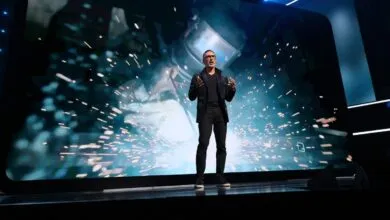
The annual letter from YouTube’s CEO has traditionally offered a glimpse into the platform’s product updates. For 2026, however, Neal Mohan’s strategic manifesto positions YouTube as far more than a video site; it is the central hub for global culture, entertainment, and commerce. This evolution demands a fundamental shift in how marketers approach the platform. YouTube now functions simultaneously as a global television network, a thriving creator marketplace, a direct commerce platform, and an AI-powered discovery engine. Understanding these interconnected roles is crucial for developing a video strategy that succeeds in the coming years.
Mohan’s vision is organized around key themes: reinventing entertainment, creating a safe space for younger audiences, powering the creator economy, and both supercharging and safeguarding creativity. For any business, this translates to a clear directive. The future of video marketing is integrated, creator-led, commerce-enabled, and rigorously measurable.
Creators now operate as full-scale studios, making the old transactional sponsorship model obsolete. The era of dismissing YouTube content as simple user-generated material is over. Top creators invest in production facilities, hire teams, and develop episodic series that compete with traditional television. This structural shift means brands must move beyond one-off product placements. The most effective approach is a co-production model, where brands collaborate deeply from the start, shaping content formats and developing campaigns that unfold across multiple episodes or entire seasons. This mirrors the proven performance of long-term partnerships over short-term influencer activations. From a business perspective, this improves efficiency. Instead of managing dozens of shallow briefs, brands can cultivate a smaller number of meaningful partnerships that yield recurring assets usable across organic, paid, and owned channels.
YouTube Shorts, now averaging 200 billion daily views, has fundamentally redefined content discovery on the platform. Mohan confirmed plans to integrate additional formats like image posts directly into the Shorts feed, evolving it into a multi-format social surface. For marketers, this means Shorts should be treated as the critical entry point to a larger content ecosystem. A high-performing strategy uses short-form content to introduce ideas, long-form videos to explore them in depth, and community posts to sustain engagement. Shorts are not a standalone tactic; they are the essential front end of a layered content system designed to guide audiences deeper. Best practices like hook-driven openings and concise storytelling are now non-negotiable for visibility.
The platform’s dominance in living rooms is undeniable, with Mohan citing Nielsen data showing YouTube as the leader in U.S. streaming watchtime for nearly three years. This collapse of the distinction between digital video and television means production quality, long-form storytelling, and episodic content are more vital than ever. Brands should consider developing signature, recurring video formats, such as monthly expert-hosted shows or documentary-style customer stories, rather than relying solely on campaign-based videos. With YouTube ads increasingly resembling connected TV buys, the platform is an essential component of any omnichannel media plan.
A major shift is underway as YouTube aggressively pushes into commerce, transforming video from a brand-building channel into a direct revenue driver. The focus on YouTube Shopping and frictionless in-app purchases shortens the path to conversion and clarifies attribution. For performance marketers, this elevates YouTube to a necessary component of lower-funnel planning, alongside search and social media. Integrating product feeds, tagging videos with shoppable links, and retargeting viewers of product content are now fundamental actions for capturing direct sales.
Mohan highlighted that over a million channels use YouTube’s AI creation tools daily, but he also stressed the platform’s commitment to combating low-quality “AI slop.” The message is clear: AI is a powerful accelerator for execution, but it cannot replace human strategy and creativity. AI excels at tasks like drafting scripts, generating variations, and scaling translation. Human oversight remains irreplaceable for understanding audience nuance, crafting authentic narratives, and maintaining a distinctive brand voice. The goal is to use AI to reduce production time, freeing up resources to focus on high-level strategic thinking.
Finally, the emphasis on diversified monetization signals a broader shift toward measuring business impact. Success is no longer about vanity metrics like view counts, but about tangible outcomes such as increased watch time, verified brand lift, and attributable conversions. Marketers must implement tracking for retention, utilize brand lift studies, and strive to connect video engagement directly to revenue wherever possible. Optimizing based on these deeper results separates effective strategies from mere content production.
The strategic takeaway from the 2026 roadmap is that YouTube is maturing into a unified ecosystem. The winning approach is not to chase every new feature, but to design an integrated system. Use Shorts for broad discovery, long-form content for depth and authority, creator partnerships to build trust, paid media to achieve scale, and seamless commerce integrations to drive conversions. The marketers who will thrive are those who build intelligent, interconnected video ecosystems, not just those who produce the highest volume of content.
(Source: Search Engine Journal)