AI Dubbing: Optimizing Streaming Dialogue and Singing
▼ Summary
– Generative AI has transformed dubbing workflows, replacing traditional studio sessions, but achieving precise emotional expression with AI voices remains a significant challenge.
– A key ethical and quality concern is the accurate vocal representation of actors, as their voices are central to a film’s brand, requiring directorial oversight that traditional dubbing provided.
– AI dubbing tools are being developed to allow creators to direct AI voices like a director, offering control over delivery to match subjective artistic intent, as there is no single “perfect” result.
– Dubbing singing presents a distinct technical challenge due to the need to convey rhythmic expression across different languages, controlled through methods like textual or audio prompting.
– The industry sees technologists and APIs enabling the direction of AI dubbing, but it requires collaborative human teams to manage nuances like emotion, pitch, and tone for different markets.
The landscape of audio dubbing for film and television has undergone a profound shift with the rise of generative AI. This technology has moved the costly, studio-bound process of traditional dubbing into a new digital era, yet industry leaders emphasize that achieving emotional authenticity remains a complex artistic challenge. While AI can replicate voices, refining them for precise emotional impact in dialogue and, even more so, in musical performances, requires a nuanced blend of technology and creative direction. This ongoing evolution was a central topic of discussion among experts at a recent industry conference.
A significant part of the conversation addressed the ethical and qualitative concerns stemming from AI’s capabilities. One participant pointed directly to the 2023 Hollywood strikes, noting that the protection of an actor’s vocal likeness was a core issue. Beyond ownership, there is a critical need for oversight to ensure quality and accuracy, especially for lead actors whose voices are integral to a film’s brand. The sentiment echoed a nostalgia for the traditional studio process, where a director and linguists worked collaboratively to achieve an authentic performance. The question posed was whether current AI dubbing solutions can incorporate that same level of directorial control.
In response, Anton Dvorkovich of Dubformer confirmed this is precisely the goal for pre-recorded content. He described high-end dubbing as an artistic endeavor, where a dubbed track is part of the overall creative expression. His company is developing creator tools that allow users to direct AI voices, acknowledging that there are countless valid ways to deliver a line, each subject to a director’s unique vision. He stressed that while AI will drastically reduce technical errors, the idea of a single button producing a “perfect” result is a myth. The outcome will always be subjective, filtered through the creativity of the human guiding the process.
The discussion then turned to a particularly complex application: dubbing songs. Philip Grossman raised the question, recalling a demonstration where an actress’s singing was seamlessly translated between languages. Dvorkovich acknowledged that singing presents a major challenge, primarily due to the need to preserve rhythmic expression across different linguistic structures. He outlined three primary methods for controlling AI voice generation. The first involves coarse adjustments like changing an accent or acoustic setting. The more powerful tools, however, are prompting techniques. Textual prompting mimics a director’s notes, asking for more energy or a faster pace. Audio prompting, crucial for singing, involves the AI listening to a reference performance and replicating its intonation and pitch.
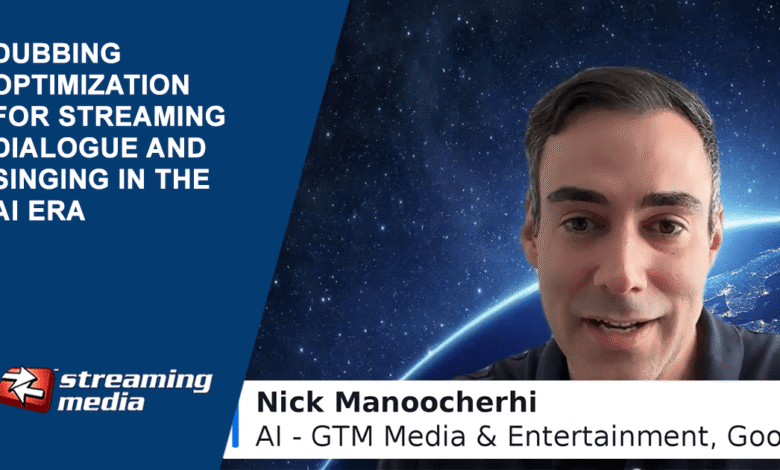
Exploring the role of the director further, the conversation shifted to the technological infrastructure enabling this control. Nick Manoochehri of Google affirmed that the technologist is indeed becoming a new kind of director, leveraging intelligent APIs to execute creative decisions. He agreed that the process is fundamentally artistic and cannot be fully automated with one click. The complexity of dubbing into multiple languages involves nuanced tweaks, adjusting the emotion assigned to a specific word or fine-tuning pitch and tone. This requires a collaborative team effort to either faithfully recreate the original performance or adapt it creatively for a new market. While Google currently provides the foundational APIs, they are also working on a platform to facilitate this detailed creative work.
The exchange concluded on a lighter note, with Grossman humorously imagining a dial for fine-tuning Southern U.S. accents, adding a touch of Texas or a hint of Alabama. McLennan joked that on the West Coast, such distinctions were unnecessary. The session underscored that while AI provides powerful new tools, the human element of creative direction and artistic judgment remains irreplaceable in the quest for authentic and compelling dubbed audio.
(Source: Streaming Media)