Tesla Ends Direct Car Sales Model
▼ Summary
– Tesla is pivoting from being a traditional automaker, as evidenced by discontinuing the Model S and Model X and executives framing the company as a “transportation as a service” provider.
– Elon Musk asserts that Tesla’s future is in autonomous vehicles, predicting that over 95% of miles driven will be autonomous and that the company will eventually only make self-driving cars.
– Despite this shift, Tesla’s primary revenue (73% in 2025) still comes from car sales, but this automotive revenue is declining while its energy and services segments grow.
– The company is heavily investing in autonomous technology and robotics, including the Full Self-Driving subscription service and the Optimus robot, with massive capital expenditures planned for 2026.
– Musk’s enormous compensation package is tied to achieving ambitious milestones in autonomy and robotics, and the company’s strategic pivot is fully supported by Tesla’s board and shareholders.
The question of whether Tesla remains fundamentally an automotive manufacturer has grown increasingly urgent. The company’s recent strategic pivot, marked by discontinuing its flagship Model S and Model X, signals a profound shift away from its core business of selling cars. Instead, leadership is aggressively steering toward a future built on autonomous vehicles, robotics, and subscription-based services. This reorientation raises significant questions about Tesla’s identity and long-term viability as its traditional revenue streams contract.
During the latest earnings discussion, Elon Musk and his team made their priorities unmistakably clear. Musk reiterated his conviction that the vast majority of miles driven will be autonomous in the coming years, potentially reducing human-operated driving to a tiny fraction of all travel. He stated that, in the long term, Tesla intends to manufacture only self-driving vehicles. A senior executive framed the company not as a conventional automaker, but as a provider of “transportation as a service.”
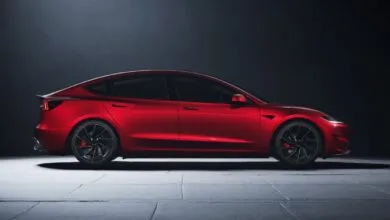
Despite these pronouncements, Tesla still generates most of its money from cars. In the last fiscal year, automotive sales accounted for over seventy percent of its total revenue. However, that segment is contracting sharply, with year-over-year declines exceeding ten percent. Concurrently, Tesla lost its position as the world’s top electric vehicle seller to BYD, and its mainstream Model 3 and Model Y programs are struggling. The erosion of government incentives for EV purchases, a trend Musk’s political activities have supported, further complicates the mass-market vehicle landscape.
Tesla’s new bet is on software and subscriptions. For the first time, the company revealed it has 1.1 million active subscriptions for its Full Self-Driving (Supervised) system, claiming a substantial quarterly increase. Musk announced plans to stop selling FSD as a one-time purchase, moving entirely to a subscription model. This feature, which permits hands-free operation under driver supervision, remains controversial and is the subject of ongoing safety probes and litigation.
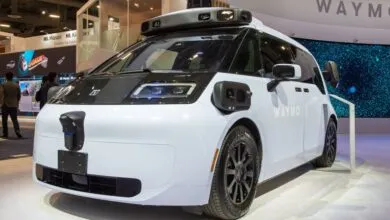
Musk’s enormous compensation package is directly tied to achieving milestones in autonomy and robotics, including deploying a million robotaxis and producing over a million Optimus humanoid robots. Critics note that the vehicle sales target within this agreement is relatively modest, suggesting a decline in car sales is already factored into the company’s internal projections. The board and shareholders have fully endorsed this vision, despite visible challenges. Competitors like Waymo have more advanced robotaxi operations, federal data suggests Tesla’s autonomous test vehicles crash at a higher rate, and the Optimus robots are not yet materially useful in manufacturing, as Musk himself conceded.
This strategic shift does not occur in a vacuum. The entire auto industry is chasing the dream of “software-defined vehicles” and the recurring revenue that software updates and subscriptions can provide. Building cars is a low-margin, capital-intensive endeavor; subscription income is far more attractive. However, for Tesla, this transition is fraught with risk. The capital expenditure required is staggering, with plans to double investment to roughly $20 billion next year to fund the Cybercab, the Semi truck, Optimus, and new battery production facilities.
Musk acknowledged the immense difficulty and cost, characterizing some of this spending as almost “out of desperation.” The company is now funneling vast resources into a speculative future while its present-day automotive business weakens. With the Model S and X gone, its lineup is thinner, and it is unclear whether subscription revenue can ever offset losses from selling fewer cars. Tesla’s journey reflects a high-stakes gamble that the future of transportation is autonomous and robotic, leaving its original identity as a car company firmly in the rearview mirror.
(Source: The Verge)